New York
—
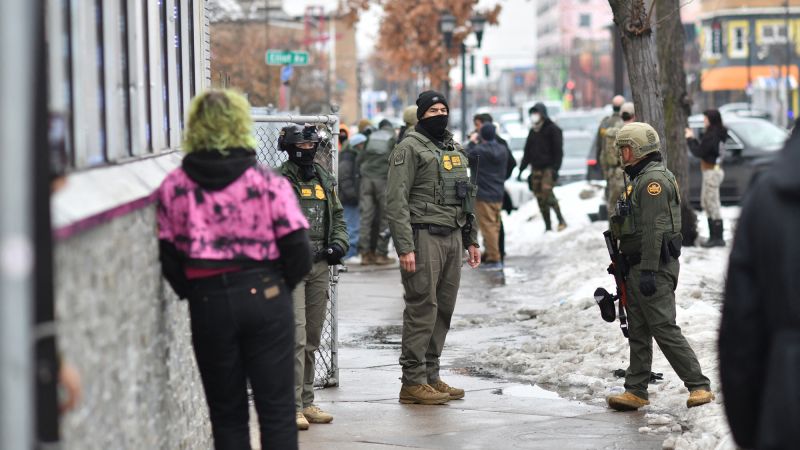
Federal immigration agents have been circling El Burrito Mercado, a prominent Mexican supermarket and restaurant in St. Paul, Minnesota, for the last week.
The sight of unmarked vans and masked agents driving around has scared off customers and workers, driven down sales and jeopardized the future of the 47-year-old local institution once called a “mini-empire” by the food site Eater.
“ICE is using my business as a hunting ground,” CEO Melissa Silvia-Diaz said in a phone interview Tuesday afternoon. She was getting ready to close early because staff called out and shoppers stayed home. “They’re swirling around the block waiting for people.”
The Trump administration’s blitz of immigration agents to Minneapolis and St. Paul has ground one of the largest metro economies in America to a halt, business owners and local leaders say. Thousands of federal immigration agents have descended on the area, and more than 2,000 people have been arrested, according to the Department of Homeland Security.
Many legal and undocumented immigrants have stopped going out in public since the operation began last month, chilling spending and business activity. Stores have cut their hours, and shopping districts are empty. Businesses compare the volatility to the Covid-19 pandemic in 2020 and are unsure how to respond.
The economic fallout has escalated since Renee Good, a 37-year-old US citizen, was killed by an ICE agent last week. Dozens of businesses temporarily closed. Comedian John Mulaney postponed a three-night performance last weekend. and an arts festival and Pride event set for this weekend were called off.
El Burrito Mercado only opened for four hours Wednesday.
“This is not sustainable,” Silvia-Diaz said. “It makes you wonder — how do we survive this?”
The Twin Cities and Minnesota sued the Trump administration this week to halt the operation. In the suit, the state and cities cited the economic impact, claiming some businesses have reported sales drops of 50% to 80%. They warned tax collection may take a hit.
Business owners and leaders in other big cities, such as Chicago and Los Angeles, have also reported an economic blow from the Trump administration’s mass deportation push.
“The Trump Administration’s immigration enforcement operations have resulted in countless dangerous criminal illegals being removed from the streets,” the White House said in a statement to CNN. “Making American communities safer will create an environment in which all businesses can thrive in the long term and their customers can feel safe.”
Silvia-Diaz grew up around El Burrito Mercado, which has grown to include a food truck, catering business and imported gifts and home décor from Mexico. In 2024, it secured a highly-competitive spot as a food vendor at the Minnesota State Fair.
She and her sister took over the business a decade ago from their parents, who emigrated from Mexico during the 1970s. It’s located in the bustling Mexican-American commercial area known as the District del Sol in St. Paul’s West Side.
During the mid-20th century, migrant workers from Mexico like Silvia-Diaz’s parents settled in the neighborhood. Men found work at meatpacking plants and railroad lines. Spanish-language churches and businesses opened. The community grew and by 2005, the Mexican government opened a consulate in St. Paul.
Today, more than 30% of the area’s population today is Latino.
Sales at El Burrito Mercado began to slow last year as immigrant agents surged into Chicago. The holidays were quieter than usual, but business fell off a cliff after immigration agents arrived in the Twin Cities last month, Silvia-Diaz said.
Her heavily Latino customer and employee base has stopped showing up, and most recent customers have been White. She’s also began to carry passport with her in case she’s stopped by an immigration agent.
“This country is built on immigrant businesses,” she said. “We employ people and inject money into these neighborhoods. You wipe them out and then what?”
Miguel Lopez closed the dining room at Homi, a Mexican restaurant in St. Paul, Monday and switched to pickup-only orders.
Lopez and his wife, Hortencia, who were born in Mexico, opened the restaurant in 2009.
“I don’t feel safe either in my house or my business,” he said. “I’m not going to put my employees or myself in that position.”
The crackdown has pressured businesses in other ways.
Target, headquartered in Minneapolis, has become a visible site of immigration officers. It has roughly 50 stores in the metro area.
US Border Patrol commander Gregory Bovino and other agents walked through one Target store over the weekend in St. Paul, and two Target employees were arrested by immigration agents at another store in Richfield.
“I’m literally a US citizen,” one of the Target workers said repeatedly as he was dragged away, according to a video of the arrest. (Homeland Security said he was arrested for assaulting federal law enforcement officers.)
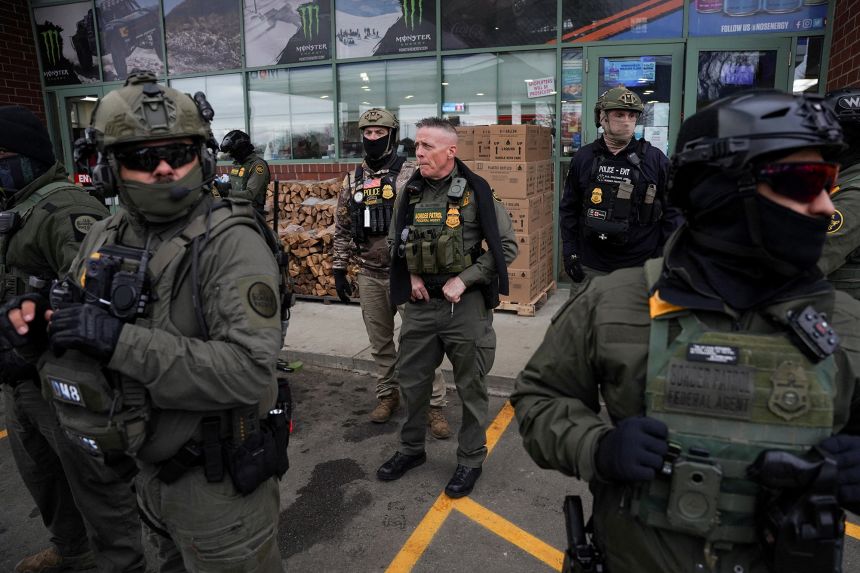
Some local leaders are calling on Target to protect employees and customers from immigration agents. But while big companies have been affected by ICE raids, most have stayed quiet to avoid angering the Trump administration.
Target’s chief human resources officer sent an email to employees last week referring to the ICE efforts as “events in our hometown,” according to the Minnesota Star Tribune.
“This situation is changing quickly and continuing to develop — and we receive new information by the moment,” the email said. “But I want to assure you that we’re constantly monitoring the situation, following all laws and regulations, and prioritizing safety at our stores and sites.”
Target declined CNN’s request for comment.
Like much of the US economy, the Twin Cities and the state are heavily dependent on immigrant businesses and workers. Minnesota leaders worry the Trump administration’s operation will depress the region’s long-term economic growth.
Minnesota faces a slowdown in population growth, driven by aging baby boomers, declining birth rates and fewer people from the United States moving to the state, the Minnesota Chamber of Commerce said in a report last year. There are nearly two job openings for every one person looking for work in Minnesota, and the state needs immigrants to mitigate workforce shortages.
“Immigration has only become more important to Minnesota’s economy in the first half of this decade,” the report said, calling it an “essential ingredient of Minnesota’s long-term economic success.”
Minnesota has a diverse economy, with large companies such as 3M, General Mills and Best Buy based in the state. The Mayo Clinic is headquartered in Rochester, roughly 90 miles south of Minneapolis.
Ninety-four percent of Minnesota’s net population growth during 2020 to 2024 was driven by immigration. The state’s foreign-born labor force grew by 41% since 2010, compared to just 4% for US-born workers, according to the Minnesota Chamber of Commerce.
“My larger fear is this has a much broader impact in terms of attraction and retention of talent” to Minnesota,” said Mike Logan, the CEO of the Minneapolis Regional Chamber of Commerce. “For the sake of the economy, businesses and the community, the sooner this can come to a civil conclusion the better.”