Long gone are the days of the post-Cold War lull when space was largely treated as a peaceful utility domain.
As US officials warn of China’s and Russia’s rapid progress in space, and tech CEOs dream of AI data centers in lower orbit, space is becoming an increasingly contested layer of global infrastructure with national security implications.
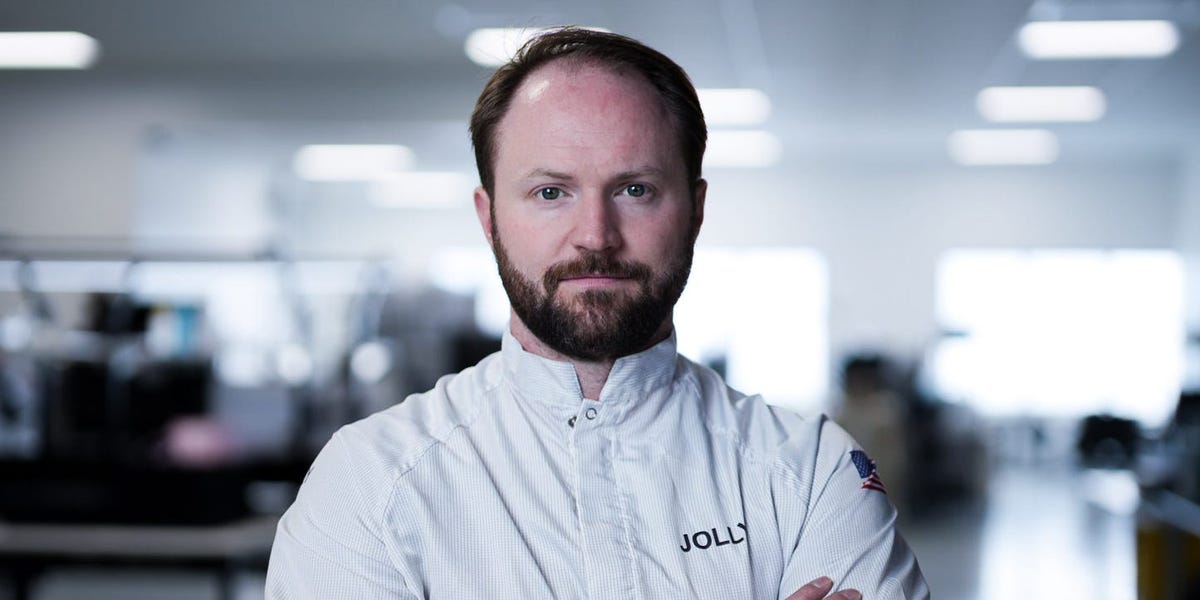
Even Rogers, a former US Space Command officer and the CEO of True Anomaly, a space defense startup, says America needs to catch up.
“We’re already really far behind,” Rogers told Business Insider, comparing the US to Russia and China. “The United States has a very clear mandate in national military strategy and national defense strategy to achieve space superiority.”
China and Russia have long been considered America’s adversaries in space — and their capabilities in that domain are only increasing.
Brig. Gen. Brian Sidari, deputy chief of space operations for intelligence at the US Space Force, said in September that China’s pace of progress in space was “concerning” as the country reaches record levels of launches. A 2024 US intelligence report also said China and Russia are actively exploring ways to incapacitate satellites.
Foreign space systems can range from spy satellites gathering intelligence on the positions of US forces to anti-satellite weaponry that could destroy another object.
Rogers described a constant cycle of maneuvering between the US and its adversaries and warned that Washington lacks a rapid-response capability to quickly gather high-quality reconnaissance on newly deployed spacecraft.
The CEO said Russia has consistently deployed what the US suspects are “weapons and test systems into lower orbit” over the past decade.
“We haven’t had a responsive capability to be able to, within 24 to 48 hours, go take a picture of that object,” Rogers said, adding, “every single day there’s a cat and mouse game that’s being played.”
Part of the challenge for the US is to know precisely what’s happening in orbit. Although the government already has the ability to track objects in space, Rogers said the hard part is getting high-quality information.
The CEO said the Space Force needs to do reconnaissance against other spacecraft that are highly agile and maneuverable without detection.
At True Anomaly, a team of more than 250 people is building a spacecraft that can maneuver close to other objects and collect high-quality data from them.
One of the company’s core products is the Jackal, a space drone built for the kind of reconnaissance mission the US Space Force would want to conduct.
“What we’re doing is collecting the detailed intelligence information of a spacecraft,” Rogers said.
The hype around data centers in space could add another layer of vulnerability. Tech CEOs are exploring a still-far-fetched idea of putting critical AI infrastructure into lower orbit, which would make space not just a military or government concern but also a commercial asset to protect.
Rogers said that it’s hard to know what space defense of data centers would look like, but that the idea adds another need for space security.
“You could see data centers in general being part of critical infrastructure for a country’s political power,” he said. “So yeah, it’s going to be critical infrastructure, and they’ll need to be protected.”