Dive Brief:
- UPS plans to benefit from “a more agile, more profitable network” with higher-upside volume as it reduces deliveries for major customer Amazon, EVP and CFO Brian Dykes said during a Raymond James investor conference Wednesday.
- The adjustment means less of an emphasis on e-commerce volume and more business-to-business, industrial, healthcare and small business shipments coming out of Q2, according to Dykes.
- The strategy shift aims to help UPS continue growing per-package revenue, as higher-value verticals like healthcare are more willing to endure price hikes than other shippers as long as service levels remain high. “It’s a whole different ball game than if you’re talking about a T-shirt, right, going to a residence,” Dykes said.
Dive Insight:
UPS and rival FedEx are distancing themselves from general e-commerce volume — a segment steeped with alternative carrier competition — and chasing customer types that offer higher-value shipments and call for more specialized services.
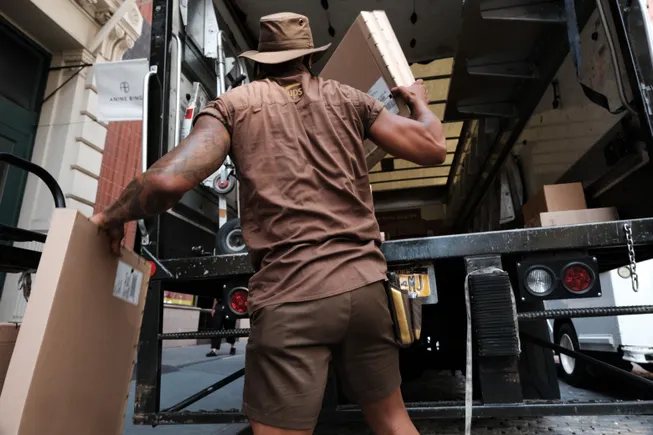
For UPS, that includes shedding about $5 billion in Amazon revenue and about 2 million pieces of daily volume, an effort that began last year, Dykes said. The carrier is adjusting to fewer Amazon packages flowing through its network by cutting jobs, closing facilities and offering buyouts to full-time drivers.
In the reduction plan, UPS is specifically pulling away from Amazon volume already positioned close to end customers — “probably 50 miles from your house,” Dykes said. An integrated end-to-end network isn’t necessary to ship those packages, he added.
“They’re going to insource that piece of the business, and we’ll focus on other pieces of the business,” Dykes said of Amazon. “They’re still going to be one of our largest customers. We do a lot of returns from them through our UPS Store network. We do things for small businesses that sell on the Amazon platform.”
While Amazon volume continues to decline, UPS is pushing to win business elsewhere, including among healthcare shippers and smaller companies. UPS is fueling small business volume growth in particular through its Digital Access Program, which connects to e-commerce platforms to offer rate discounts and other shipper services. The program reached over $4 billion last year, up from $150 million six years ago, Dykes said.
“This is not just Etsy stuff,” the CFO added. “This is also industrial retailers that are selling products online.”
As UPS removes Amazon volume from the network and pursues higher-yielding business, the company expects revenue per package to increase 6.5% in 2026, according to Dykes. That would build on a per-package revenue jump of 8.3% year over year in Q4, about 340 basis points of which was tied to base pricing growth.
Dykes also touched on UPS’ latest round of driver buyouts, saying the program gives the carrier a way to accelerate attrition as it rightsizes its network. The company has offered the buyout to over 100,000 drivers, including those operating package cars and tractor-trailers.
“We’re seeing good take rates so far,” Dykes said. “We’ll continue to update everybody on what the numbers look like as we go through the first quarter. Our expectation is that we’ll close the program out in the second quarter, take the charge and then this will start to drive benefits in the back half.”