
Louisville Mayor Craig Greenberg on redevelopment of Humana building
Louisville Mayor Craig Greenberg discusses plans to redevelop the Humana building into a 1,000-room convention hotel and what this means for downtown.
- Louisville’s lead economic development group and its chamber of commerce have voted to merge.
- The new nonprofit, One Louisville Inc., will focus on economic development, talent, member services, and advocacy.
- Trevor Pawl, CEO of the Louisville Economic Development Alliance, will serve as the inaugural CEO of One Louisville.
Louisville’s recently formed lead economic development organization and the long-standing region chamber of commerce voted to merge on Feb. 25, citing a desire for increased coordination to better help Louisville compete.
The Louisville Economic Development Alliance, also known as LEDA, will combine with Greater Louisville Inc., or GLI, to form One Louisville Inc.
The new nonprofit organization, effective March 1, will focus on four main aims: economic development, talent attraction and retention, member services and advocacy.
LEDA’s CEO, Trevor Pawl, will be the inaugural CEO of One Louisville.
“The intent here was to essentially elevate the best of LEDA and the best of GLI, and in doing so, drive more outcomes and efficiencies,” he said at the Feb. 25 meeting. “While we will be emphasizing heavily economic development going forward, the chamber of commerce model in One Louisville is still alive.”
Votes this week by GLI and LEDA follow months of discussions about a potential merger intended to move GLI’s member services, advocacy work and talent attraction efforts and LEDA’s local business growth and economic development work under one roof.
The union of the two groups will take the collective employee headcount from 51 to 32 full-time employees, which Pawl said was “easily the most difficult part of this process.” By uniting, the two groups will share marketing, accounting, human relations, IT and other services.
“To set One Louisville up for success and help it remain resilient in the face of any market condition, we needed to create an organization that was more nimble, and we did that by minimizing duplication,” Pawl said.
Overall budgets will go from $11.5 million to $9.1 million, a smaller figure that Pawl said made the new model sustainable.
As for Louisville Metro Government’s involvement in the new organization, Pawl said 32% of One Louisville’s funding will come from public dollars.
“Any lower percentage of public funds would cause us to run a sizable deficit in years one and two, unless we saw larger increases in private sector contributions, which in this market would be tough,” he said. “I do want to reassure everybody that One Louisville still has enough resources to effectively market the region more than we have before, generate more leads than we have before, and develop dynamic new programs.”
What’s ahead for the new organization?
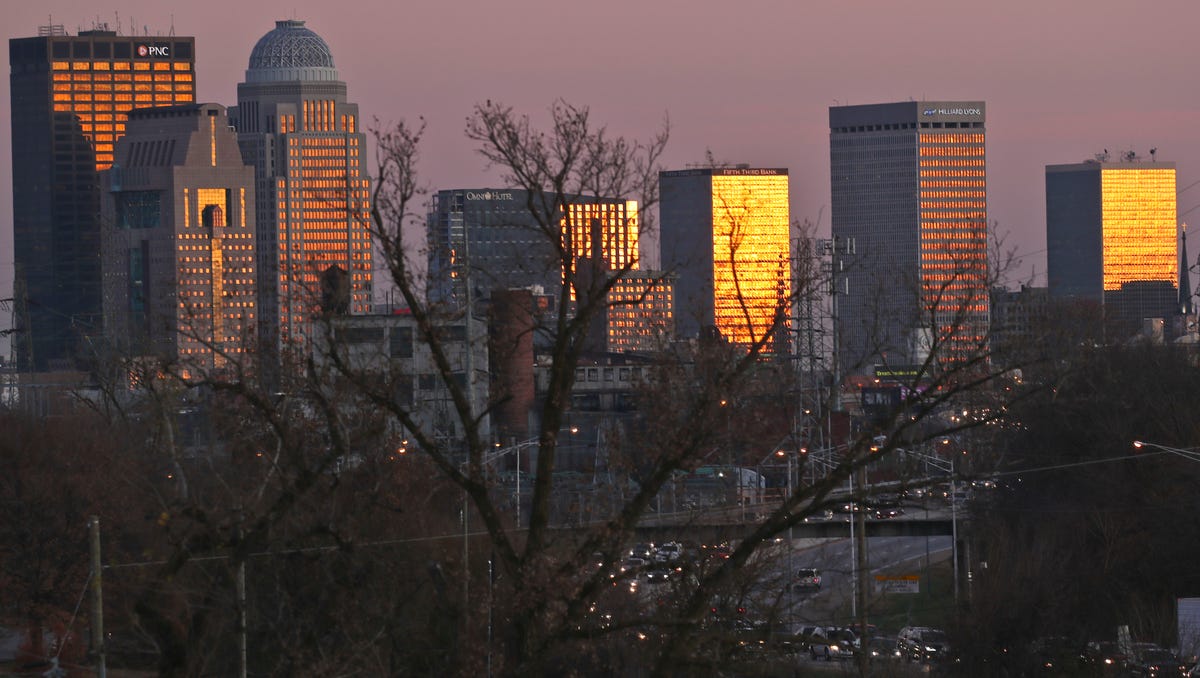
Staffs of both organizations will begin working together next week at the existing GLI offices on the 23rd floor of the PNC Tower, though GLI as an organization would “wind down” over the next 100 days.
GLI’s board voted unanimously to approve the merger. Lance Mann, GLI interim president and CEO, said the combined organization will better serve businesses.
“This is a shining example of the private and public sector coming together to reinvent a platform that supports growth, strengthens the regional economy, and delivers greater value to businesses in our region,” he said in a release.
One Louisville, like its predecessor organizations, will be a type of nonprofit called a 501(c)(6) that is governed by a 60-70 member board and include CEO Pawl and a smaller executive committee of 15-20 members.
It will be supported by a much smaller, five to seven member 501(c)(3) foundation, which will act as the charitable arm of the larger entity.
This story may be updated.
Reach growth and development reporter Matthew Glowicki at mglowicki@courier-journal.com or 502-582-4000.