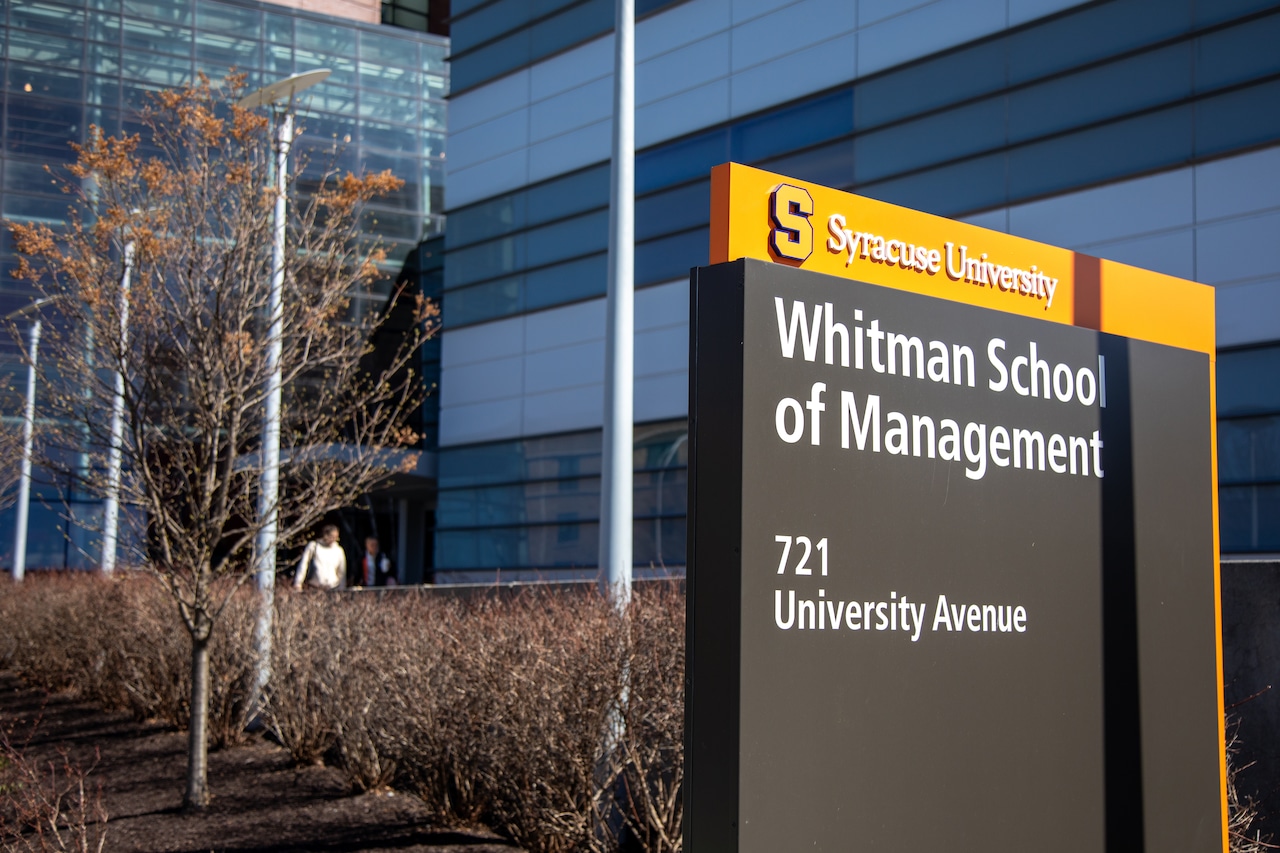
Syracuse, N.Y. — Syracuse University’s Whitman School of Management is launching a program next month to teach students how to evaluate the investment potential of startups while connecting entrepreneurs with investors.
“Think like Shark Tank,” said Alexander McKelvie, dean of the Whitman School and professor of entrepreneurship.
Entrepreneurs will pitch their ideas to potential investors at events modeled after “Shark Tank,” ABC’s reality show where businesses sell their concepts to investors.
As part of the class, students will set up the events, vet businesses and conduct market research, McKelvie said. The goal, he said, is to teach the undergraduate and graduate students what investors weigh when their money is on the line.
The university and business school will not make investment decisions or take ownership stakes in ventures. The investors retain control over their money, but the students will recommend whether to invest.
“We’re just saying, ‘hey, this is what we see with this opportunity,’ and then the investors make the capital investment, or not, in the new venture,” said Jeff Gish, who will run the program and serve as its new academic director.
The school has invited investors and entrepreneurs with connections to SU to participate. Already, more than a dozen of both are involved, McKelvie said.
The group of potential investors, including some from Central New York, will form the Orange Business Angel Network, an ongoing effort to build business connections among SU alumni, students, parents and anyone associated with the university.
That network, McKelvie said, is about more than money. Entrepreneurs can also get mentorship and guidance, he said.
The program will start to address a need McKelvie said he hears about repeatedly: The struggle to win over investors.
“The number one thing we hear from successful student entrepreneurs who become alumni entrepreneurs is ‘access to capital,’” McKelvie said. “They wish that they had an angel to help take that next step.”
Many SU alumni have reached out to the Whitman School looking for the next startup to invest in, McKelvie said.
Gish is teaching at the University of Central Florida now, but he’s also an experienced entrepreneur and angel investor.
For seven years he owned a transportation company in the Pacific Northwest with 57 employees and 42 trucks before selling to a competitor. Then, he pursued a doctorate at the University of Oregon before using his own capital to invest in a fund.
Gish said he is excited to meld academic learning and real-world, hands-on learning.
“There are real consequences to the work that we’re doing because these are real entrepreneurs seeking capital and these are real investors investing their dollars into entrepreneurship,” he said.
The program targets early-stage companies valued at less than $10 million and with revenues under $2 million.
SU-affiliated investors and entrepreneurs from all over the country are submitting applications, McKelvie said, including 10 to 15 startups working in artificial intelligence, tech and other services.
Gish said he’s been in touch with at least a dozen investors in Upstate and Central New York, including Upstate Capital and New York State Ventures.
The investors have to meet Securities and Exchange Commission requirements for net worth and income thresholds, and have a connection to Syracuse University as an alumni, parents, faculty or staff.
“We’re making it very selective and starting it small to allow it to grow over time,” McKelvie said.
While about 40 similar university angel networks exist nationally, McKelvie said Syracuse’s program stands out for centering students in the due diligence process.
“The big piece is that this is really student-focused and making sure that they are at the heart of this academic learning,” McKelvie said.
Gish said the course will prepare the students for careers in business.
“It’s not the expectation that they would become angel investors, unless they’re already a high-net-worth individual,” Gish said.