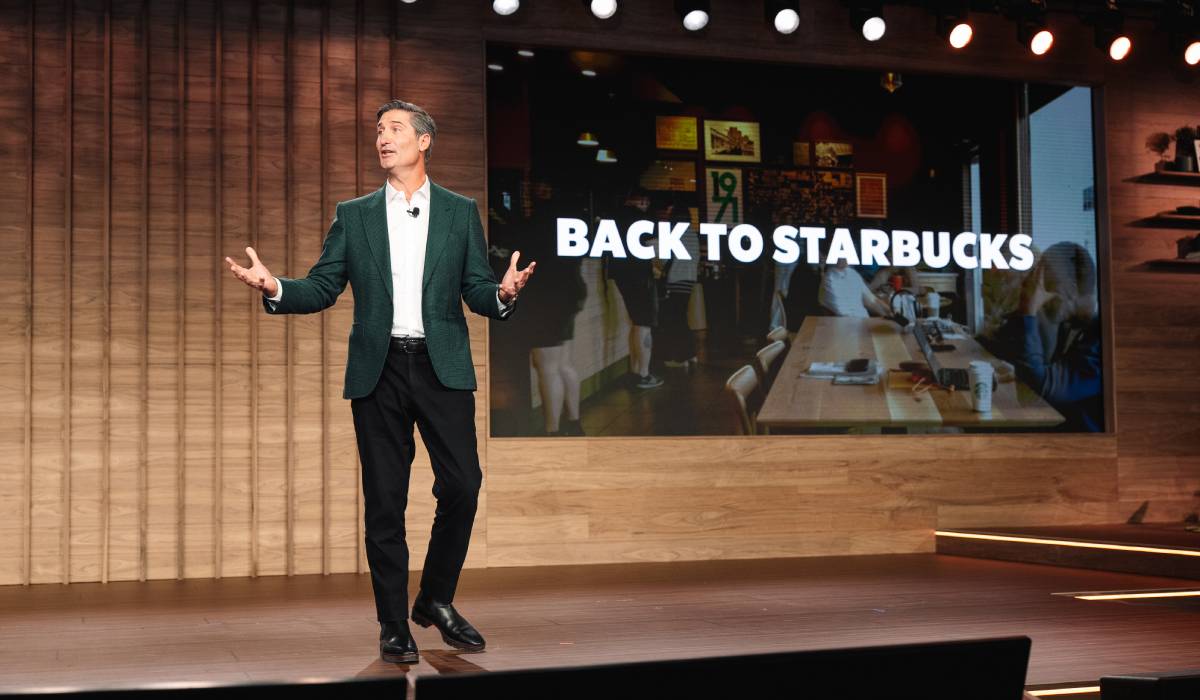
Starbucks is the biggest coffee concept in the world, and Thursday’s Investor Day proves the brand wants to keep that title.
Where does the chain stand?
Starbucks finished Q1 with 41,118 shops systemwide, with 18,360 in North America and 22,758 internationally.
Where’s the company headed?
The company projects up to 5,000 new store opportunities in the U.S.’s central, southern, and northeast markets, and this figure could double as AUVs increase. The optimistic projections come after Starbucks shuttered a net of 143 North American company locations in fiscal 2025, made up of stores that were either unprofitable or couldn’t meet the chain’s renewed emphasis on the “third place.”
READ MORE: Starbucks Breaks Two-Year Slump as Traffic and Sales Turn Positive
Starbucks also expects to nearly double its international footprint over time, putting the segment near 40,000. Much of this expansion will come from China, where the brand foresees 15,000 to 20,000 new units, a major jump from its roughly 8,000-unit footprint.
In 2028, the brand said it will open over 2,000 net new stores globally, 400 of which will be U.S. company-operated shops. For perspective, Starbucks opened 791 net new locations in fiscal 2025 and plans to debut 600 to 650 net new outlets in fiscal 2026.
The company hopes to build shops that can offer the full suite of drive-thru, dine-in, mobile ordering, and delivery. It wants to do so while cutting building costs by 20 percent.
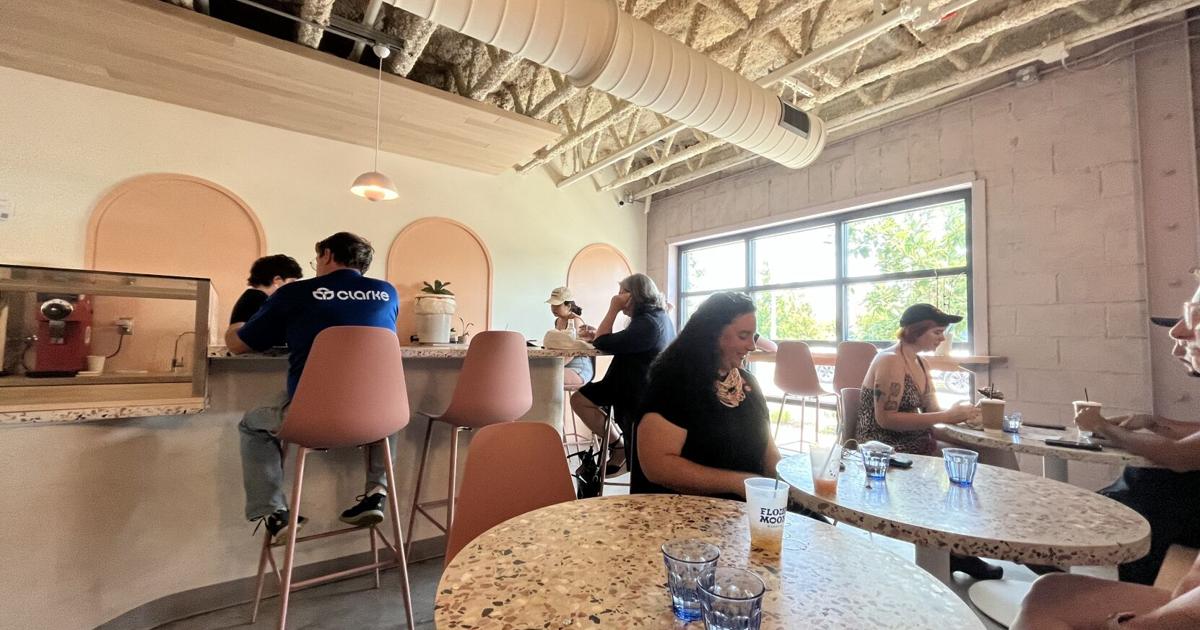
New and existing locations will focus heavily on the dining room environment as Starbucks reignites its third place badge of honor. The brand is working through an uplift program in which stores are becoming more comfortable for dine-in customers. The changes cost just $150,000 per store and can be completed overnight. So far, 200 units have undergone the renovation, mostly in Southern California and New York City. Starbucks wants to complete more than 1,000 units by the end of fiscal 2026, which would add more than 25,000 cafe seats. The brand will finish the program completely in fiscal 2028.
The growth aspirations were announced a day after Starbucks reported positive U.S. same-store sales and traffic for the first time in two years. North America and domestic comps increased 4 percent in the first quarter, driven by a 3 percent rise in transactions and 1 percent growth in average ticket.
The chain expects the momentum to remain. It called for at least 3 percent global and U.S. comps growth for fiscal 2026. Net revenue should grow at a similar rate.
In fiscal 2028, Starbucks projects at least 5 percent net revenue growth, at least 3 percent global and U.S. comps growth, 2 to 3 percent revenue contribution from new locations, and operating margin of 13.5 percent to 15 percent.
Several levers are fueling Starbucks’ optimism.
One aspect is streamlined operations. Later this year, the company will modernize its POS system with technology that can anticipate customers’ orders and improve speed of service. Starbucks is also rolling out new equipment to significantly increase throughput. Currently, it takes about 70 seconds for an employee to pull four espresso shots. In 2027, the brand will launch an upgraded machine—built with proprietary tech—that will cut prep time in half and double capacity.
Starting later in 2026, the brand will release a dedicated espresso machine for cold beverages to mitigate congestion in high-volume locations (cold drinks make up a majority of Starbucks’ sales). The company has also completed the launch of Green Dot Assist, an AI search tool that helps employees find information instead of flipping through a handbook.
Menu innovation is on the radar as well, particularly in the afternoon. In fiscal 2025, Starbucks earned more than $12 billion in revenue before 11 a.m. and about $11 billion after 11 a.m.
The brand plans to capture more later-in-the-day transactions with espresso, matcha, and chai drinks. For example, the Iced Ube Coconut Macchiato and Iced Mango Chai are coming to the menu this spring. Starbucks will also expand its Refreshers lineup with new energy drinks.
These beverages will be paired with food items like flatbreads, wraps, and protein popcorn.
Then there’s the Starbucks Rewards program. An updated version will go live March 10, involving three statuses—Green, Gold, and Reserve. After accumulating enough stars, guests can reach a higher tier, allowing them to earn points faster and receive enhanced benefits.
The loyalty platform is a source of strength for the brand. In the first quarter, Starbucks reached a record 35.5 million 90-day active members, and rewards transactions grew year-over-year for the first time in eight quarters. Overall, there are over 85 million rewards members. These customers represent 60 percent of company-operated revenue and visit Starbucks about 200 times per year on average. The chain estimates that if half of its membership were to add one extra visit, it would result in $150 million in incremental revenue.
The chain will also bolster the mobile app with scheduled mobile ordering and an AI companion to help guests find the best order.
In terms of staffing, Starbucks continues the push of Green Apron Service, a set of labor standards that’s resulted in fewer customer complaints and wait times moving below four minutes during peak periods.
· .