For all the pain motorists are feeling at the gasoline pump these days, it’s a lot worse for diesel drivers.
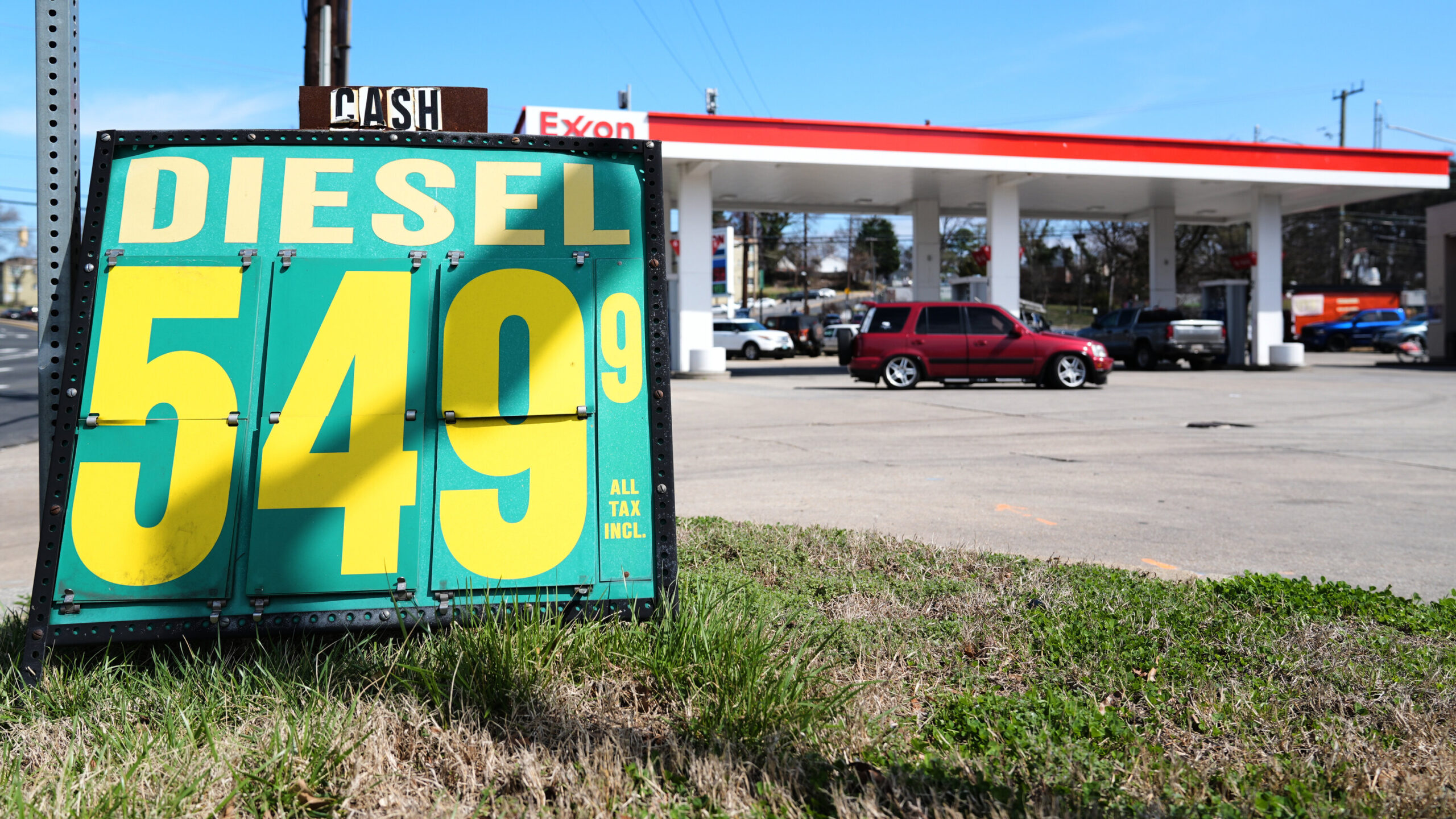
Since late February, when the war in Iran upset global oil markets, diesel prices in Washington have jumped by around $1.40 a gallon, to an average of $6.20, according to AAA. By comparison, regular gasoline is up around 97 cents, to $5.15.
For a global supply chain heavily tilted toward diesel power, that spike is looking more and more like a disaster.
At Puyallup-based MN Logistics, owner Muhammad Khalid Nazir contracts with 20 to 25 truckers to haul containers to Portland from Seattle-area ports.
Collectively, he said, those drivers are now spending thousands of dollars more for each trip now due to the war.
Nazir tried to pass that extra cost along to his customer, “but they refused,” he said. “It was basically … either you suck it up and you keep doing what you’re doing, or otherwise, we’re going to look for somebody else.”
Trucking is only one diesel pain point. The fuel, which is more energy-dense than gasoline, is used in the majority of commercial vehicles and equipment — everything from delivery vans and dump trucks to excavators and buses.
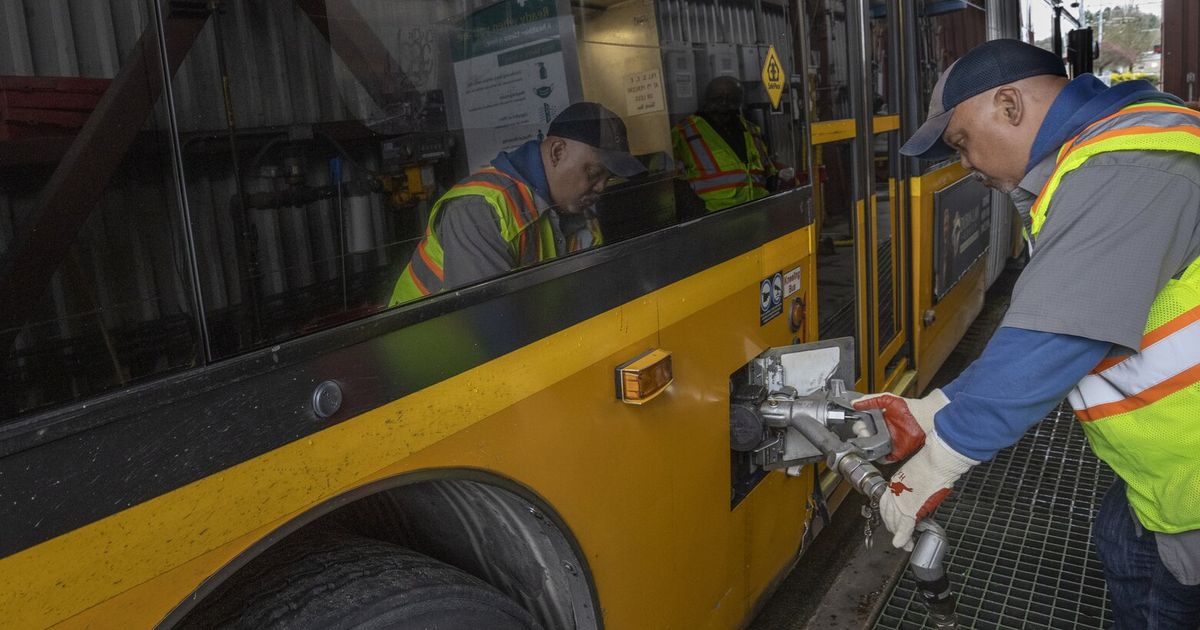
At King County Metro, the fleet of diesel-electric hybrid buses burns through roughly 25,000 gallons every 24 hours, and every 50-cent increase in diesel means another $12,500 in daily costs, said Al Sanders, Metro spokesperson.
Metro doesn’t know whether a sustained diesel spike could ultimately lead to a fare increase. “It’s too soon to say how this current rise in fuel prices will affect Metro’s total budget, and we will continue to monitor costs,” Sanders said.
But for many smaller businesses, the question isn’t if but when they’ll be forced to pass those higher fuel costs to customers.
Many transportation-related companies have already been absorbing the higher costs and declines in business from the Trump administration’s import tariffs last year, said Apurva Jain, a supply chain expert at the University of Washington’s Foster School of Business.
After enduring narrow profit margins for so many months, many businesses may be unable to simply eat the cost of high diesel prices, Jain said. “Something has to give.”
War and taxes
War isn’t the only thing fueling higher diesel costs in Washington.
Even before the conflict disrupted oil tankers moving through the Strait of Hormuz, prices for diesel in Washington were 30% above the national average, according to AAA data.
Much of that reflects state taxes that are levied on fuel, which total 62 cents a gallon, or nearly double the national average of 33 cents, according to the U.S. Energy Information Administration.
An analysis by the Western State Petroleum Association, a trade group representing oil and gas companies, which includes the cost of the state’s cap-and-trade carbon system, puts the per-gallon tax total substantially higher.
However, the sudden jump in diesel prices is mainly due to the spike in the price of the crude oil used to make diesel, gasoline and other products.
Since U.S. and Israeli forces attacked Iran on Feb. 28, the per-barrel price for Brent crude, an industry benchmark, has climbed from around $68 to around $107 as of Thursday — an increase of 57%.
Although it takes weeks for that more expensive crude to move through the transportation and refining system, prices “downstream” often jump sooner as refiners and distributors anticipate paying for those more expensive barrels.
At the retail level, many gas stations also raise their prices as a hedge against more expensive wholesale fuel, though they have to be careful not to charge more than their competitors.
At his Shell station in Seattle’s Greenwood neighborhood, Harminder Momi says he doesn’t raise pump prices until his wholesaler does, which helps him stay competitive for the landscapers, contractors and others who buy his diesel.
Even so, with a price currently at $6.49 — up a dollar in the last month — many of his diesel customers have already fled to Costco, Walmart and other larger retailers, which, he says, can usually undercut smaller retailers like him.
As a result, diesel sales are “almost 30% less than what we usually sell,” Momi said.
‘Really bad outcomes’
With no clear timeline for a resolution to the Iran war, many experts expect the spike in diesel to eventually ripple through the broader economy.
On Wednesday, the Federal Reserve said it was holding off a widely expected cut in interest rates out of concern that soaring crude oil costs will reignite inflation. While keeping rates high can help curb inflation, it also means consumers won’t get any relief on credit card, mortgage or car-loan rates.
In the meantime, many observers worry about what pricier diesel means for fuel-intensive businesses.
In the short term, trucking companies and other big diesel users may feel they have little choice but to keep pumping that costlier fuel. But at some point, higher prices will start to change behavior.
Nazir, with MN Logistics, says he’s taking fewer orders, and some of his drivers have begun turning down loads rather than run trips that will leave them so little profit after fuel costs.
“They say, ‘Man, we would rather sit home and wait for things to get better than keep doing what we are doing,’ ” Nazir said. He hopes state lawmakers will consider “some kind of tax holiday on gas and diesel,” to help out strapped businesses.
Lisa Clark, a former Seattle-area trucker, says at current diesel prices, more and more truckers simply won’t take loads that don’t include a fuel surcharge.
“There are a lot of folks that would just park their truck and drive an Uber just to make a little” money, she said.
UW’s Jain says cutting back is a common strategy when companies get squeezed by the cost of a key input such as fuel.
But he adds that it might not be a sustainable option for smaller contractors or for owner-operators who still face high fixed costs, such as mortgage payments.
He also worries that, coming on the heels of higher tariff-related costs, higher fuel costs could mean “really bad outcomes for smaller companies” and even a “spike in bankruptcies.”
Some diesel users may not wait for those outcomes.
JK Choi, a trucker who hauls containers to and from the ports of Seattle and Tacoma, says he’s now paying $100 more every time he fuels up, which is roughly every four days.
Although Choi can pass along some of that cost to his customers, he says many other truckers he knows can’t do that.
For some, the diesel spike feels like the final straw after years of dealing with pandemic disruptions and tariff-driven slowdowns.
“Nobody wants to stay in this business,” said Choi. “Everybody’s saying, like, ‘I want to get out. I want to get out.’ “