
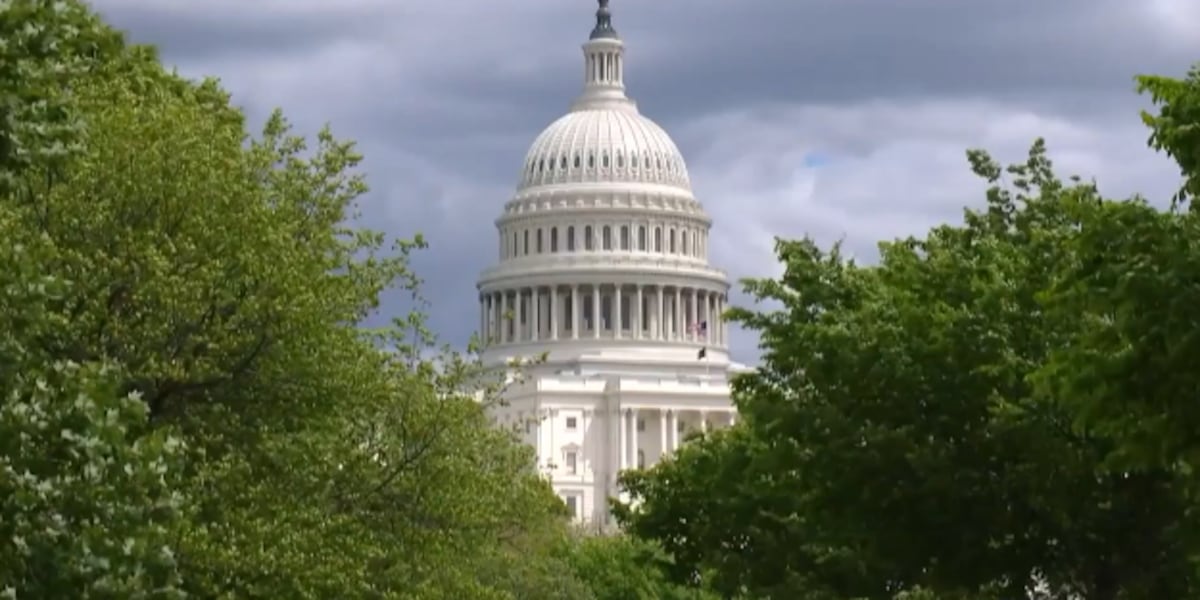
WASHINGTON (Gray DC) – Goldman Sachs gathered 2,300 small business leaders in Washington to discuss ways to grow their companies. Several of those discussions happened with congress members.
Small businesses like Dan Cahoy’s “Cahoy’s General Stores” in Nebraska and South Dakota, make up more than 45 percent of the entire private workforce.
“So we’re in really rural areas,” Cahoy said. “Populations range from like 300, 2,000. And we’re the only grocery store in those communities. One of them, we’re the only grocer in the whole county.”
He says 35 percent of sales at one location comes from SNAP and WIC. Without these benefits not only would these families go hungry, it could impact his 120 employees.
The funds for those programs are drying up because of the on-going government shutdown. At the heart of the conflict on Capitol Hill – healthcare.
It’s an issue Elin Barton of Binghamton, New York wants to discuss with lawmakers.
“I’m a small business, and I pay 100 percent of my employee’s premiums every month,” Barton said. “They have good health care. And it is very expensive. So I want to talk about that too. How to maybe take some of that burden off of small businesses.”
Iowa Senator Joni Ernst chairs the Senate’s committee on Small Business. She released this statement:
“As chair of the Senate Committee on Small Business and Entrepreneurship, I am thrilled to welcome dozens of Iowa small businesses to Washington this week and bring their voices to the highest levels. Under Republican leadership, we have already slashed nearly $1 trillion worth of red tape, delivered the largest tax cut in history, and seen a resurgence in domestic manufacturing. Small businesses are the backbone of the Hawkeye State, and it’s always my priority to get burdensome government regulations out of the way and work with our job creators as we unleash the Golden Age of America.”
Calvin Briggs owns Southern Stem Center based out of Birmingham, Alabama. He says when the new administration took over – he lost a lot of business. Many of his clients relied on government subsidies and grants. Now – he’s pivoting and looking for more profitable avenues with the governments help.
“Capital is always a major concern,” Briggs said. “Scaling the business and getting it to grow. Right now, I think that’s where we’re kind of stuck is to leverage some capital so we can constantly expand what the work that we’re doing.”
Its not just money issues small business leaders want to discuss. Dr. LaTeasha Gaither-Davis who runs Therapeutic Focus in West Memphis, Arkansas says she needs a stronger workforce to better provide therapy services for her underserved community.
“(Help) training the workforce, workforce issues, that are greatly needed in my community,” Dr. LaTeasha Gaither-Davis said. “Being able to train people, having access to training. I should say, childcare services, things of that nature.”
These leaders hope this is the start of a direct link to lawmakers who can help small businesses thrive.
Copyright 2025 Gray DC. All rights reserved.