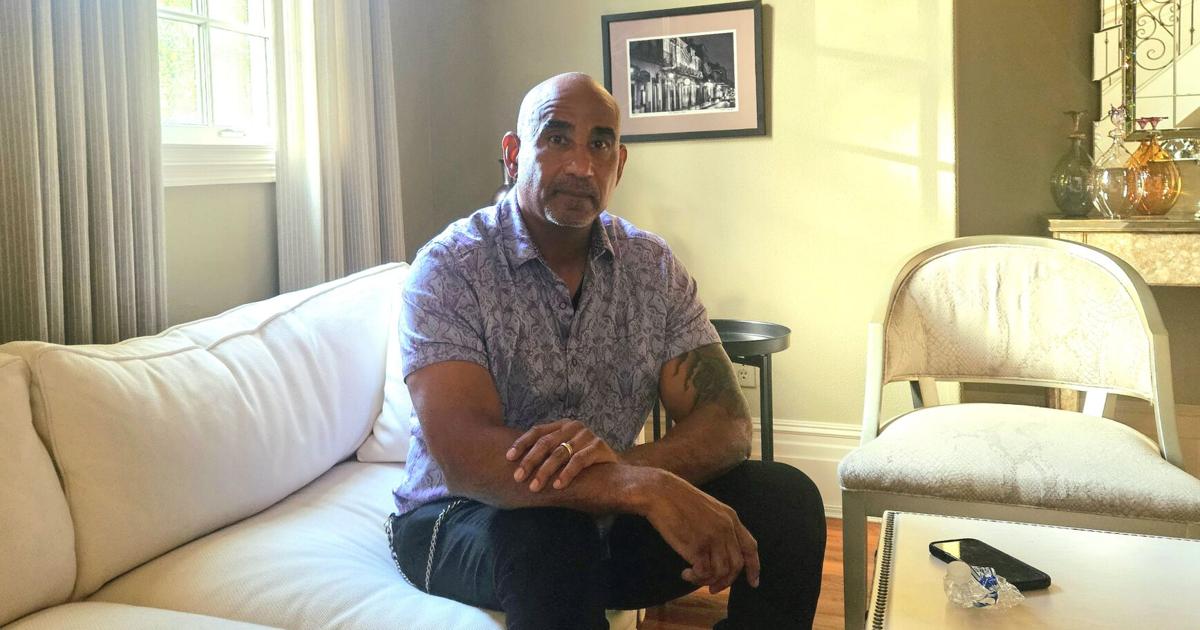
Roy Glapion has never strayed far from home — by design. A lifelong New Orleanian, the civil engineer and entrepreneur recently stepped away from a decades-long professional career and is now turning his attention more fully toward civic work that he believes will help shape the city’s next chapter.
Glapion co-founded Citywide Testing & Inspections in 1995 with his business partner, Dennis Engen, building the firm into a significant regional construction materials testing operation. In 2007, the company was sold to Professional Service Industries for an undisclosed sum. Engen chose to retire, but Glapion stayed on, continuing to work for PSI and successor firms for another 17 years, until his retirement in December.
“I stayed because I still wanted to,” Glapion said. “I liked competing. I liked winning work. At some point, you just know it’s time to do something different.”
That “something different” now includes a deepening commitment to civic engagement and philanthropy. Among the most visible projects he has helped shepherd is the long-delayed effort to fund and build a $15 million stadium at George Washington Carver High School — an initiative he has worked on for more than half a decade. He is also deeply involved in nonprofit work, including leadership within the PLEASE Foundation, which focuses on mentorship and opportunity for young people.
Glapion’s sense of obligation to the city is inseparable from his family history. His roots in New Orleans stretch back to the 19th century, tracing directly to Marie Laveau II (1827-97), daughter of the famed Voodoo Queen Marie Laveau. His father, Roy E. Glapion Jr., was a longtime educator, New Orleans City Council member and for decades a respected leader of the Zulu Social Aid & Pleasure Club. His sister Désirée Glapion Rogers is a nationally prominent executive who has served as White House social secretary under President Barack Obama, CEO of Johnson Publishing Co. and, since 2019, CEO of Black Opal Beauty.
A decade ago, Glapion himself entered electoral politics, running for a state Senate seat ultimately won by Troy Carter, a close friend. These days, he says, his focus is less on office-holding than on helping the city’s next generation — and next administration — succeed.
Interview has been edited for length and clarity.
You describe yourself as a “traditional New Orleans family.” What does that mean to you?
It means the roots run deep. My parents grew up here. I grew up here. My sister grew up here. We are direct descendants of Marie Laveau de Glapion — Marie Laveau II. We don’t wear it on our sleeves, but it’s part of who we are. I’m a New Orleanian, born and bred. I’ve never lived anywhere else.
Your father left a strong legacy in education and politics. How did that shape you?
My father was an educator first. My mother was an educator, too. At some point, my dad decided he could make a bigger difference by running for office, and he won the first time out. He did a great job, and his reputation speaks for itself. But what really shaped us was how we were raised: Excuses were unacceptable. If you failed, it was because you accepted failure. That mindset guided everything I’ve done.
You had football scholarships, including to LSU, but chose engineering instead. Why?
My father asked me a simple question: “Do you want to play pro football?” I said no. He said, “Then why play in college?” I studied civil engineering, graduated from UNO and eventually was named Alumnus of the Year. Engineering made sense to me. Math made sense to me.
But you didn’t stay a traditional engineer.
I got bored, honestly. I was designing highway beds, sitting at a table with calculations everywhere, watching a bird outside the window and thinking, this isn’t it. I wanted something different.
That led to Citywide Testing & Inspections?
Yes. A friend suggested construction materials testing. I didn’t know much about it at first, but there were fewer competitors, and every construction project needs testing. My wife (Inez, whom Glapion has been with since high school at St. Augustine) was pregnant with our second son when I quit my job. I told her I was unemployed. She said, “No, you’re self-employed.” That was the start.
How did you build the business?
By solving problems. We couldn’t work in Orleans Parish because of my father’s political role — too many conflicts — so we went to Jefferson Parish, St. John, St. Charles, Baton Rouge, Mississippi. People talk about obstacles. Everybody has obstacles. The question is whether you go around them, under them or over them.
Did race present barriers in that era?
Of course there were obstacles. We knew exactly what we were up against. But business is business. If you know what you’re doing and you have a good product, people will work with you. I walked in as a businessman, not as anything else.
When Citywide was sold in 2007, your partner retired. You didn’t. Why?
I still wanted to work. I liked the chase. I stayed with PSI and successor firms for years, putting strategies together to win big contracts. Eventually, the people I trusted retired or passed away, and the structure changed. At some point, you just get tired of doing the same thing.
So what does retirement mean to you now?
Retirement is being able to do what you want every day. I’ve probably been retired for a long time in that sense. I don’t have a job now, but I’m very busy.
Much of that busyness is civic. What are you focused on?
Giving back. “To whom much is given, much is required.” I mentor younger professionals, especially in engineering. I give information freely — no strings attached — so they don’t have to reinvent the wheel.
You’re also deeply involved in nonprofit work.
Yes. I’m serving as president of the PLEASE Foundation. We work with 21 kids who have drive and at least one committed guardian. Watching those kids succeed — and even come back as alumni — is incredibly gratifying.
And Carver High School’s stadium?
That’s been six years of work. I like planting seeds. When that stadium gets built, I’ll know I helped plant one.
Looking ahead, what gives you hope for New Orleans?
Change. We have new leadership coming in, younger people with different ideas. Different isn’t bad — it’s good. The city’s problems are longstanding, but losing hope is a defeatist attitude.
What should be the city’s priorities?
First, make it easier to do business — fix permitting, pay people on time, cut red tape. Second, focus on where the city can grow, which is Eastern New Orleans. That’s where the footprint is. If we get those right, more people will come, and the city will move forward.
Do you see yourself running for office again?
Never say never — but right now, I’m focused on helping however I can. I love this city. My family has been here forever. If I can help plant seeds that grow into something better, that’s enough.