To breathe easier, it’s helpful to have some plants around,
quite literally. It’s Biology 101 really. Your carbon dioxide converts into
oxygen through those plants.
But that’s what makes it so ironic at the plant shop at the
corner of S. Salisbury & W. Hargett in Downtown Raleigh. Shelves filled
with green, leafy plants and the owner holding her breath because of possible
parking rate hikes on the horizon.
“That is not sustainable for us,” Anna Grace FitzGerald,
owner of Copperline Plant Company said. “It doesn’t seem like it’s a really big
number in the grand scheme of things but when that is multiplied over the
course of a year, no. I can’t afford that.”
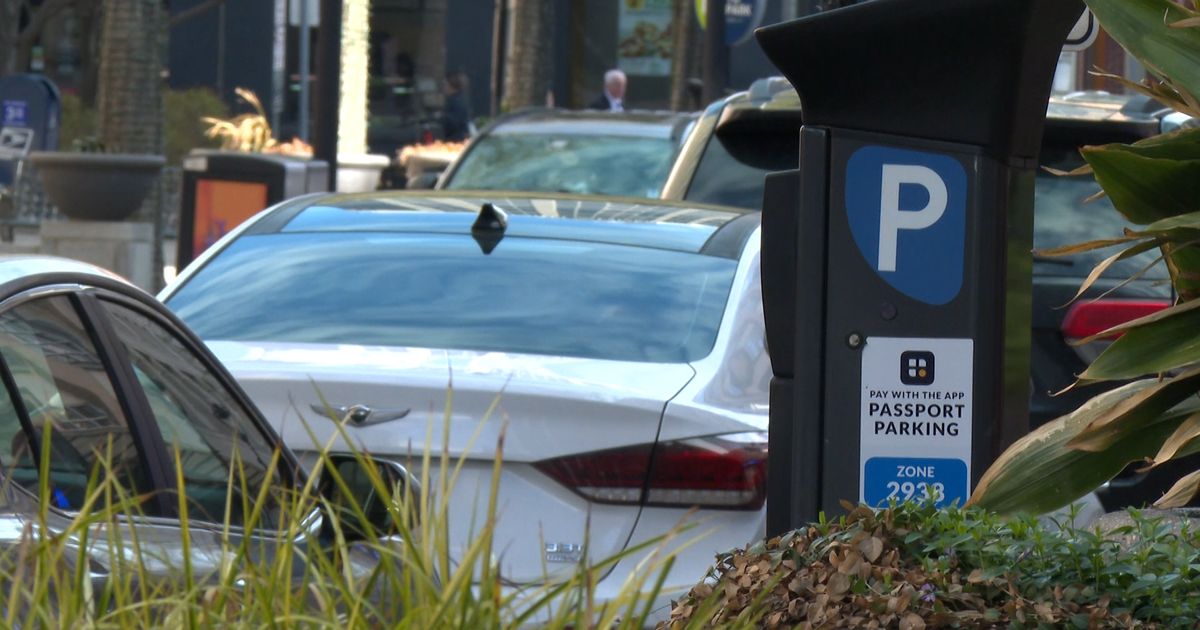
It’s one of many changes being discussed on the parking
front downtown. Monday, during its budget meeting, Council members heard about
the changes necessary to keep structures up to park.
“Due to our current pricing strategies, we’re unbalanced,”
Caitlyn Parker, City of Raleigh Parking Manager said. “You ideally want
on-street parking to be a higher rate and charge more to create behavior to
drive people to go to the garage for that long term parking.”
In a presentation to the City Council, Parker projected an
$8 million gap for maintaining city-owned parking garages. Solutions to filling
that gap include increasing on-street parking to $2.50 per hour, reducing free
parking in garages from 2 hours to 1 hour and increasing costs inside parking
garages.
The city is projecting some $16.1 million in revenue for
Fiscal Year 2027, while expenses are projected to be $24.1 million, creating
that $8 million gap.
It also includes eliminating the Small Business Parking
Program. Right now, small businesses with less than 49 employees can receive up
to 10 free parking passes for employees. Now, the suggestion by the City
includes a charge of $60 per month per pass.
“These are service worker employees, dishwashers, waiters,”
Bill King, President of the Downtown Raleigh Association said. “Even the owners
of most of these businesses in downtown on the storefront level are not very
wealthy. It’s been a great program.”
At Copperline, that would equate to roughly $300 a month
right now for its 5 employees, totaling $3,600 for the entire year. But if
FitzGerald wants to hire a new employee, that number goes up.
The opportunity for free parking has worked as a recruiting
tool for FitzGerald both financially and from a safety perspective because her
employees know they will have a safe and secure space to park their cars.
She doesn’t want to lose those tools, but she may have to if
parking goes from zero to $60.
“I don’t have that money,” FitzGerald said.
And she can’t pass that onto her employees.
“It’s essentially foregoing almost half of an entire shift
for them.”
But something needs to change. Parking garages are in need
of millions of dollars in improvements. Parker estimated that cost around $13.5
million.
She also highlighted issues facing the system right now. City
staff has not met with Council since it approved rate increases in 2018. Due to
the pandemic, the second phase of approved rate increases did not take effect.
Presently, on-street rates range from $1.25 to $1.50 per
hour. Phase 2 would have increased those rates to $1.50 to $2 per hour. The
off-street daily max is currently $14 and unreserved monthly rate is $125. The
phase 2 off-street daily max was expected to move up to $140 per month but an
off-street daily max was never addressed.
There are three options Parker presented to Council. All
three include a monthly increase to $135, charging on Saturdays and increasing on-street
parking to $2.50 per hour. All three options are projected to increase revenue
by $7.1 million to nearly $7.4 million.
However, Parker says their office is recommending option 1,
which cuts the free parking in half to one hour free.
All options presented are something Council Member Megan
Patton referred to as “nuclear” options.
“I don’t want to turn all the knobs up to hot and create
some problems for ourselves,” Patton said. “We do need to invest in these
parking decks. They need to be repaved, resurfaced, software that reads your
license plate need to be updated, sprinkler systems and lights need to be
changed.”
But she needs to see more before agreeing to any of the
options presented Monday.
“I do want to make sure any changes we make to this program
are not going to turn up as some other type of investment we have to make in
Downtown two years from now,” Patton said. “Because we’ve maybe turned the dial
too strongly in one direction.”
“I think it’s a really aggressive proposal,” Bill King,
Downtown Raleigh Alliance President said. “It changes virtually everything
about downtown parking. Honestly, I think it’s too much.”
It’s an issue that’s six years in the making, according to
King. After the pandemic, the number of workers traveling downtown in need of
monthly parking plummeted. As an estimate, he calculates for every 1,000 monthly
parkers lost, the city effectively lost $1.8 million in annual revenue.
City staff have not provided estimates on how many monthly
parkers have been lost since the pandemic.
“You can’t solve it, in my opinion, in one swing like that
without a really serious shock to our downtown economies,” King said.
A major sticking point for King is reducing the free parking
program. It’s a program King has led the charge on for boosting downtown
economy.
A survey by DRA shows 31 percent of people parking downtown
said the free parking program influenced their decision to come downtown. That
led to an estimated $3.8 million economic impact.
Something felt at places like Copperline Plant Company, as it
enters its 4th year as a brick and mortar. FitzGerald, pointing to
at least 2 parking decks within a block of her business and ample street
parking on a Tuesday afternoon, said the parking is there but it’s convincing
people it’s there that can be difficult.
“It’s a big difference between perception and reality,”
FitzGerald said. “Parking downtown is not difficult. I think especially over
the last year, the free two-hour parking has made it even better and even
easier to find parking.”
“Most of the decks in that program are in the Wilmington
Street corridor, which needs help,” King said. “Supporting that part of
downtown that was hit hardest in the pandemic, and taken the longest to
recover. It’s a great program and it has been impactful. I think the return on
investment is high in comparison to the relatively small cost in foregone
revenue.”
Those boosts, King says, would be lost to other competitive parts
of the city like North Hills where parking is free for the first 3 hours or
Iron Works where parking is free always.
“I think it will deter people from coming downtown, I think
it’s going to be really difficult for downtown businesses and residents,” King
said. “I think it will have a negative impact on our economy.”
Ultimately, Monday’s budget session were merely recommendations.
Recommendations Bill King does not approve of. Recommendations Megan Patton isn’t
entirely sold on.
“We told the manager some other options we’d like to see
evaluated,” Patton said. “I would expect to hear it back as some kind of agenda
item between now and June before we look on the budget.”
And recommendations that are rooted in an economic concern
for FitzGerald.
“We just hope that folks are receptive to maybe opening us
up to a bigger conversation,” FitzGerald said. “As opposed to just going
forward with this decision.”