The future is female, you’ll hear.
Well, that depends on where you’re sitting.
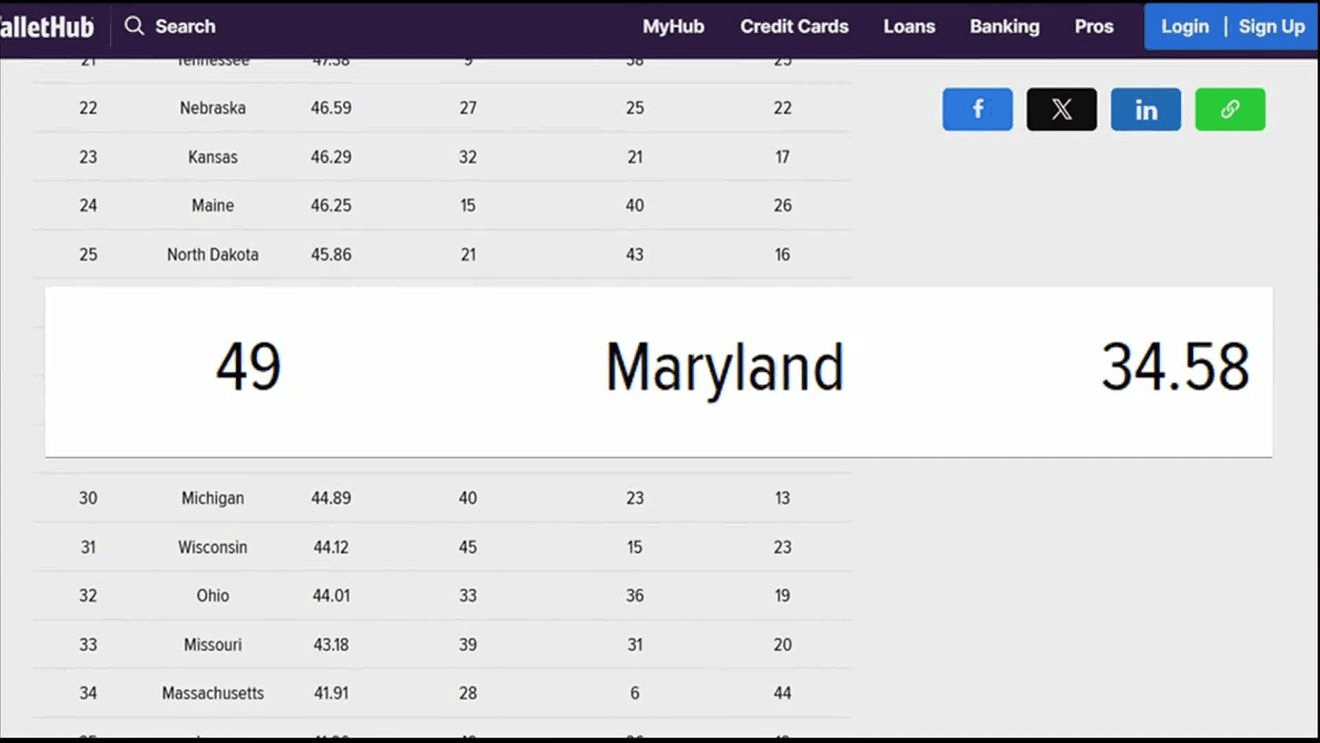
Percentage of female CEOs in the Fortune 500? The number is roughly 10% according to a Fortune survey in 2024. The percentage of female board members? A little better: 33% based on the same survey. The percentage of women who are full professors in business schools? The AACSB pegged that number at 25.7% in 2023 (not counting female deans, who made up nearly a third of the list).
FEMALE FACULTY CLUSTERED AT THE TOP OF THINKERS50
While women may be underrepresented among the rank-and-file faculty, they outnumber their male colleagues in the upper echelon of business thought leaders. That was the finding of Thinkers50, dubbed the “Oscars of Management Thinking.” Released on November 4, the 2025 iteration of Thinkers50 celebrates the business minds “with the potential to make a significant contribution to management theory and practice” and “create a better future for all.” This year’s list features 56 honorees, with six members being co-authors of business books and models. Among the list, you’ll find 29 women – a majority.
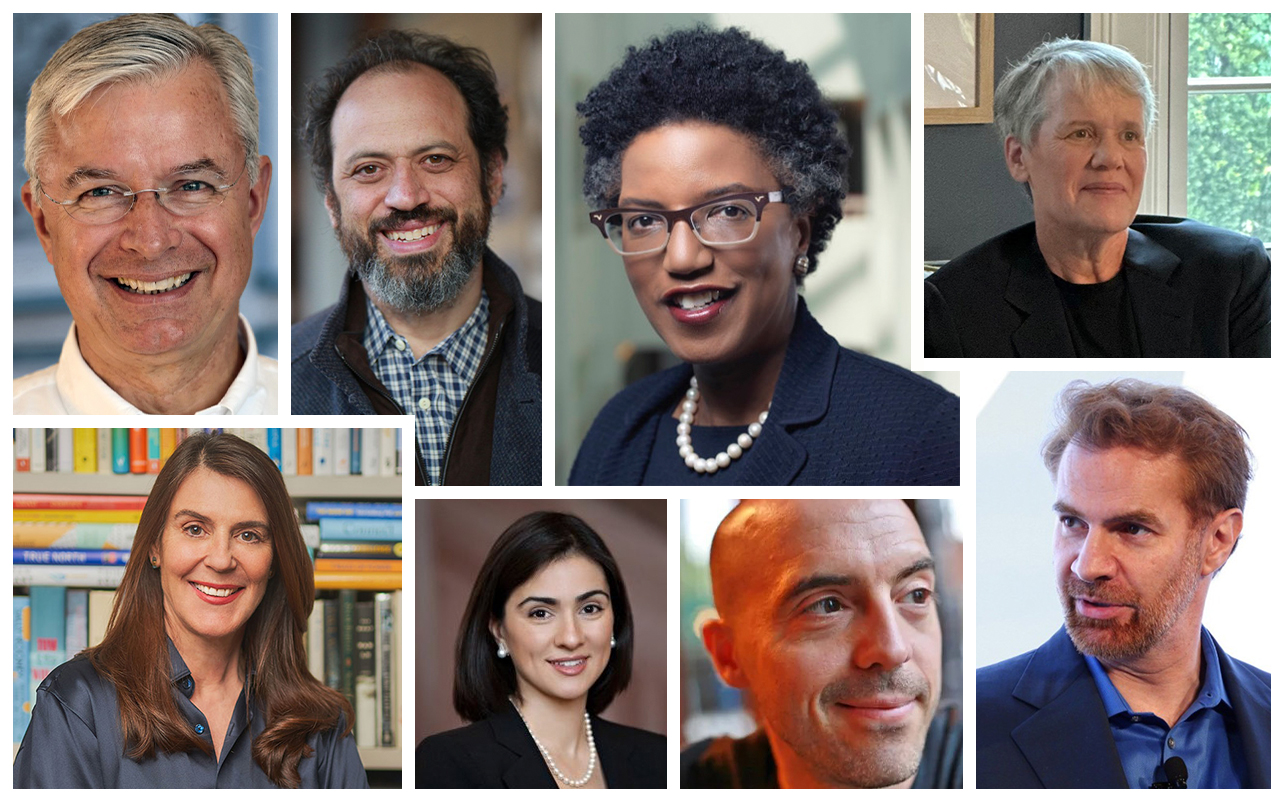
Here’s where the number gets more striking. The Thinkers50, which is produced every two years, now only ranks the Top 10 thinkers. Among those 12 influencers, you’ll find seven women. And all but one – Anne Morriss – teaches in a business school. Among women in total, there were 21 business faculty members.
This year’s top-ranked thinker was actually a male tandem who operate outside academia: Paul Polman and Andrew Winston. The duo, ranked 3rd last year, are the authors of Net Positive: How Courageous Companies Thrive by Giving More Than They Take. Published in 2021, the book brings the ‘do well by doing good’ philosophy to climate change and inequality. In the process, it provides a step-by-step template for organizations to boost value without sacrificing purpose, becoming a ‘Net Positive’ force that gives more than it takes. Bringing together a former Unilever CEO (Polman) and a sustainability sage (Winston), the book turns simplistic ideals into potent practices…and shows how to make a few extra bucks along the way.
“Our goal with Net Positive is to raise the level of ambition in business,” explains Polman in a 2022 interview with Forbes. “Given the scale of the accelerating crises we face, we need a movement to change the way business is done. The world is demanding that the private sector steps up. Expectations about the role of business in society have changed more in the last 2 years than the previous 20. It’s getting clearer that doing less harm, or incremental change, is not enough. The only way to stay relevant today is to become net positive.”
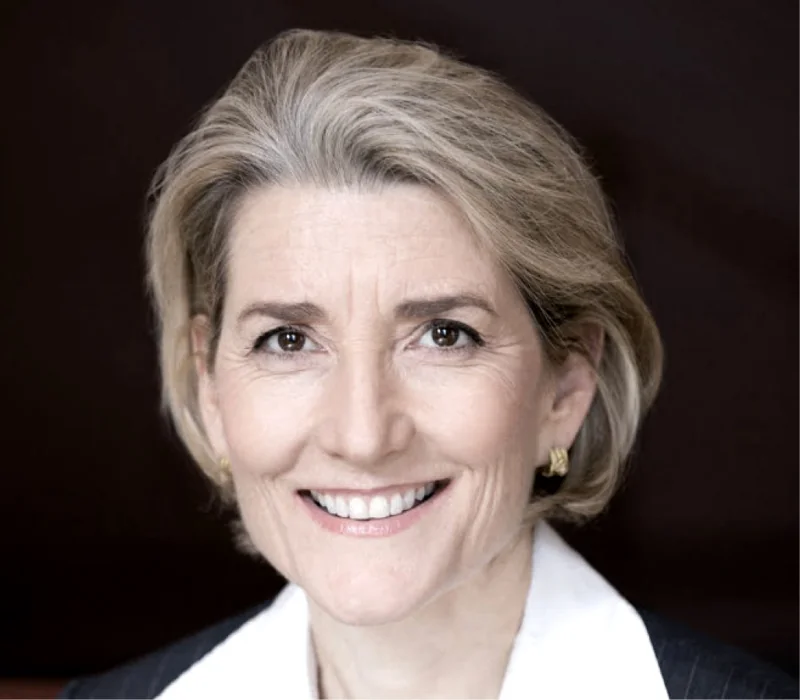
Harvard Business School’s Amy Edmundson
HARVARD BUSINESS SCHOOL DOMINATES EARLY ON
Amy Edmundson, a Harvard Business School professor who pioneered the concept of psychological safety, fell to #2 in the 2025 Thinkers50 ranking. This comes on the heels of Edmundson being ranked as the top business thinker in both 2023 and 2021. Rounding out the Top 3 is Amy Webb, CEO of the Future Today Strategy Group and an adjunct professor at New York University’s Stern School. Described as a ‘quantitative futurist’, Webb is best known for two of her books: The Genesis Machine and The Big Nine – along with her eagerly-anticipated Tech Trends Report. This year, she notes, the world has entered a post-precedent world where AI and biotech are continuously revising the rules, risks, capabilities, and opportunities.
“Living intelligence is going to rewrite the rules of our reality as we know it today, and we are not prepared,” Webb told an audience at SXSW in March “Living intelligence is a system that can sense and learn and adapt and evolve.”
Overall, Harvard Business School landed four faculty members on the Top 10 of the Thinkers50 list: Edmundson, Linda Hill (4th), Frances Frei (7th), and Ranjay Gulati (9th). Frei personifies the bridge between academic frameworks and real-world realities. Along with devoting over a quarter century to teaching at HBS, Frei has served as a senior VP at Uber and a board member at Robinhood and WeWork. Partnering with real-life spouse Anne Morriss, Frei has co-authored three watershed books: Uncommon Service, Unleashed, and Move Fast and Fix Things. Sometimes referred to as a ‘culture doctor’, Frei developed a “Triangle of Trust” with Morriss that has resonated across board rooms and cube farms alike.
“Here’s the basic formula: people tend to trust you when they think they are interacting with the real you (authenticity), when they have faith in your judgment and competence (logic), and when they believe that you care about them (empathy).”
What does Frei see as the true test of leadership that stems from this trust? She broke it down into two components in a 2020 interview with Dr. Diane Hamilton.
“Leadership is about making other people better as a result of our presence and having it last into our absence…I would say, when you’re leading, turn the mirror into a window and constantly be looking at how you can set other people up for success. It’s okay if they have to be reliant on you in the beginning, but the true testament is, can they be even more successful in your absence?”

INSEAD Professors W. Chan Kim and Renée Mauborgne
VIABILITY & VISIBILITY ARE THE MAIN CRITERIA FOR SELECTION
Not surprisingly, the Wharton School’s Adam Grant appeared on the Thinkers50 at #8. By the same token, Columbia Business School placed two faculty members in the Top 10: Rita Gunther McGrath and Sheena Iyengar. INSEAD’s W. Chan Kim and Renée Mauborgne, the architects of the Blue Ocean Strategy, slipped out of the Top 10 in 2025, but remain among the Thinkers 50. This year, the Top 10 also lost Yves Pigneur (University of Lausanne) and Tsedal Neeley (Harvard Business School), both of whom remain in the Thinkers50.
Taken together, 43 of the 56 members of the 2025 Thinkers50 have some affiliation with business school teaching, either as a full-time or adjunct professor. That doesn’t include several non-faculty members with MBA degrees: Seth Godin (Stanford GSB), Keith Ferrazzi (Harvard Business School), Erica Dhawan (MIT Sloan), and Anne Morriss (Harvard Business School). Similarly, Heidi Gardner and Antonio Nieto-Rodriguez have previously taught at Harvard Business School and Hult respectively.
In terms of volume, Harvard Business School placed six full-time faculty members on the Thinkers50, more than any other school. The Wharton School and INSEAD each boast four members, while Columbia Business School and MIT Sloan each count three members. Dartmouth College’s Tuck School, IMD Business School, and London Business School added two members each to the list. The Stanford Graduate School of Business, consistently ranked among the world’s elite business schools, had just one faculty member make the Thinkers50 list: Erik Brynjolfsson.
This year’s list includes several new entrants, including Angela Duckworth (Wharton), Ethan Mollick (Wharton), Wendy Smith (University of Delaware’s Lerner College), and Marianne Lewis (University of Cincinnati’s Lindner College). Conversely, several faculty members tumbled out of Thinkers50 in 2025. Among them, you’ll find Rachel Botsman (University of Oxford’s Saïd Business School), Lynda Gratton (London Business School), and Hal Gregersen (MIT Sloan). A mainstay on the list since 2011, Gratton received the Thinkers50 Lifetime Achievement Award in 2025 after being inducted into its Hall of Fame last year.
The Thinkers50 was started in 2001 by Des Dearlove and Stuart Crainer, business professors at IE Business School and Oxford University who’d collaborated on The Financial Times Handbook of Management. Published every two years, Thinkers50 voting opens in May to the general public. To evaluate nominations, judges look at two dimensions: Viability and Visibility. The former is divided into the four R’s: Relevance, Rigor, Reach, and Resilience. Visibility focuses on impact, incorporating areas like academic citations, media coverage, speaking engagements, and practical applications. Candidates are shortlisted from August through October, with announcements made at the Thinkers50 Gala in London on November 3-4. Along with the Thinkers50 listing, the gala also honors winners of several awards in areas ranging from innovation to leadership.
Page 2: Top 10 Business Thinkers of 2025
Page 3: Listing of Business School Professors Ranked Outside the Top 10
Page 4: Other Award Winners and Top 5 Performers Across the Years
© Copyright 2025 Poets & Quants. All rights reserved. This article may not be republished, rewritten or otherwise distributed without written permission. To reprint or license this article or any content from Poets & Quants, please submit your request HERE.