START SELLING WITH BigBCC TODAY

Start your free trial with BigBCC today.

BLOG |

Photo Essay: Wahiawā Facility Helps Entrepreneurs Turn Food Into Business

Jina Wye, founder and CEO of Okonokai and her assistant Grace Gregg seal her limu cracker bags at the Wahiawā Value-Added Product Development Center Wednesday, Sept. 17, 2025, in Wahiawā. The center makes producing her “Made in Hawaiʻi” crackers easier with facilities and amenities usually owned by mass-production companies. (Kevin Fujii/Civil Beat/2025)

Table of Contents

The year-and-a-half old product-development center in Central Oʻahu helps grow Jina Wye’s limu cracker company.

The year-and-a-half old product-development center in Central Oʻahu helps grow Jina Wye’s limu cracker company.

Jina Wye, founder and CEO of Okonokai, removes Big Island limu from an oven at the Wahiawā Value-Added Product Development Center last month. The center’s product kitchen helps make her Made in Hawaiʻi crackers easier with equipment usually only found at mass-production companies. (Kevin Fujii/Civil Beat/2025)

Established in April 2024, the Wahiawā Value-Added Product Development Center is a 33,000-square-foot food manufacturing and education facility operated by Leeward Community College in partnership with the state, says Chris Bailey, the center’s manager.

The center boasts four commercial kitchens with state-of-the-art equipment and a product-development lab. It’s been instrumental in furthering local businesses such as Okonokai, founded by Jina Wye.

“I started with recipe development at home and then immediately started working from a commercial kitchen in town before I moved to WVAPDC in March of this year,” Wye said. “I know a lot of local makers still produce at home under Hawaiʻi’s Cottage Industry provision. From a productivity standpoint, it’s just straight-up inefficient for me.”
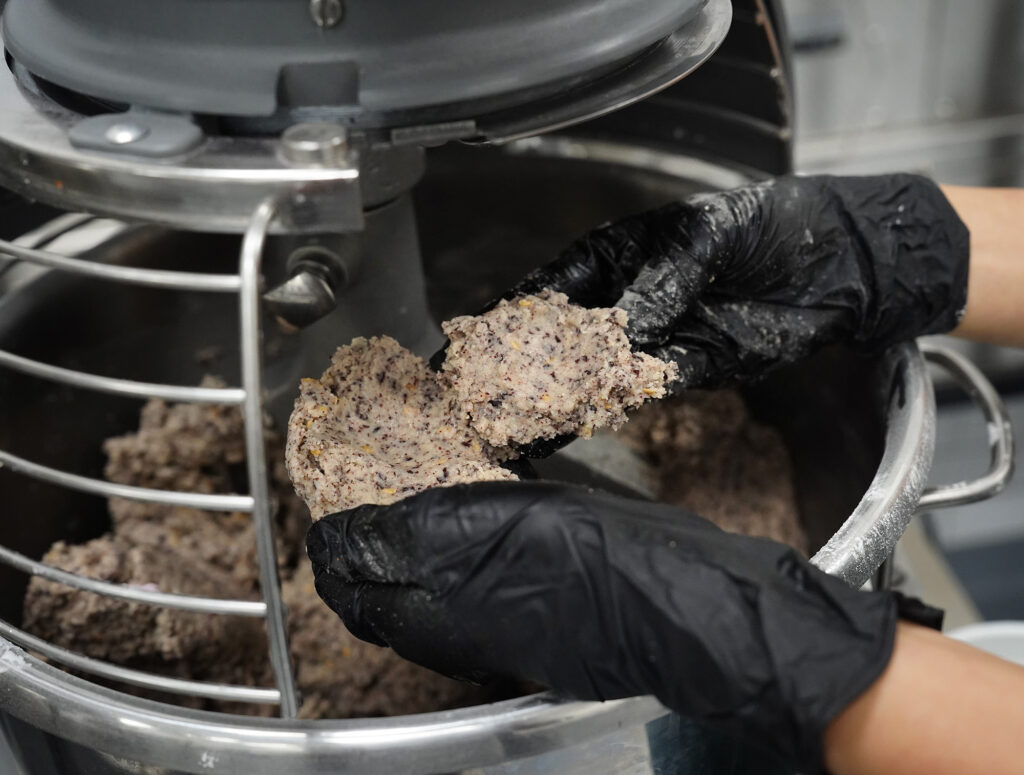
Jina Wye checks her limu-cracker batter at the Wahiawā Value-Added Product Development Center Wednesday, Sept. 17, 2025, in Wahiawā. The center makes producing her “Made in Hawaiʻi” crackers easier with facilities and amenities usually owned by mass-production companies. (Kevin Fujii/Civil Beat/2025)
Wye checks her limu-cracker batter in an industrial-size mixer. She added a little more water. (Kevin Fujii/Civil Beat/2025)

“I first heard about the WVAPDC when I read about the ʻĀina to Mākeke incubator program offered through Leeward Community College,” Wye said.

“The Hawaiʻi Ag & Culinary Alliance was offering tuition scholarships for entrepreneurs interested in launching value-added goods that utilize local agricultural products,” she said. “I was just in the beginning stages of exploring what I could create with local limu and I was particularly excited about the incubator program when I learned about the new state-of-the-art kitchen spaces that we’d have access to. It’s one of the main reasons I applied to the program.”

Bailey said the the center supported 60 businesses through the ʻĀina to Mākeke food business program, administered by Leeward Community College’s Office of Workforce Development in partnership with the Hawaiʻi Ag & Culinary Alliance. Since then, he said many in the program have expanded their products to major retailers, including 7-Eleven, ChefZone, ABC Stores, Down to Earth and Foodland.

Foodland carries Wye’s limu crackers. The local military commissaries will begin to sell Okonokai soon.
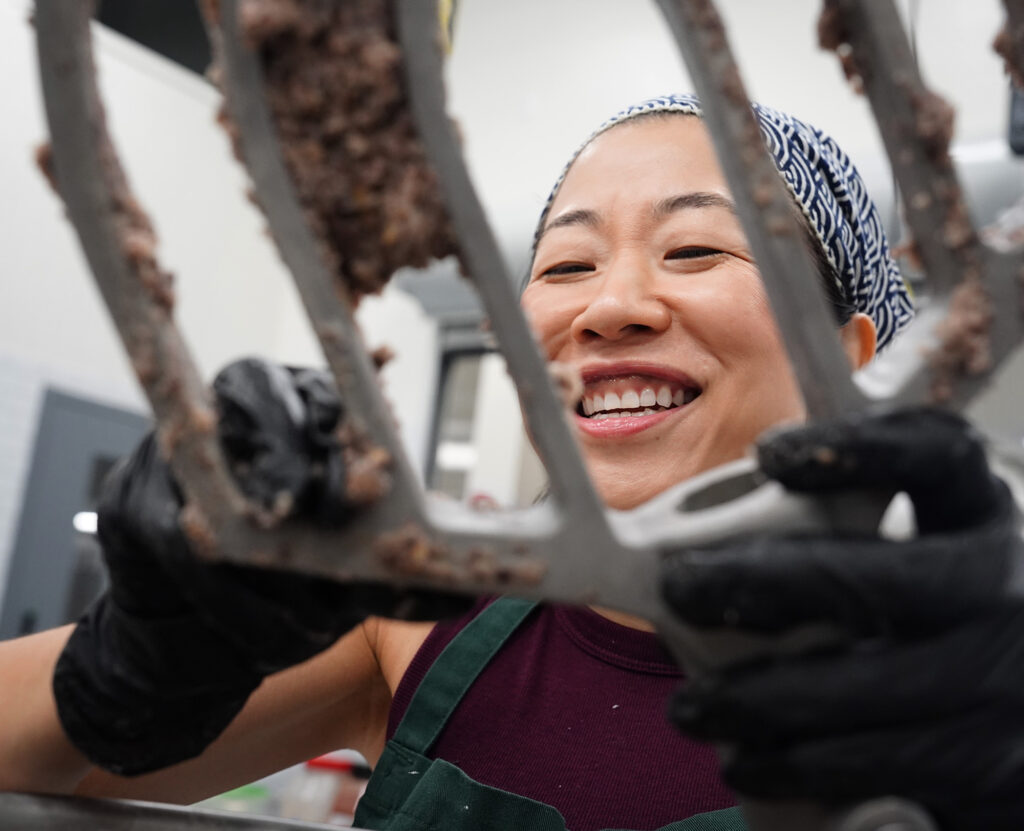
Jina Wye scrapes off limu-cracker batter from an industrial mixer at the Wahiawā Value-Added Product Development Center Wednesday, Sept. 17, 2025, in Wahiawā. The center makes producing her “Made in Hawaiʻi” crackers easier with facilities and amenities usually owned by mass-production companies. (Kevin Fujii/Civil Beat/2025)
Wye scrapes off limu-cracker batter from an industrial mixer’s flat beater. She’s using the smaller of the two mixers. The prospect of using the larger mixer excites her. (Kevin Fujii/Civil Beat/2025)

“I’m proud of the fact that all our limu snacks are handmade from scratch, which is ultra time-consuming,” Wye said. “The access to tools, relevant equipment and the staff’s knowledge has helped me to increase my productivity and helped me improve the quality of my snacks.”

Wye went on to say that she slightly changed her original recipe after suggestions from the center’s product-development team. She said it improved the texture and longevity of her limu crackers since they weren’t being consumed immediately out of the oven.
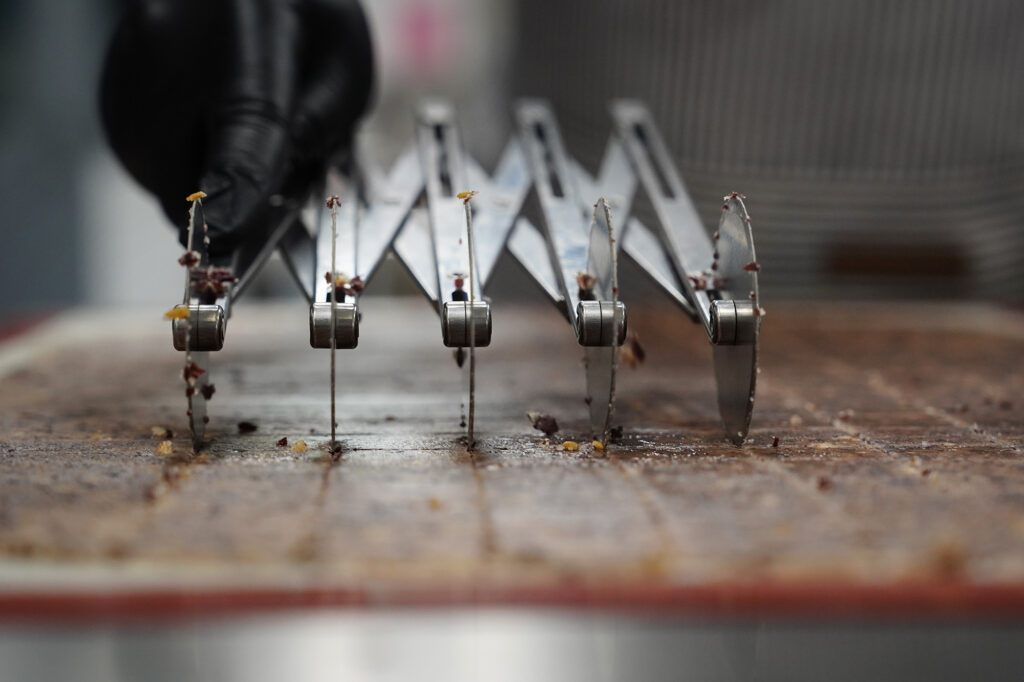
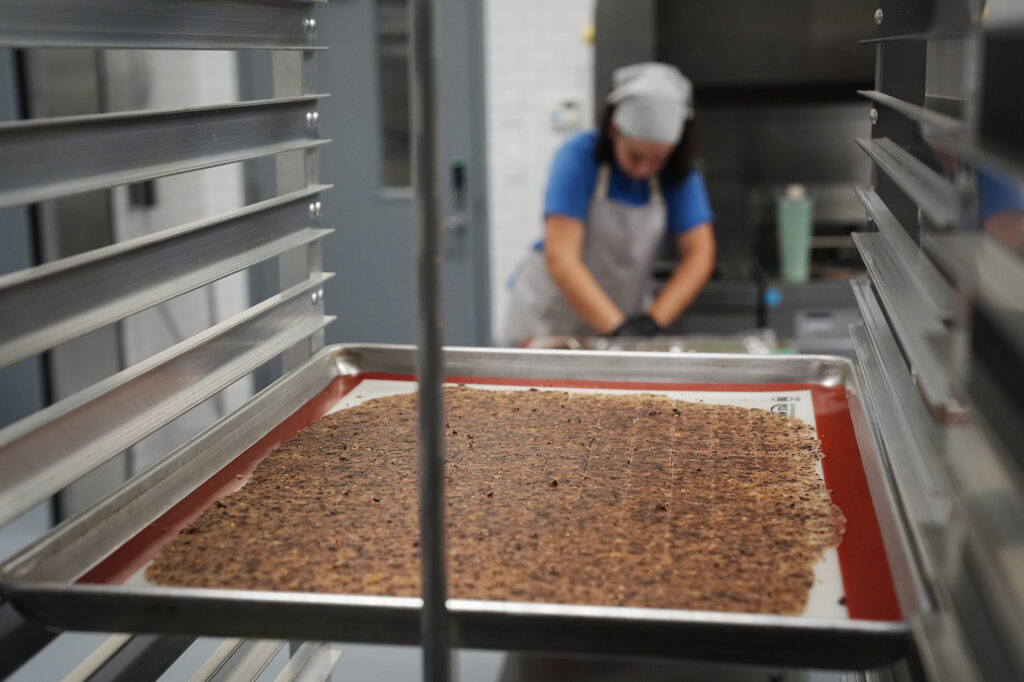
Jina Wye’s assistant Grace Gregg cuts limu-cracker batter at the Wahiawā Value-Added Product Development Center Wednesday, Sept. 17, 2025, in Wahiawā. The center makes producing her “Made in Hawaiʻi” crackers easier with facilities and amenities usually owned by mass-production companies. (Kevin Fujii/Civil Beat/2025)
Wye’s assistant Grace Gregg cuts limu-cracker batter into perfect squares last month. (Kevin Fujii/Civil Beat/2025)
Jina Wye’s assistant Grace Gregg cuts limu-cracker batter at the Wahiawā Value-Added Product Development Center Wednesday, Sept. 17, 2025, in Wahiawā. The center makes producing her “Made in Hawaiʻi” crackers easier with facilities and amenities usually owned by mass-production companies. (Kevin Fujii/Civil Beat/2025)
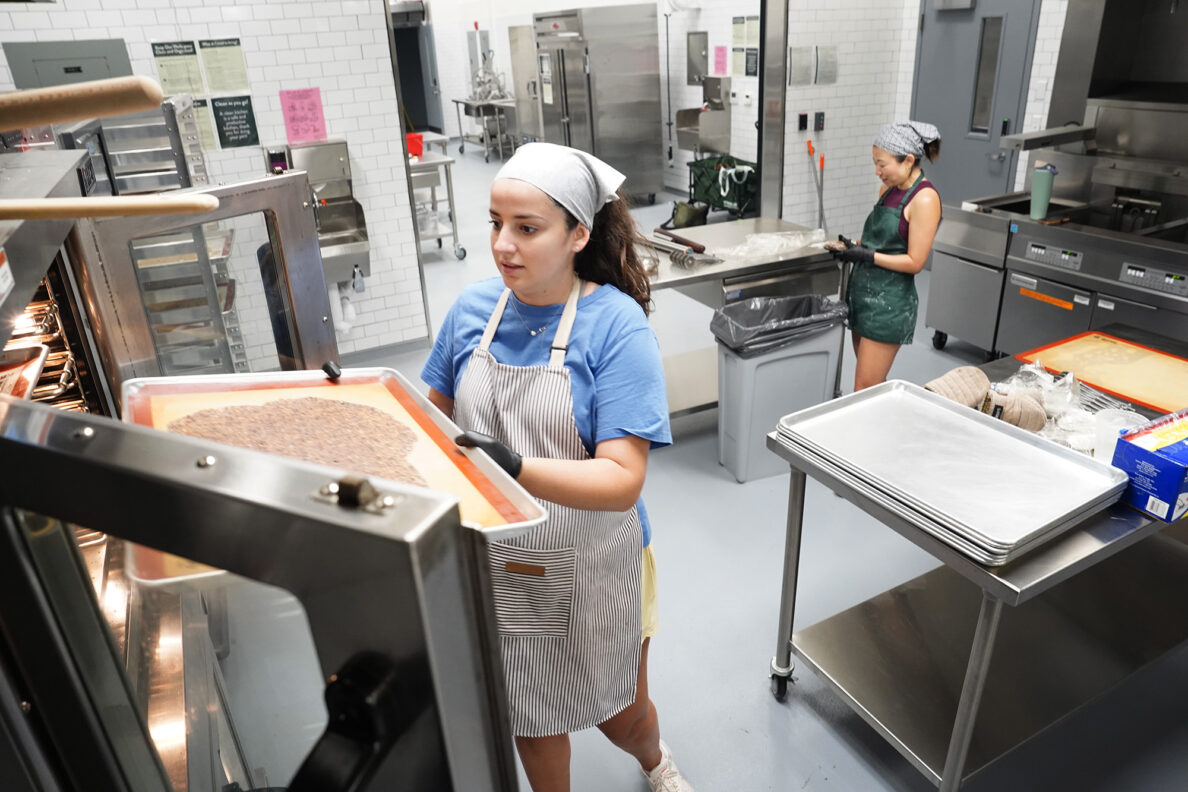
Limu-cracker batter waits for a couple more trays to join before Gregg pops them into the oven. (Kevin Fujii/Civil Beat/2025)
Grace Gregg places limu-cracker batter in the oven as Jina Wye unwraps more batter to roll out at the Wahiawā Value-Added Product Development Center Wednesday, Sept. 17, 2025, in Wahiawā. The center makes producing her “Made in Hawaiʻi” crackers easier with facilities and amenities usually owned by mass-production companies. (Kevin Fujii/Civil Beat/2025)
Gregg places limu-cracker batter in the oven while Wye unwraps more batter to roll out in the dry product kitchen. (Kevin Fujii/Civil Beat/2025)
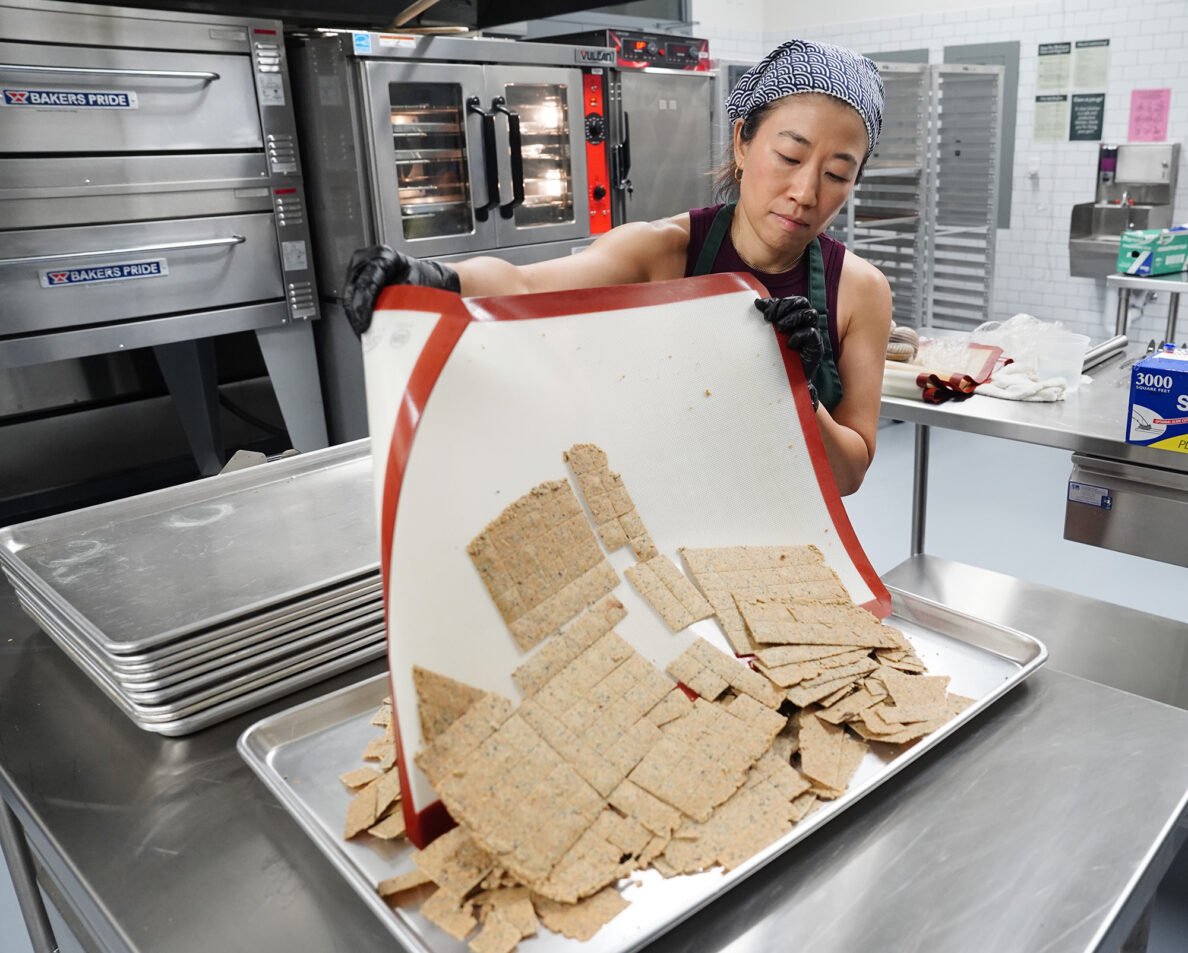
Jina Wye slides her limu crackers off a baking mat at the Wahiawā Value-Added Product Development Center Wednesday, Sept. 17, 2025, in Wahiawā. The center makes producing her “Made in Hawaiʻi” crackers easier with facilities and amenities usually owned by mass-production companies. (Kevin Fujii/Civil Beat/2025)
Wye slides her limu crackers off a baking mat to cool before bagging. (Kevin Fujii/Civil Beat/2025)
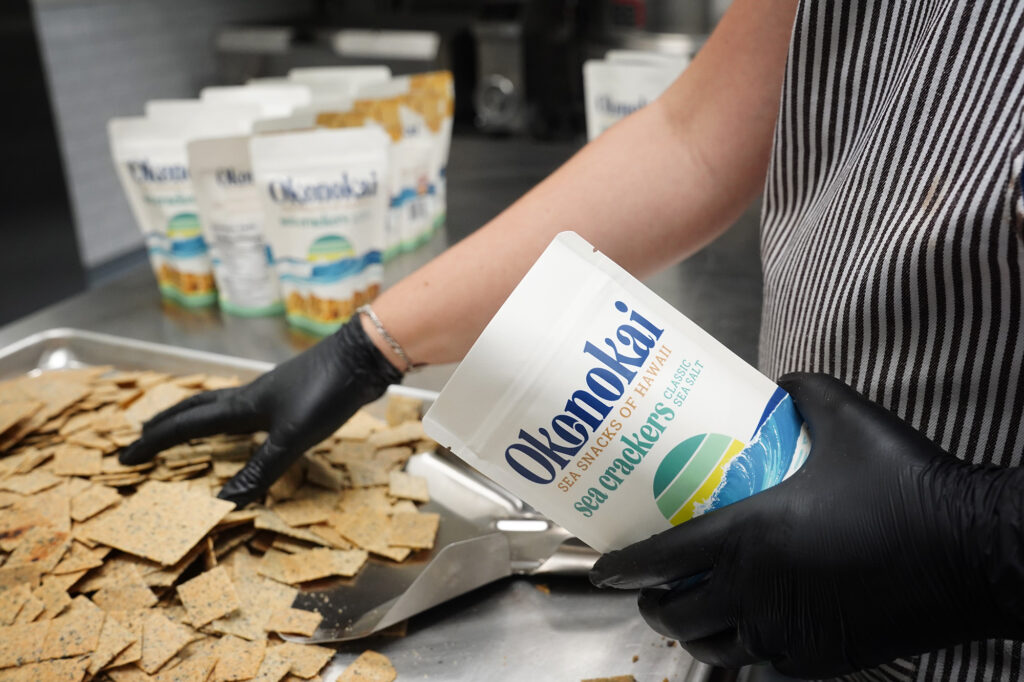
Jina Wye’s assistant Grace Gregg fills a limu crackers into its packaging at the Wahiawā Value-Added Product Development Center Wednesday, Sept. 17, 2025, in Wahiawā. The center makes producing her “Made in Hawaiʻi” crackers easier with facilities and amenities usually owned by mass-production companies. (Kevin Fujii/Civil Beat/2025)
Gregg fills limu crackers into Okonokai packaging. (Kevin Fujii/Civil Beat/2025)
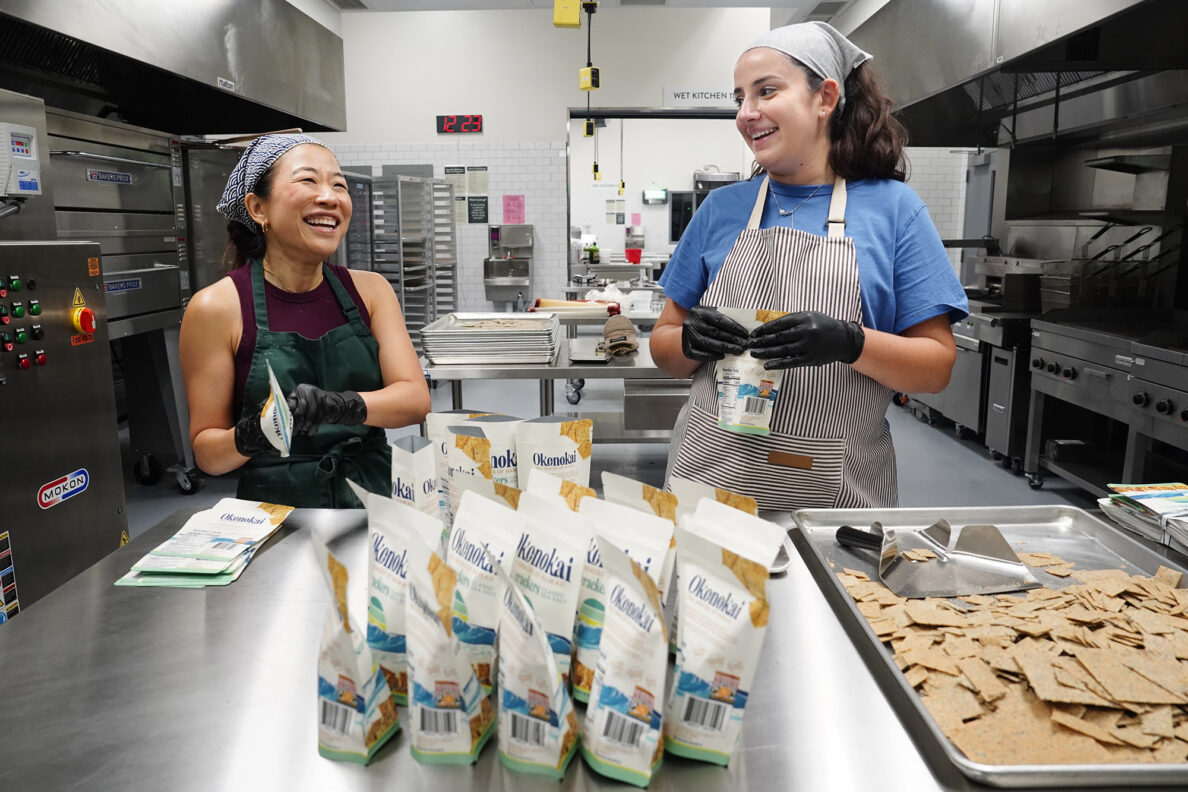
Jina Wye, from left, and her assistant Grace Gregg share a light moment while filling bags with limu crackers at the Wahiawā Value-Added Product Development Center Wednesday, Sept. 17, 2025, in Wahiawā. The center makes producing her “Made in Hawaiʻi” crackers easier with facilities and amenities usually owned by mass-production companies. (Kevin Fujii/Civil Beat/2025)
Wye and Gregg share a light moment while filling bags with limu crackers. (Kevin Fujii/Civil Beat/2025)
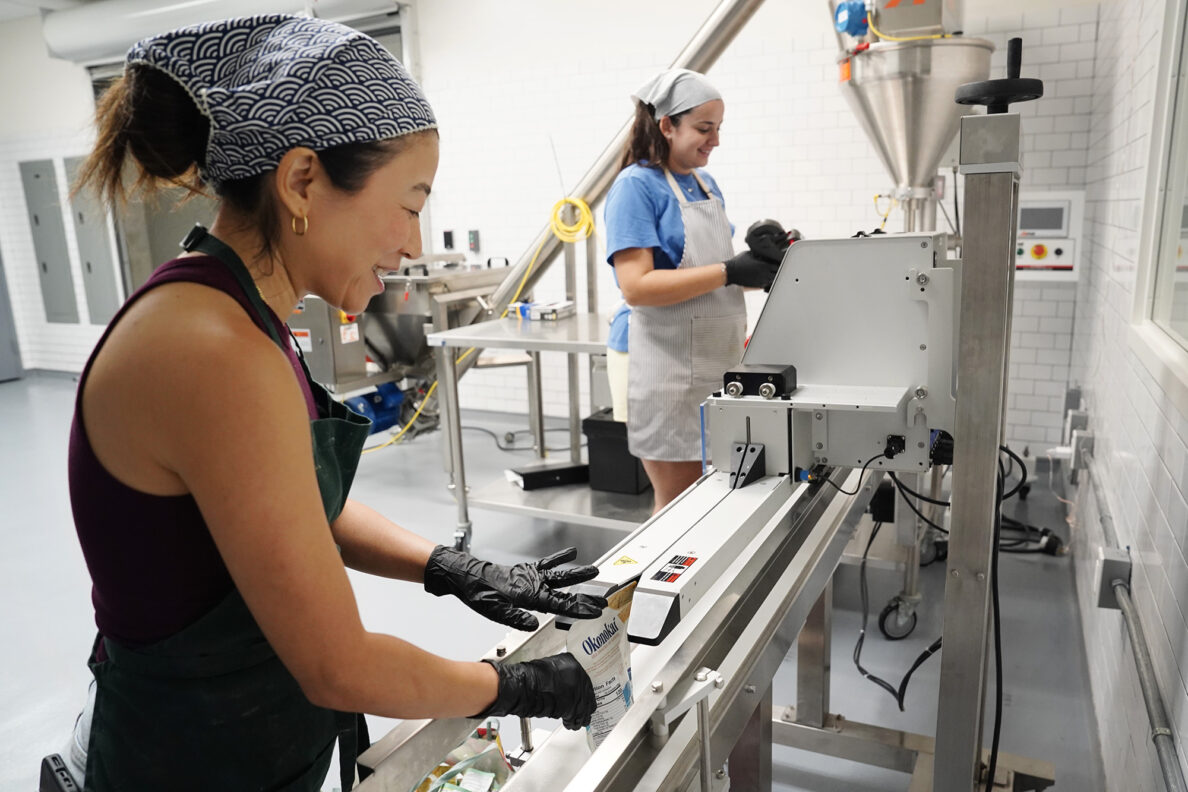
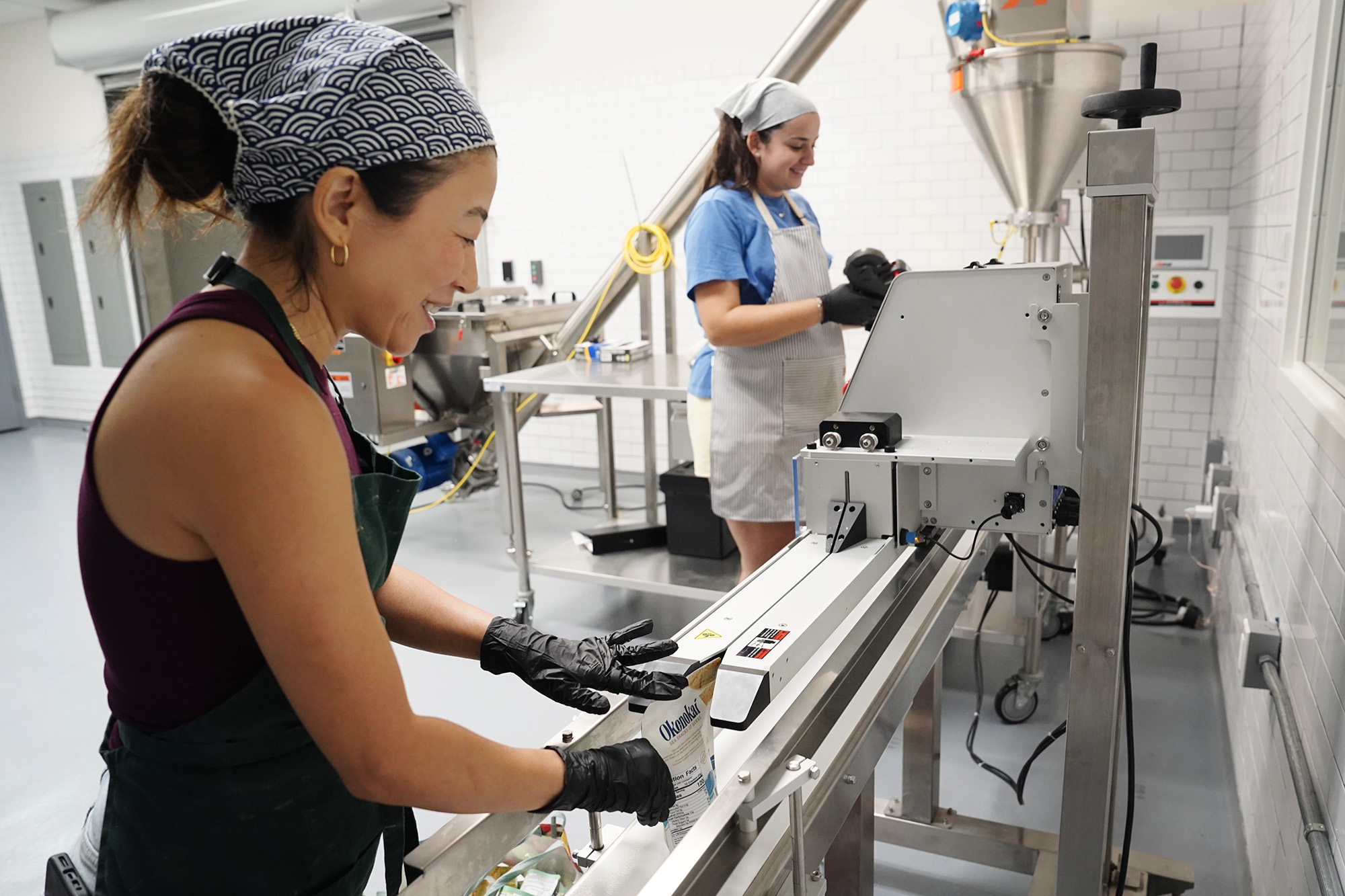
Jina Wye, founder and CEO of Okonokai and her assistant Grace Gregg seal her limu cracker bags at the Wahiawā Value-Added Product Development Center Wednesday, Sept. 17, 2025, in Wahiawā. The center makes producing her “Made in Hawaiʻi” crackers easier with facilities and amenities usually owned by mass-production companies. (Kevin Fujii/Civil Beat/2025)
Wye and Gregg close her freshly made limu crackers in bags with an industrial heat sealer. (Kevin Fujii/Civil Beat/2025)

“The center has specialized tools like a band sealer which heat-seals my snack pouches,” Wye said. “I love this piece of equipment. I’m happy to share that I can now produce five times the amount of limu snacks per shift than I was doing just one year ago – mind-blowing.”
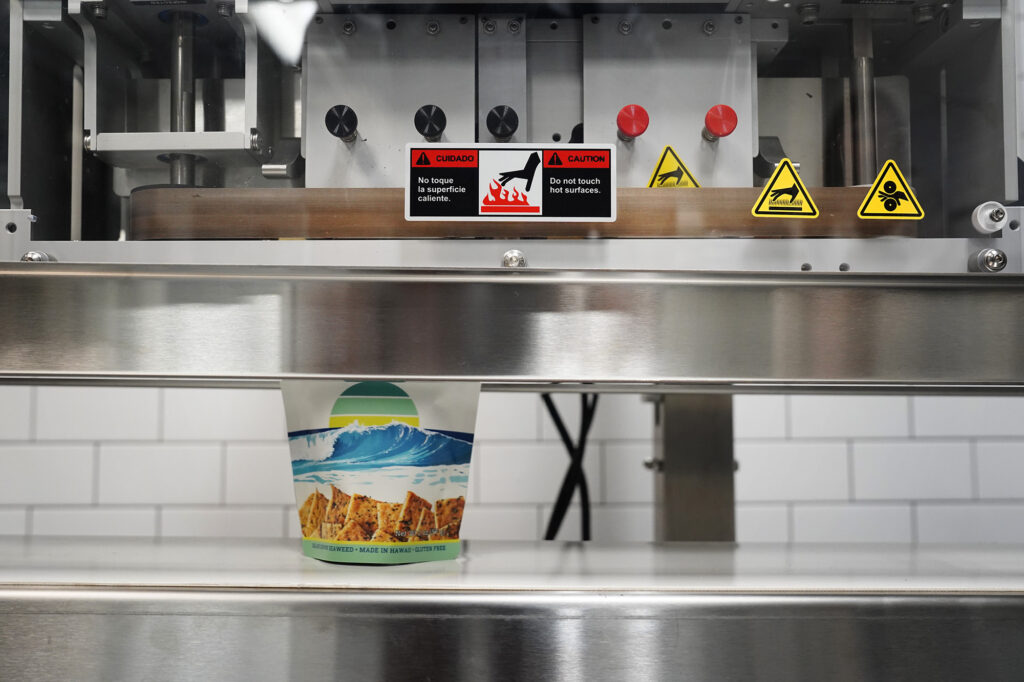
Jina Wye, founder and CEO of Okonokai, says this machine saves her hours of time during her production day to seal her limu cracker bags at the Wahiawā Value-Added Product Development Center Wednesday, Sept. 17, 2025, in Wahiawā. The center makes producing her “Made in Hawaiʻi” crackers easier with facilities and amenities usually owned by mass-production companies. (Kevin Fujii/Civil Beat/2025)
Wye says this band sealer saves her hours of time on her production days. (Kevin Fujii/Civil Beat/2025)
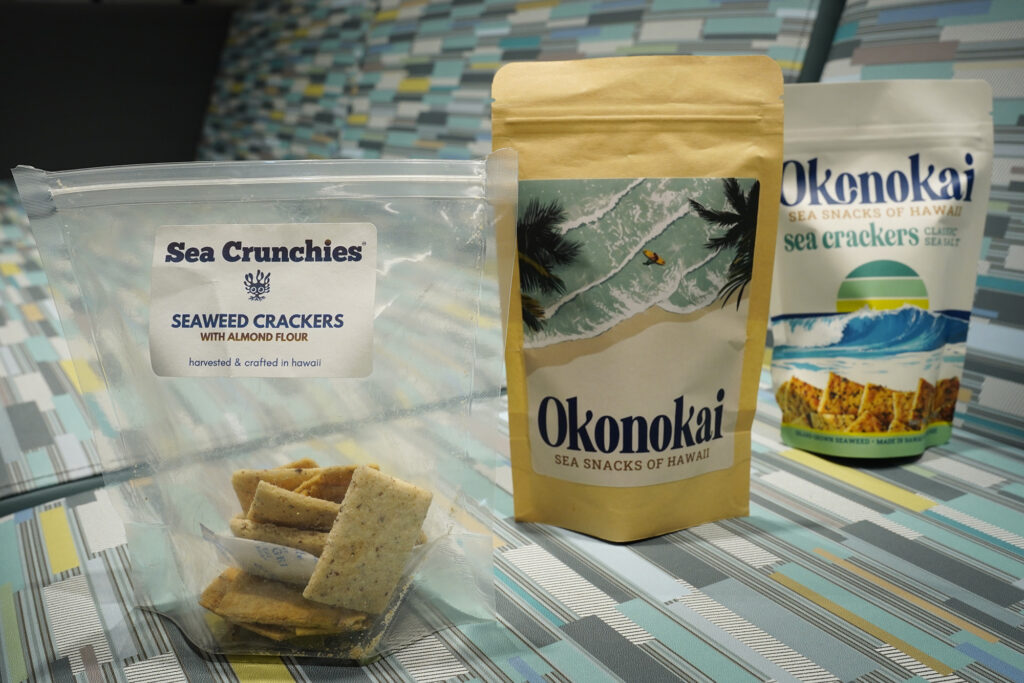
The three generations of Jina Wye’s Okonokai limu crackers are on display at the Wahiawā Value-Added Product Development Center Wednesday, Sept. 17, 2025, in Wahiawā. The center makes producing her “Made in Hawaiʻi” crackers easier with facilities and amenities usually owned by mass-production companies. (Kevin Fujii/Civil Beat/2025)
Three iterations of Wye’s Okonokai limu cracker bags are on display at the Wahiawā Value-Added Product Development Center. (Kevin Fujii/Civil Beat/2025)

“I also love the location,” Wye said. “There are few commercial kitchen options for central and western Oʻahu. So this fills a much needed void for our communities. Its proximity greatly improves my quality of life and gives me more time to focus on the important things, such as growing my business.”

“The WVAPDC wants to help young food businesses scale up with the goal to eventually move on to larger production facilities,” Wye said. “So I think I’ve got about another year here before I’ll either find a manufacturing partner or build out my own kitchen.”

“The WVAPDC supports the creation of an incredibly wide range of value-added food and beverage products,” Bailey said. “Producers here make everything from baked goods, fresh salsa, sauces, pickled products, jams and jellies, to more specialty items like ahi jerky, charcuterie with venison and wild boar, poi churros, flavored nut butters, seasoning salts, craft cocktail mixers and even high-quality dog food.”

“The facility provides the resources for not only producing and cooking but also packaging, labeling and preparing products for distribution,” Bailey said. “This means entrepreneurs can take their products from concept to market-ready all under one roof, while meeting food safety and quality standards.”
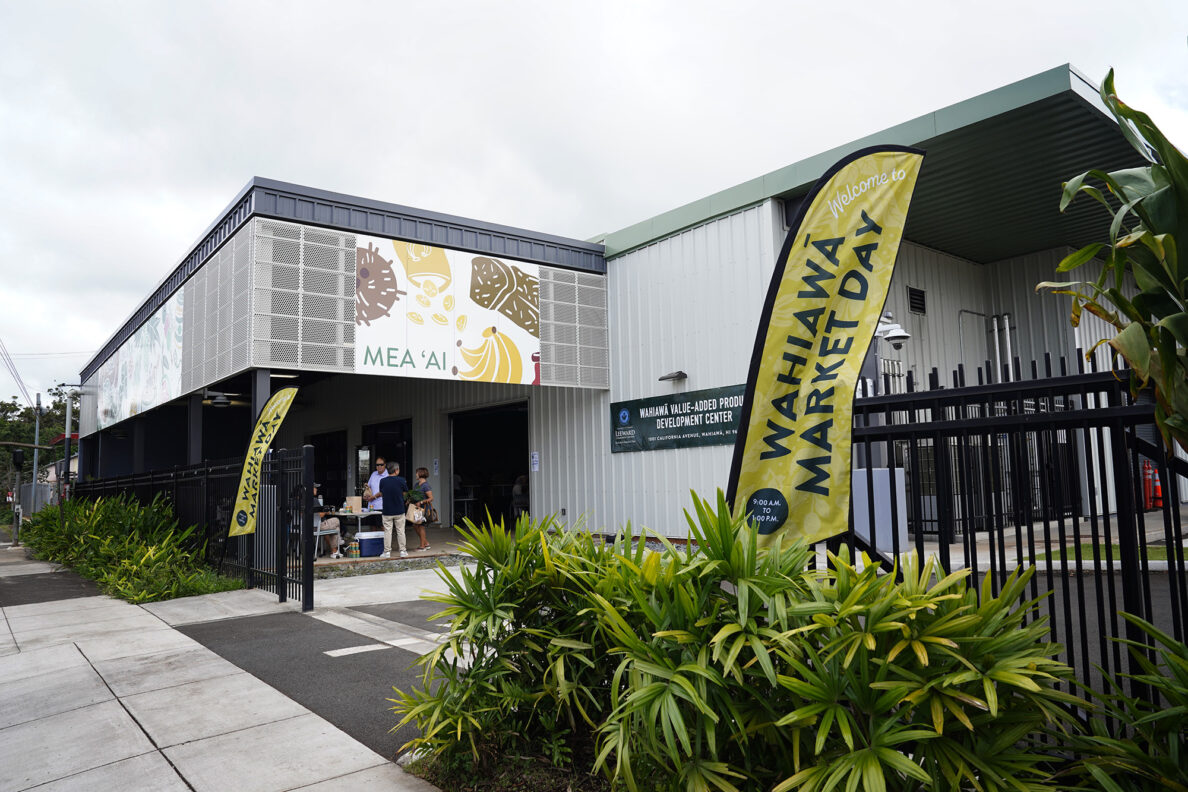
The Wahiawā Value-Added Product Development Center (WVAPDC) opens its doors for the Wahiawā Market Day Saturday, Sept. 20, 2025, in Wahiawā. Wahiawā Market Day is every third Saturday of each month, 9:00 a.m. to 1:00 p.m. at the WVAPDC. It’s located at 1001 California Avenue and  introduces patrons to local farmers, food producers and artisan products grown and produced with Hawaiʻi’s local flavors and culture. (Kevin Fujii/Civil Beat/2025)
The WVAPDC posts flags for their Wahiawā Market Day at 1001 California Avenue to introduce patrons to local farmers, food producers and artisans’ products grown and produced with Hawaiʻi’s local flavors and culture. (Kevin Fujii/Civil Beat/2025)

“Hawai‘i Grown” is funded in part by grants from the Stupski Foundation, Ulupono Fund at the Hawai‘i Community Foundation and the Frost Family Foundation.”Hawaiʻi’s Changing Economy” is supported by a grant from the Hawaiʻi Community Foundation as part of its work to build equity for all through the CHANGE Framework.
Source link

Share Article:

The newsletter for entrepreneurs

Join millions of self-starters in getting business resources, tips, and inspiring stories in your inbox.

Unsubscribe anytime. By entering your email, you agree to receive
emails from BigBCC.

The newsletter for entrepreneurs

Join millions of self-starters in getting business resources, tips, and inspiring stories in your inbox.

Unsubscribe anytime. By entering your email, you agree to receive marketing emails from BigBCC. By proceeding, you agree to the Terms and Conditions and Privacy Policy.

SELL ANYWHERE
WITH BigBCC

Learn on the go. Try BigBCC for free, and explore all the tools you need to
start, run, and grow your business.