January 12, 2026
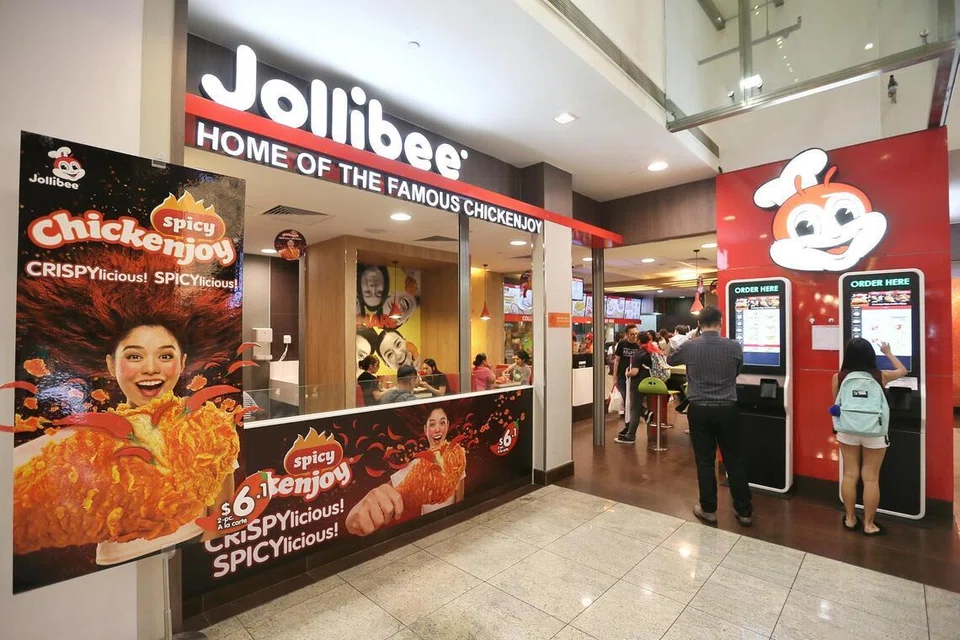
MANILA – Jollibee, the Philippine fast-food giant famous for its crispy fried chicken, has set its sights on conquering more overseas markets.
On Jan 5, Jollibee Foods Corporation announced plans to spin off and separately list its international business in the US, an ambitious move that could potentially open access to deep pools of capital to fund its global expansion.
“A US listing is a game changer for Jollibee,” said Filipino business strategist Jonathan Ravelas. “It gives the brand global visibility and credibility, which matters in competitive markets like the US.”
Mr Ravelas, who now runs his own advisory firm after previously serving as chief market strategist at BDO Unibank, told The Straits Times that the plan signals Jollibee’s intention to position itself as a global growth player, rather than just a domestic food company with overseas sidelines.
Another analyst, Mr Juan Paolo Colet, managing director of Manila-based Chinabank Capital Corporation, told local newspaper Manila Bulletin that the planned US listing is a “novel” strategy for Jollibee, one that could potentially benefit existing shareholders.
Jollibee already has a significant global footprint, including operations in Singapore , where it runs more than 20 outlets alongside other brands such as The Coffee Bean & Tea Leaf and Smashburger.
The group operates hundreds of stores across Asia, North America and the Middle East, making overseas markets an increasingly important part of its business.
Jollibee plans to separate its overseas operations into a new entity that it aims to list on a US exchange by late 2027, while keeping its local operations listed on the Philippine Stock Exchange.
Existing shareholders will receive shares in the international unit, allowing them to hold or trade the two businesses separately.
Jollibee was started in 1975 as an ice cream parlour by Chinese-Filipino businessman Tony Tan Caktiong in Metro Manila. The small family-run store eventually grew into the country’s largest fast-food company, with customers returning for its signature “Chickenjoy”, sweet Filipino-style spaghetti and peach mango pie.
Its planned Wall Street debut would mark a new phase for a business that spent decades building its base at home before taking its ambitions abroad.
Mr Tan Caktiong is also co-chairman of Hotel101 Global Holdings, one of the few Philippine-owned companies listed in the US. Hotel101 Global made its debut on the Nasdaq stock exchange in June 2025.
Major telecommunications provider PLDT (formerly Philippine Long Distance Telephone) also has a presence in the US, where its American depositary receipts trade on the New York Stock Exchange. PLDT has its primary listing on the Philippine Stock Exchange.
Analysts said Jollibee’s domestic business remains highly profitable and dominant, with over 1,200 branches across the archipelago generating steady earnings. In contrast, its overseas portfolio is more volatile and requires heavy investment to scale.
By separating the two, Jollibee can offer investors a clearer choice: a stable, cash-generating Philippine food service company or a higher-risk, higher-growth international expansion play.
“It doesn’t just lower funding costs. It opens access to deep pools of capital and institutional investors who wouldn’t normally look at a Philippine-only stock,” Mr Ravelas said. “That means more firepower for acquisitions and store roll-outs without over-relying on debt.”
Investors in Manila appeared to welcome the announcement. Jollibee’s shares jumped by nearly 9 per cent on Jan 7 after the plan was disclosed, reflecting optimism that the restructuring could finally untangle the company’s strong domestic performance from the drag of its overseas losses.
Even though Jollibee’s international operations accounted for about 43 per cent of group sales in the first nine months of 2025, they posted a net loss of around 250 million pesos (S$5.4 million) over the same period – a reminder that global scale has yet to translate into consistent profits.
Mr Nicky Franco, vice-president and head of research at Philippine stock brokerage firm Abacus Securities, told Manila Bulletin that spinning off the international business would allow the profitability of Jollibee’s Philippine operations to “shine through”, after being weighed down for years by losses from brands such as Smashburger.
Still, analysts caution that the overseas business will come with higher risks once it operates independently.
Mr Toby Allan Arce, head of sales trading at Globalinks Securities, told local newspaper Business World that while shareholders effectively gain direct exposure to a Wall Street-listed company, the international unit will face fiercer competition and greater operational volatility as it expands in saturated Western markets.
Mr Arce added that Jollibee’s target of a late-2027 listing suggests the company is taking the time to prepare the international business for the scrutiny of US capital markets, including strengthening management depth and financial discipline.
Such caution may be warranted. Mr Ravelas said that while separating the domestic and international businesses can unlock value, it can also backfire if synergies are lost or costs rise.
“For Jollibee, the playbook is simple: keep one brand vision, centralise key functions, invest in governance, and use shared tech and data. Separation should create focus, not silos,” he said.
Jollibee’s challenge now is to prove that its global ambitions can deliver consistent growth on a much bigger stage