Texas’ push to become the nation’s capital for business is continuing to build momentum thanks to a strong working relationship between state lawmakers and corporations, according to legislators and business advocates who spoke during a series of panels in Dallas on Tuesday.
The event, hosted by The Texas Tribune at the Dallas Regional Chamber headquarters, highlighted the fast-growing financial sector in the Dallas area and the state policy fueling that growth. The Dallas-Forth Worth region has been dubbed “Y’all Street” in recent years because of its rising status as a competitor to the historic financial hub on Wall Street — a competition that panelists said they intend to win.
“This wasn’t happenstance,” said state Rep. Morgan Meyer, R-University Park and chair of the House Ways & Means Committee. “This just didn’t occur over the past six months or last session, or the session before. In fact, this type of legislation and these types of priorities and this type of policy started when I was first elected back in 2014.”
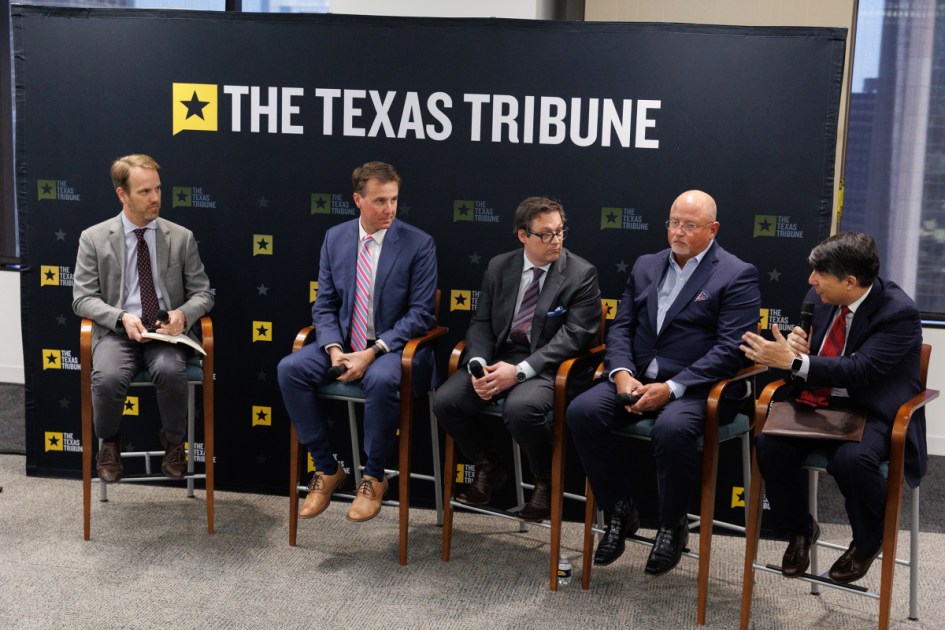
Meyers was joined by state Sen. Bryan Hughes, R-Mineola, on the first of the event’s two panels, both moderated by Texas Tribune Editor-In-Chief Matthew Watkins. The two legislators credited state laws with initiating a wave of companies moving their legal homes to Texas, spurring growth in the state’s financial sector and drawing three major stock exchanges to the state in recent years.
Key to that movement toward Texas was the creation of the Texas Business Court and the 15th Court of Appeals, specialized legal venues designed to handle business and commercial disputes, the lawmakers said. The new courts, paired with the Legislature’s business-friendly overhaul of the Texas Business Organizations Code in 2025, have created a predictable business environment that will draw more corporations to the state, they added.
ExxonMobil’s announcement earlier this month that it would reincorporate from New Jersey to Texas — pending approval from its shareholders — is proof that the Legislature’s efforts are working, Meyer said.
“Having Exxon take that leap, we couldn’t ask for a better commercial or a confirmation of the path we’re going on in Texas is the correct path,” Meyer said.
Coinbase, Space X and Tesla are other major U.S. companies that have reincorporated to Texas in recent years.
The second panel, made up of business advocates, echoed Meyer and Hughes’ assessments.
Texans for Lawsuit Reform CEO Ryan Patrick said northeastern states are watching companies’ departure to Texas with alarm: “The panic is starting to set in, and this was before Exxon.”
Patrick was joined by Chris Babcock, president of the Alliance for Corporate Excellence, Brian Page, a managing director at JPMorgan Chase, and John Sepehri, counsel at Foley and Lardner, LLP and former general counsel for the Texas Secretary of State’s Office.
Babcock said the current moment is the culmination of more than a decade of cooperation between the business community and a bipartisan group of legislators working to make the state more business friendly.
That, coupled with a changing political and business climate in states like Delaware — the longstanding home of most Fortune 500 companies due to its specialized business courts and friendly corporate laws — has created an opening that Texas is capitalizing on, Sepheri said.
“Historically, people looked to Delaware as a place that had built up a body of law developed over many years and felt like it was a place where there was a lot of knowledge about business disputes,” Sepheri said. “But in recent years, there’s been a change in the political culture there, and that has enabled activist shareholders and judges to really second guess the decisions of management, and not always in a way that is productive.”
The panelists all pointed to a 2025 change in Texas’ corporate law that requires shareholders to own at least a 3% stake in the company to be able to sue the board of directors, something they said prevents frivolous shareholder lawsuits that cost companies big legal fees to defend.
That provision was tested in a federal court last week, when a judge dismissed a lawsuit filed by a shareholder with a less than 1% stake in Southwest Airlines and ruled that the 3% threshold is constitutional. The shareholder was suing over the company’s decision to end its “bags fly free” policy.
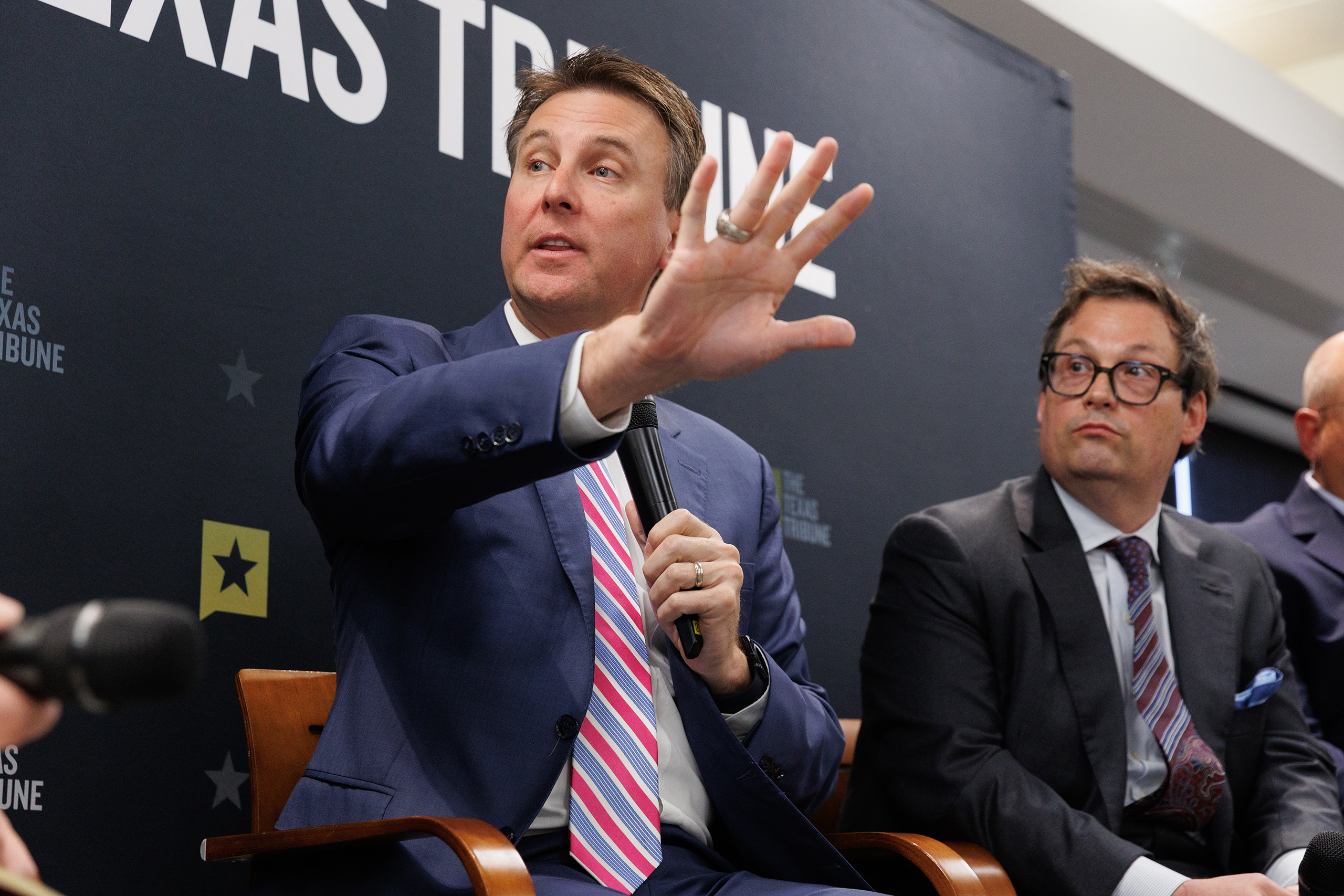
Crucially, the state will need to prove that law is in the best interest of shareholders as well, Babcock said, something he hopes ExxonMobil’s May 27 shareholder vote to incorporate in Texas will validate to the shareholders of other companies.
The members of both of Tuesday’s panels said the momentum Texas has built will be difficult to stop.
Making needed tweaks to the new business courts and reworked corporate laws will be a priority in next year’s legislative session to maintain the economy’s upward trajectory, the legislators said, as well as continuing to invest in infrastructure like transportation, water and electricity to keep up with the state’s growing population.
Disclosure: JPMorgan Chase and Texans for Lawsuit Reform have been financial supporters of The Texas Tribune, a nonprofit, nonpartisan news organization that is funded in part by donations from members, foundations and corporate sponsors. Financial supporters play no role in the Tribune’s journalism. Find a complete list of them here.
Source link