
In 2015, something unprecedented happened. All 193 member states of the United Nations agreed on a shared roadmap for the future: the 17 Sustainable Development Goals. Governments, businesses, civil society, and citizens aligned, at least on paper, around a simple premise: Economic prosperity, social stability, and environmental limits are no longer separable.
It didn’t take long for that logic to reach business schools.
For much of the past decade, sustainability in management education looked like a rare point of consensus. Schools added courses, launched centers, signed pledges, and reported progress. But today, that consensus is cracking. And the backlash, particularly in the U.S., is forcing business schools to confront an uncomfortable question: Were they building managerial capability and accountability – or mainly broadcasting intent?
THE POLITICAL GROUND HAS SHIFTED, FAST
In the United States, ESG, DEI, and “stakeholder capitalism” have moved from boardroom buzzwords to political flashpoints. Executive orders, legal guidance, and litigation risk aimed at restricting DEI initiatives have created a chilling effect across public institutions, including universities and business schools that depend on federal funding, public boards, and risk-averse legal counsel.
At the same time, ESG itself is under scrutiny in corporate governance. What once looked like prudent risk management is now framed by critics as ideological overreach. In many American boardrooms, “sustainability” has become a loaded word – even when the underlying issues (physical climate risk, regulation, supply-chain disruption, and social legitimacy) are plainly material.
Europe is not immune either. Media narratives increasingly portray business schools’ sustainability efforts as moralizing, politicized, or disconnected from economic reality. Fair or not, the message is clear: Institutions that cannot demonstrate credible learning outcomes and real-world relevance will lose trust fast.
Polarization, in this sense, is a signal. These issues have left the margins and entered the arena of real trade-offs.
THE INFRASTRUCTURE BUSINESS SCHOOLS QUIETLY BUILT
What is often missing from the debate is how methodical – and frankly unglamorous – much of the work inside business schools has been.
Since 2012, higher education has organized globally around sustainability, notably through the UN’s Higher Education Sustainability Initiative (HESI). That coordination helped normalize sustainability as a management concern, not a side project.
Several global networks played an outsized role:
- Principles for Responsible Management Education (PRME) created a common language and reporting discipline for schools integrating responsible management into teaching, research, and operations. Its shared platforms and peer accountability mechanisms helped push deans beyond marketing commitments toward more measurable change.
- Global Business School Network (GBSN) through its global network has been elevating sustainability in management education by supporting schools in emerging and established economies to embed responsible leadership, inclusive development, and locally grounded impact into their curricula and operations.
- Globally Responsible Leadership Initiative (GRLI) convenes cross-sector partners across business and education to advance globally responsible leadership through collective inquiry – supporting deeper transformation in what institutions teach, how they engage society, and how they confront the systemic drivers of harm and inequality.
Among many others, these efforts did not simply add sustainability electives; they quietly redefined what good management education must contend with in practice. Rankings followed. QS, Times Higher Education, and The Financial Times now incorporate sustainability-related criteria. Corporate Knights goes further by shifting the focus from teaching sustainability to demonstrating outcomes and graduate impact.
Accountability has also moved closer to the student experience. The Positive Impact Rating reframes quality by asking whether a school’s sustainability claims are reflected in what students actually learn, experience, and observe, introducing bottom-up pressure alongside traditional top-down evaluations. Employers increasingly demand graduates who understand transition risk, regulation, supply-chain resilience, and stakeholder pressure, not slogans.
Accreditation bodies responsible for quality assurance are likewise moving in step. EFMD embeds Ethics, Responsibility & Sustainability across the Equis standards, while AACSB advances Engagement & Societal Impact through Standard 9.
A RESPONSIBLE LEADERSHIP CAPABILITY IS NECESSARY – AND NOT SUFFICIENT
What’s at stake is not whether business schools are becoming ideological, but whether they are preparing leaders to operate within – and, where needed, reshape – systems whose design currently externalizes harm and concentrates benefit. Climate, inequality, and social fragmentation are not “topics” to be appended; they are conditions shaping strategy, governance, and legitimacy.
The task for management education is therefore to build the capacity for judgment: to work with evidence, debate trade-offs openly, understand incentives and power, and collaborate across institutions to test what actually changes outcomes.
That’s not virtue-signaling, and it isn’t activism. It is responsible leadership practice.
3 RESULTS THAT ARE HARD TO IGNORE
First: Sustainability became a managerial capability. The real shift was not about ideology. It was operational. Today’s MBAs are expected to understand carbon accounting, regulatory risk, physical climate exposure, and reputational dynamics. Call it ESG, enterprise risk, strategic resilience, or transition management – the label is secondary. Employers need leaders who can reason and decide under constraint.
This is not activism. It is competence in the world as it is.
Second: Business schools became testbeds for institutional change. Some of The most credible work happened behind the scenes: Governance structures, KPIs, data systems, and reporting discipline. PRME’s transparency norms forced uncomfortable conversations about gaps and failures, moving climate commitments from glossy brochures into operating models.
A growing ecosystem of assessment and learning tools is also helping schools shift from aspiration to evidence – making it easier to compare competencies, identify gaps, and improve over time. The point is not any single platform; it is the discipline of measurement in service of learning and accountability. Tools like Sulitest’s TASK platform, now shared by more than 80,000 learners in under three years, show there is real demand for comparable, evidence-based measurement. That discipline transfers directly to students.
Third: Students gained leverage. One valid criticism of sustainability initiatives is that they can feel top-down. That is why student-driven accountability mechanisms matter. When students say a school’s impact narrative does not match reality, reputational damage follows quickly. No press release can offset that.
WHERE SCHOOLS MADE THEMSELVES VULNERABLE
The backlash did not come out of nowhere. Three missteps stand out.
Performative signaling without proof: Pledges multiplied faster than budgets, governance changes, learning design, or outcomes. Language raced ahead of execution.
Over-simplified framing: When sustainability is taught as certainty rather than analysis — as values without trade-offs, or as slogans without economics – it becomes easy to caricature. In the current U.S. legal and political environment, that sloppiness is costly. Sustainability must be grounded in science, economics, and decision-making under constraint.
A lack of pluralism: Scientific facts do not dictate a single business response; they narrow the space of plausible options and raise the cost of denial. They still demand judgment. When classrooms discourage debate on energy trade-offs, industrial policy, development priorities, or distributional impacts, students learn the wrong lesson: Disagreement is illegitimate. That is how critics land the “eco-activist” label – by exploiting moral certainty paired with institutional authority.
Pluralism does not mean “anything goes.” It means rigorous debate anchored in evidence and methods, with the confidence to surface tensions rather than hide them.
A BETTER STANDARD: ACCOUNTABLE CAPABILITY
If business schools want credibility in 2026 and beyond, the path forward is clear: Stop selling goodness. Start demonstrating accountable capability.
That means:
- Showing impact receipts, not slogans: Where competencies are taught, assessed, and applied.
- Teaching sustainability as risk, strategy, and systems: If you teach carbon, teach margins; If you teach supply chains, teach resilience, cost, and fairness.
- Giving students real voice through structured feedback and governance.
- Defending academic freedom by anchoring debate in science and methodological rigor.
- Supporting faculty to integrate these questions across disciplines, not silo them.
THIS IS A RESET, NOT A RETREAT
These global movements did not radicalize business schools. They professionalized a reality leaders already face: Environmental and social constraints are business constraints.
But aspiration alone will not carry the next chapter, especially in policy environments increasingly willing to litigate institutional agendas – or in public debates increasingly intolerant of vague claims.
The schools that win will not be the loudest. They will be the ones that can calmly answer four questions:
What changed in what we teach? What changed in how we operate? What changed in what our graduates can do? And where is the evidence?
That is not eco-anything.
That is management – practiced with responsibility.
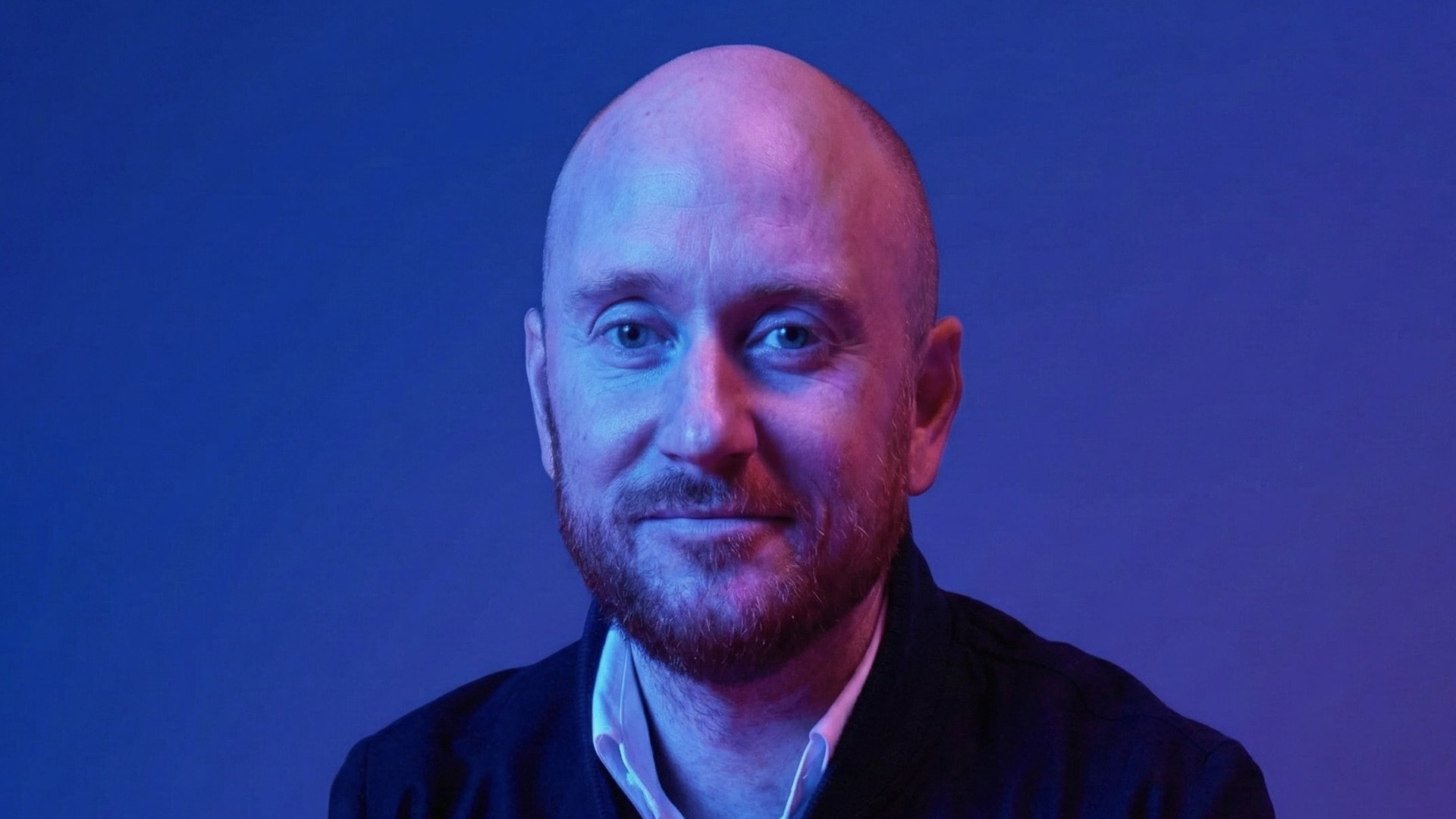
JC Carteron is former CSR Director at Kedge Business School and the founder of Sulitest, an international movement to increase sustainability literacy worldwide. John North is Executive Director at Globally Responsible Leadership Initiative. Meredith Storey is Benjamin Stevenin is special adviser to Poets&Quants and former Director of Business School Solutions and Partnerships at Times Higher Education.
© Copyright 2026 Poets & Quants. All rights reserved. This article may not be republished, rewritten or otherwise distributed without written permission. To reprint or license this article or any content from Poets & Quants, please submit your request HERE.