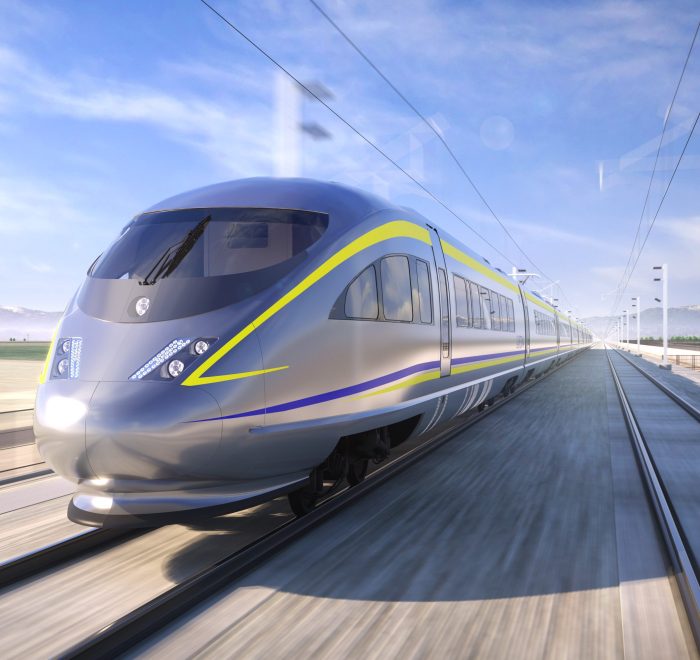
Last week, the California High‑Speed Rail Authority released its Draft 2026 Business Plan — a forward-leaning blueprint for how the nation’s most ambitious rail project can finally connect key regions of the state and spark economic growth, while continuing to be fiscally responsible with limited public funds.
The plan, now open for 60 days of public review and comment, reframes the project from a decades-long construction saga into a strategic business endeavor aimed at delivering real service and real revenue sooner rather than later.
Visit the plan’s official website, or read the CAHSRA press release. Plan information and how to submit comments are below.
CAHSRA Optimistic
Where prior business plans felt like status reports, the Draft 2026 Plan pushes hard on strategy — sequencing, revenue diversification, private-sector engagement and phased implementation — to steer the project toward a future in which high-speed rail isn’t just an idea on paper or a list of completed projects dotting the Central Valley, but a functioning part of California’s transportation ecosystem.
Nearly two decades after voters approved high-speed rail, the 2026 Draft Business Plan represents a potential turning point. It doesn’t promise instant completion of bullet trains hurtling throughout the state, but it does offer a plausible pathway to earlier service, broader revenue sources, private investment potential, and — critically — a plan that legislators can grasp and act on.
As Board Chair Tom Richards put it in describing the draft’s approach:
The Draft 2026 Business Plan sets out the path forward: completion of Merced to Bakersfield, expansion to major population centers for revenue positive service, and early asset commercialization to produce additional revenue to build out high-speed rail. It explains how we build from progress underway, prioritize investments that produce early and durable commercial benefits, and create the conditions for long-term financial strength and private-sector participation as the system expands.
What’s Actually Different (and Better) This Time
The most recent CAHSRA plan was completed in 2022; it mostly outlined cost updates and compliance with statutory requirements. This 2026 draft is more ambitious. Some of the changes include:
- Sharper cost modeling: Using “P65” confidence levels and multiple build scenarios, the new plan gives lawmakers and stakeholders more realistic estimates of what it will take to complete each phase.
- Revenue focus: For the first time the plan emphasizes commercial strategies — from station-area development to asset commercialization and fare revenues — as tools to help pay for construction and operations.
- Phased delivery with purpose: Rather than waiting for the nearly 400-mile San Francisco–Los Angeles line to be built before launching service, the draft prioritizes segments that can generate ridership and income earlier, especially once major population centers are connected.
- Risk and funding analysis: Rather than glossing over uncertainties, the draft openly discusses them and builds scenarios around different legislative and financing outcomes, including private investment.
- Strategic tone: Where 2022 read like a regulatory checkbox, the 2026 draft reads like a business case — a pitch to investors, lawmakers and the public that high-speed rail is both doable and worth doing.
The business plan also reflects the new messaging that has taken root in CAHSRA’s culture in recent years. For over a decade, the project endured heavy (often inaccurate) criticism from lawmakers and mainstream media. This led to some sense that, despite making progress, the project might be doomed by delays and rising costs. However, in recent years the messaging from the agency has been less apologetic, more celebratory of various milestones and project completions, and more forward looking.
In short, the focus has been on “how can we get this transformational project built” and less about apologizing for early plans not being completely built out yet.
Central Valley First — Then the Rest
At the heart of the plan is sequencing that makes economic sense. The project has already seen significant progress in the Central Valley: 171 miles are currently underway between Merced and Bakersfield. Nearly 80 miles of guideway complete; dozens of major structures are finished.
Instead of treating this as an isolated vision, the new business plan portrays the valley segment as a launching pad — proof that the system can work and start generating momentum — while building out toward the Bay Area and Southern California to unlock higher ridership and revenue.
The High-Speed Rail Authority has been pushing for a change to state law that would allow the agency to begin construction outside of the Central Valley, and is looking for public-private partnerships to make that a reality. The current draft plan puts to rest some concerns that the current leadership could leave the Central Valley behind.
Yes, There Are Critics — But There’s Also Progress
Critics, including libertarian-leaning voices including the California Policy Center, argue that costs remain high (obviously!) and the latest updated plans do not fully meet the vision promised to voters in the 2008 ballot measure.
But even those critiques highlight something important: the debate has matured. The 2026 draft is the first business plan that seriously tries to answer questions critics have raised for years — about financing, sequencing, revenue generation, and how to actually operate a high-speed rail system rather than just build it.
There is also nearly no mention of the project’s biggest critics. President Donald Trump, who has been known to meander into disparaging the project when he’s talking about unrelated matters is mentioned only once, in a note about how the agency can no longer rely on federal funding. USDOT Secretary Sean Duffy, isn’t even mentioned once.
Public Engagement: Your Voice Matters
The Authority wants public input on its draft plan. The 60-day comment period runs from Feb. 28 to April 29, 2026, and there are several ways to weigh in:
- Online: Fill out the public comment form on hsr.ca.gov.
- Email: Send comments to BusinessPlan2026@hsr.ca.gov.
- Mail:California High-Speed Rail AuthorityAttn: Draft 2026 Business Plan770 L Street, Suite 1180Sacramento, CA 95814
- In person: Speak during the public comment portion of a scheduled Authority board meeting.