Remember starting college? It was quite the transition.
New people and bigger demands. If you were a starting midfielder in high school, you were glued to the bench come freshman year. If you were an A-student in AP courses, you pulled B’s in college Gen Eds. On your own for the first time, you struggled to keep pace. You endured late nights, tight budgets, and failed relationships. All the while, you probably felt lost and alone, wondering if you’d made a mistake and truly belonged.
Hannah Wissotzky experienced this same disorientation and loneliness when she started at UC Berkeley in 2023. Like many women, she felt “invisible” on a campus of 30,000 people. These difficulties inspired the entrepreneurial-minded Wissotzky to start a business venture: Quilly. Rather than developing “another swipe-based friendship app,” Wissotzky took a more intimate approach. She used personality assessments and “AI-powered group leaders” to place like-minded students together in “intentional virtual houses.” In the end, Wissotzky’s solution upends the traditional social networking platform to create what she calls “a home away from home.”
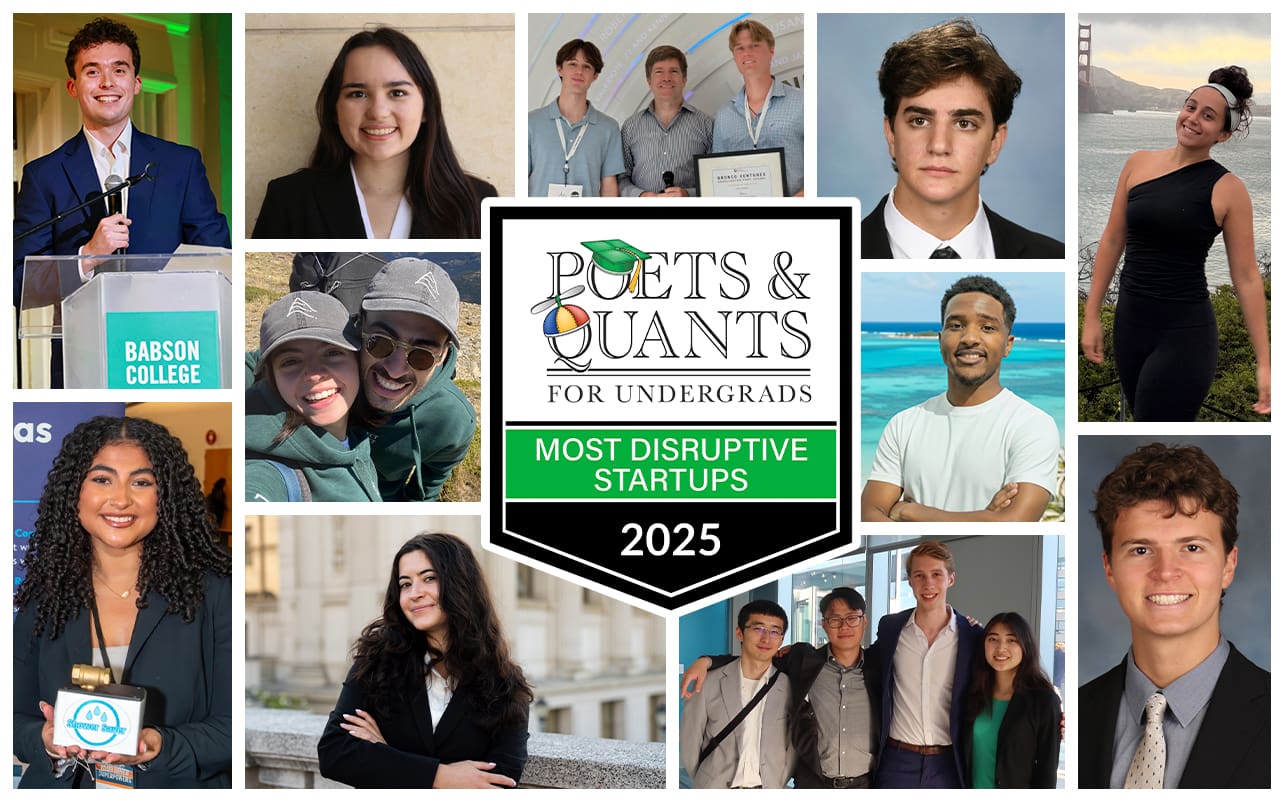
Quilly is just one of the 22 student startups honored by Poets&Quants in its 5th annual Disruptive Startups series. Focused on ventures launched by undergraduate business majors, the startups were chosen from 31 of the highest-ranked business programs according to Poets&Quants’ 2025 Undergraduate Business School Ranking. This year’s list features startups launched out of schools ranging from Babson College to the University of Michigan to the Wharton School.
FROM ROBOTICS TO PROPERTY MANAGEMENT, A WEALTH OF IDEAS
Consumer products, healthcare and education are the most dominant sectors for startup activity among these ventures. However, these these student entrepreneurs have also gravitated to a wide range of industries as different as robotics, property management, fintech, and public service. Many of the companies were spawned by personal experience.
Wissotzky’s startup at Berkeley is emblematic of the smart ideas percolating out of business school students these days. “Quilly helps girls form real friendships through spontaneous and planned hangouts, safety check-ins, shared resources, and a points system that encourages mutual support,” Wissotzky tells Powets&Quants. “The goal isn’t to keep people on their phones, it’s to get them out of their dorm rooms and into real life with people who genuinely show up for them.”
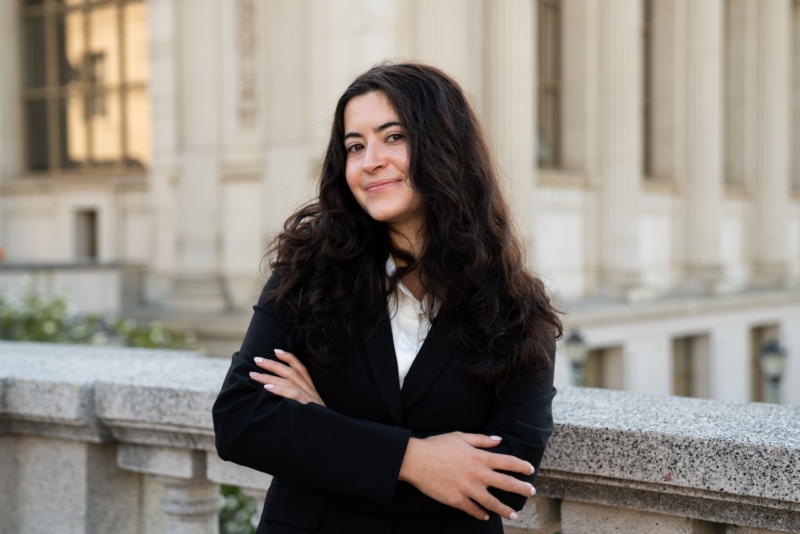
Hannah Wissotzky, Quilly
TAPPING INTO THE LARGER UNIVERSITY
Thus far, Wissotzky has funded Quilly with $3,500 in competition winnings, with the intent to open a seed round in February. Starting with a chapter at UC Berkeley, the venture now reaches 5-million people per month on Instagram. Two months ago, Wissotzky booked Sophie Silva and James Clark – who boast a combined 14-million followers – onto her podcast. She even established a partnership with a self-defense alarm company to host a party that attracted 500 women. More than that, she has honed her platform’s functionality by conducting over 100 user interviews.
Beyond the individual stories, there is a larger narrative beyond campus that fuels Quilly, adds Wissotzky. “All of this sits against a backdrop of national research: the U.S. Surgeon General naming loneliness a public health crisis; Gen Z women reporting the highest loneliness rates; and the rise of “rotting culture,” where we isolate behind our screens because showing up in real life feels too intimidating.”
College-aged women aren’t the only driving forces behind Quilly. Wissotzky points to the larger UC Berkeley ecosystem, particularly the Haas School of Business, for providing the resources that have set her venture up for success.
“Berkeley has been the best place imaginable to build Quilly,” she continues. “They included professors who opened doors; PhD students researching loneliness who let me interview them for insight; pitch competitions recommended and reviewed by professors; mentors at the eHub; and classmates who tested early prototypes. This ecosystem has pushed Quilly forward at every step. Berkeley doesn’t just give you resources. It gives you urgency, accountability, and people who genuinely want to see you build something meaningful.”

Joe Poole, Brain Battle
LEVELING THE PLAYING FIELD FOR TEST-TAKERS
Not surprisingly, student entrepreneurs found inspiration (and gaps) in Education. That starts with Brain Battle, a venture launched by Joe Poole out of Washington University’s Olin School. Targeting the SAT and ACT preparation market, Brain Battle replaces expensive tutors and rote drilling with a mobile game that enables users to “compete live against peers, track progress, [and] unlock rewards.” For Poole, the solution applies the gamified bells-and-whistles that students enjoy and leverages it to enhance learning performance.
“Brain Battle takes the same elements that keep them hooked—streaks, leaderboards, rewards, and community—and uses them to fuel learning instead. The result is studying that feels addictive in the best way, helping students at every level gain consistency, confidence, and motivation.”
For Poole, who was recognized in 2025 as an Inno Under 25 recipient, Brain Battle is a means to democratize learning. He was struck by how high-income households scored 200 points higher on the SAT than low-income counterparts. He posits that high test scores are based on privileges such as “$100-an-hour tutors, prep classes, and better schools.” To level the field, he employs a tool carried by 95% of teens – a smartphone. As a result, Poole explains, the best test prep is available to anyone at any time. This access, he believes, positions Brain Battle to reap even bigger rewards.
“In the near term, our focus is on disciplined execution of our go-to-market plan: acquiring 10,000 users, scaling school and tutoring partnerships, and launching a web-based dashboard to deepen engagement with educators,” Poole adds. “Over the next three to five years, we aim to establish Brain Battle as the clear category leader in gamified learning for Gen Z.”
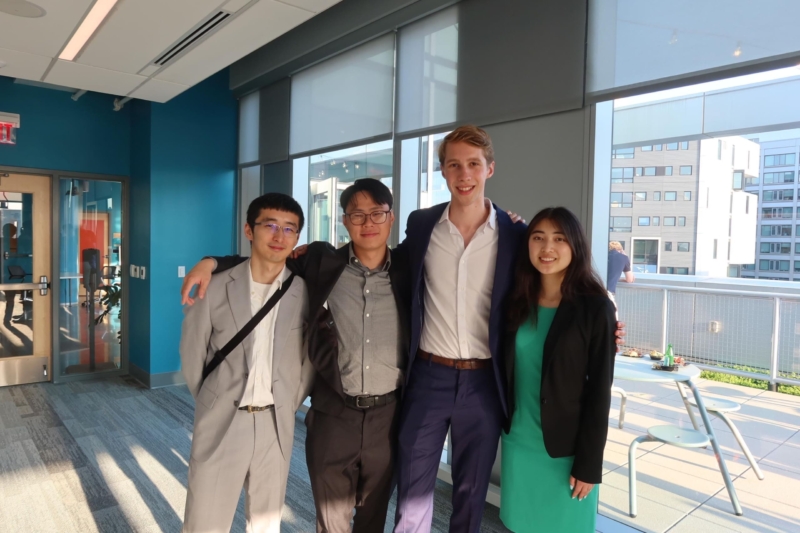
Serpent Robotics Team, (L-R): Yiran Xuan, Jason Li, Steyn Knollema, Margaret Zhu
MAKING AN INDUSTRY SAFER AND MORE ATTRACTIVE
At the Wharton School, a cross-campus team has applied cutting edge technology to tree care, an industry that has changed little in decades. Recognizing that trimming methods like manual climbing were physically draining and outright dangerous, the team founded Serpent Robotics, a solution that “combines a lightweight ascension mechanism, a sensor suite with cameras for operator feedback, and a cutting end effector optimized for safety and control.”
“The more we learned about the industry, the more we wanted to make the industry safer,” explains Margaret Zhu, a senior at Wharton. “As we spoke with arborists and learned about their challenges, we also saw that our robotic solution could unlock enormous cost savings and address widespread labor shortages. With first-year turnover rates reaching 70%, many workers simply don’t see a future in a job that puts their lives at risk.”
Zhu is part of a team, she says, that includes expertise in “mechanical engineering, robotics, design, and business strategy.” The team also tapped into campus resources like Penn’s GRASP (General Robotics, Automation, Sensing, & Perception) Lab and the Morris Arboretum. At the same time, they took advantage of school competitions, such as the Venture Lab Startup Challenge, where they collected the Blank New Venture Collaboration Award and the Weiss Audience’s Choice Award. While $20,000 in winnings from the Challenge came in handy, it also provided the impetus to continue at a time when the venture was just “digital renderings and CAD models.”
“We had to persuade the panel of expert judges that our concept was both technologically feasible and commercially viable,” Zhu tells P&Q. “We had to make them see what we believed in. Winning not just one, but two awards validated our idea and gave us the confidence and resources to begin building. Those funds directly enabled us to create Serpent’s first working prototype, which can now cut branches in trees. While developing a functioning system is a huge milestone for us, it was the Startup Challenge that truly transformed us from a student team with an idea into a venture capable of real-world impact.”
SIX-FIGURE FUNDING
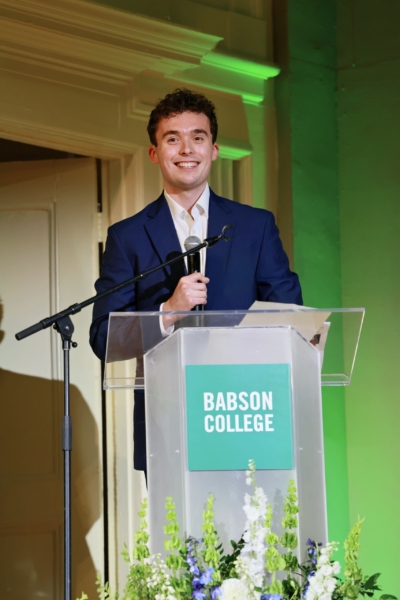
Daniel Berlin, DIRTY GUT
Some student ventures are generating serious investment. DIRTY GUT, for one, has attracted $200,000. A Babson College venture started by Daniel Berlin, the venture is “on a mission to be the world’s healthiest chocolate company.” Thus far, DIRTY GUT is found in 66 stores in Boston and Northern California, with a larger national rollout coming in 2026. In contrast, Beckett Kitaen, a senior at Texas Christian University’s Neeley School, is a co-founder of a product that he likens to “Cheetos made out of beef.” Known as BUFFS, Kitaen describes it as “the first-ever crunchy puffed snack made primarily out of grass-fed beef.” Not only has BUFFS collected pitch competition wins at TCU and USC, but has also raised $300,000. Better yet, BUFFS has entered into agreements with Sprouts and Bristol Farms.
“We want our company to be the face of clean, animal-based snacking,” Kitaen asserts. “We will grow a brand that people trust. Whatever product we come out with, people will know that it will benefit their health because of the integrity behind the brand and the mission we stand for.”
At the University of Michigan’s Ross, Hector Benitez Ventura and Noah Alexander were among the co-founders of Altrix, whose Nova solution offers an AI assistant for acute nurses. Not only has Altrix generated $300,000 in funding, but also became the first undergraduate startup to land a spot in the Techstars Health AI accelerator underwritten by Johns Hopkins and BlueCross BlueShield. While grants and winnings are one way to fund student startups, Valeria Serenil has built something more enviable: an actual revenue stream. A student at the University of Houston’s Bauer College, Serenil doubles as the CEO of Aztec Contractors Houston, where she averages $600K-$800K annually.
“Our biggest accomplishment has been expanding from residential roofing into full general contracting, winning commercial projects for clients like the YMCA and U.S. Coast Guard, and expanding our business to the bar and entertainment industry,” she tells P&Q. “We’ve also launched a workforce-training nonprofit, Second Blessing, to help formerly incarcerated individuals rebuild their lives through construction training and employment.”
AI IS KEY TO MANY STARTUPS

Anjali Laddha, Degree2Destiny
Want to know the most popular term in the student startup lexicon in 2025? “AI-powered.” Maybe the most promising is Basics out of Carnegie Mellon University’s Tepper School. Using its AI Continuity tool, users can move between platforms like ChatGPT and Copilot. As a result, says co-founder Akeil Smith, Basics removes barriers “that keep users locked into one tool.”
“We are the first to connect these tools through a single learning layer,” Smith continues. “AI Continuity has transformed how people interact with AI and how learning happens within it. For the first time, users have a learning passport that remembers how they learn best and tracks their progress across every tool. This makes education and skill development more accessible, personalized, and connected than ever before.”
At the University of Illinois’ Gies College, a student team has rolled out InvoGenix, an AI tool designed to cut documentation times by up to 85%. Up north at Northeastern University’s D’Amore McKim School of Business, Anjali Laddha has unveiled an AI career readiness platform, Degree2Destiny. Already, there have been 4,000 users in India and the United States that have participated in Degree2Destiny’s workshops, bootcamps, and digital tools, says Laddha. And the venture has given her a bit of notoriety.
“[I delivered] a keynote at the Grace Hopper Celebration — one of the world’s largest tech conferences for women — where I represented the voice of Gen Z AI educators.”
Next Page: Startup Programming, Faculty, and Resources
Page 3: In-Depth Profiles of 22 Student Startups
© Copyright 2026 Poets & Quants. All rights reserved. This article may not be republished, rewritten or otherwise distributed without written permission. To reprint or license this article or any content from Poets & Quants, please submit your request HERE.