Missouri Attorney General Catherine Hanaway is taking action against businesses that sell and manufacture 7-OH, which she called a “deadly opioid.” Hanaway announced a lawsuit March 31, filed in Jackson County circuit court, against CBD American Shaman and related companies for the distribution of kratom and substances like 7-hydroxymitragynine, or 7-OH. The lawsuit lists Kansas City-based American Shaman and “a web of companies connected to it” including Shaman Botanicals and SVS Enterprises as defendants, along with the president of American Shaman, Stephen Vincent Sanders II. “Missourians, including those struggling with opioid addiction, are being dangerously misled into believing that 7-OH is predictable, safe and natural. This could not be more untrue,” Hanaway said in a news release. “It is my job to protect Missourians and it is clear 7-OH is a hazardous opioid.” Hanaway alleges that American Shaman overstates the safety of its products, and that the business continued “unlawful behavior” of selling kratom and 7-OH products despite “repeated warnings” since the beginning of her investigation in November 2025. Hanaway also alleges that American Shaman has repeatedly failed to disclose the risks of 7-OH, including in its advertisements of “free samples” of the products. Kratom and 7-OH were at the center of a debate in Kansas City for several months, with community members sharing mixed opinions on the effects of products like kratom and 7-OH. On Feb. 12, city officials ultimately banned synthetic 7-OH products and certain synthetic kratom products, commonly referred to in discussions as “gas station drugs.” This included kratom products that could be smoked or vaped, or products that looked like candy. Officials also restricted natural kratom sales to adults 21 and older and required businesses to obtain a license to sell natural kratom. Kansas City businesses had 60 days after the law took effect to comply with the new ban and regulations.Hanaway filed suit in collaboration with the Missouri Department of Health and Senior Services. Both allege that American Shaman and related companies sell these products without needed safety testing or regulatory approvals. “7-Hydroxy from kratom is often marketed as a natural or harmless product, but its risks are very real,” said DHSS Chief Medical Officer Dr. Heidi Miller in a news release. “We continue to see serious health consequences linked to its use, including dependency, dangerous interactions with other substances and life-threatening toxicity. It’s important for Missourians to understand that ‘natural’ does not always mean safe.”Cocaine (from the coca leaf) and morphine (from the opium poppy flower) also come from ‘natural’ sources but are likewise addictive and deadly,” Miller continued. “We urge individuals to seek evidence-based treatments if they suffer from pain or substance-use concerns.” Hanaway is asking the court to declare that American Shaman’s business practices violate the Missouri Merchandising Practices Act. She is also asking the court to prohibit the sale of kratom and 7-OH products and to penalize the companies $1,000 per violation. “As a mom, I want to speak truthfully and honestly about these drugs: Over-the-counter opioids are not harmless, they are devastating Missouri families,” Hanaway said. “We owe it to our communities to hold accountable those who market and distribute these products unlawfully.”
Missouri Attorney General Catherine Hanaway is taking action against businesses that sell and manufacture 7-OH, which she called a “deadly opioid.”
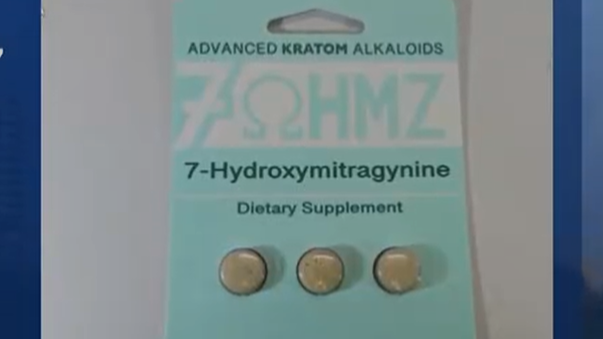
Hanaway announced a lawsuit March 31, filed in Jackson County circuit court, against CBD American Shaman and related companies for the distribution of kratom and substances like 7-hydroxymitragynine, or 7-OH. The lawsuit lists Kansas City-based American Shaman and “a web of companies connected to it” including Shaman Botanicals and SVS Enterprises as defendants, along with the president of American Shaman, Stephen Vincent Sanders II.
“Missourians, including those struggling with opioid addiction, are being dangerously misled into believing that 7-OH is predictable, safe and natural. This could not be more untrue,” Hanaway said in a news release. “It is my job to protect Missourians and it is clear 7-OH is a hazardous opioid.”
This content is imported from Facebook.
You may be able to find the same content in another format, or you may be able to find more information, at their web site.
Hanaway alleges that American Shaman overstates the safety of its products, and that the business continued “unlawful behavior” of selling kratom and 7-OH products despite “repeated warnings” since the beginning of her investigation in November 2025.
Hanaway also alleges that American Shaman has repeatedly failed to disclose the risks of 7-OH, including in its advertisements of “free samples” of the products.
Kratom and 7-OH were at the center of a debate in Kansas City for several months, with community members sharing mixed opinions on the effects of products like kratom and 7-OH. On Feb. 12, city officials ultimately banned synthetic 7-OH products and certain synthetic kratom products, commonly referred to in discussions as “gas station drugs.” This included kratom products that could be smoked or vaped, or products that looked like candy.
Officials also restricted natural kratom sales to adults 21 and older and required businesses to obtain a license to sell natural kratom. Kansas City businesses had 60 days after the law took effect to comply with the new ban and regulations.
Hanaway filed suit in collaboration with the Missouri Department of Health and Senior Services. Both allege that American Shaman and related companies sell these products without needed safety testing or regulatory approvals.
“7-Hydroxy from kratom is often marketed as a natural or harmless product, but its risks are very real,” said DHSS Chief Medical Officer Dr. Heidi Miller in a news release. “We continue to see serious health consequences linked to its use, including dependency, dangerous interactions with other substances and life-threatening toxicity. It’s important for Missourians to understand that ‘natural’ does not always mean safe.
“Cocaine (from the coca leaf) and morphine (from the opium poppy flower) also come from ‘natural’ sources but are likewise addictive and deadly,” Miller continued. “We urge individuals to seek evidence-based treatments if they suffer from pain or substance-use concerns.”
Hanaway is asking the court to declare that American Shaman’s business practices violate the state’s Merchandising Practices Act. She is also asking the court to prohibit the sale of kratom and 7-OH products and to penalize the companies $1,000 per violation.
“As a mom, I want to speak truthfully and honestly about these drugs: Over-the-counter opioids are not harmless, they are devastating Missouri families,” Hanaway said. “We owe it to our communities to hold accountable those who market and distribute these products unlawfully.”