Twice a year, things kick into gear at the 2 Sisters’ Salsa plant in Avoyelles Parish.
Over the past decade, the company has become Louisiana’s largest salsa producer, shipping the popular condiment to about 30 states. And its production schedule is determined by the tomato season.
“You can only get them at certain times of the year,” said Denise Ramon, president and new majority owner. “So they’re picked, and we cook at that perfect time.”
That means Florida tomatoes in the winter and Indiana tomatoes in the fall.
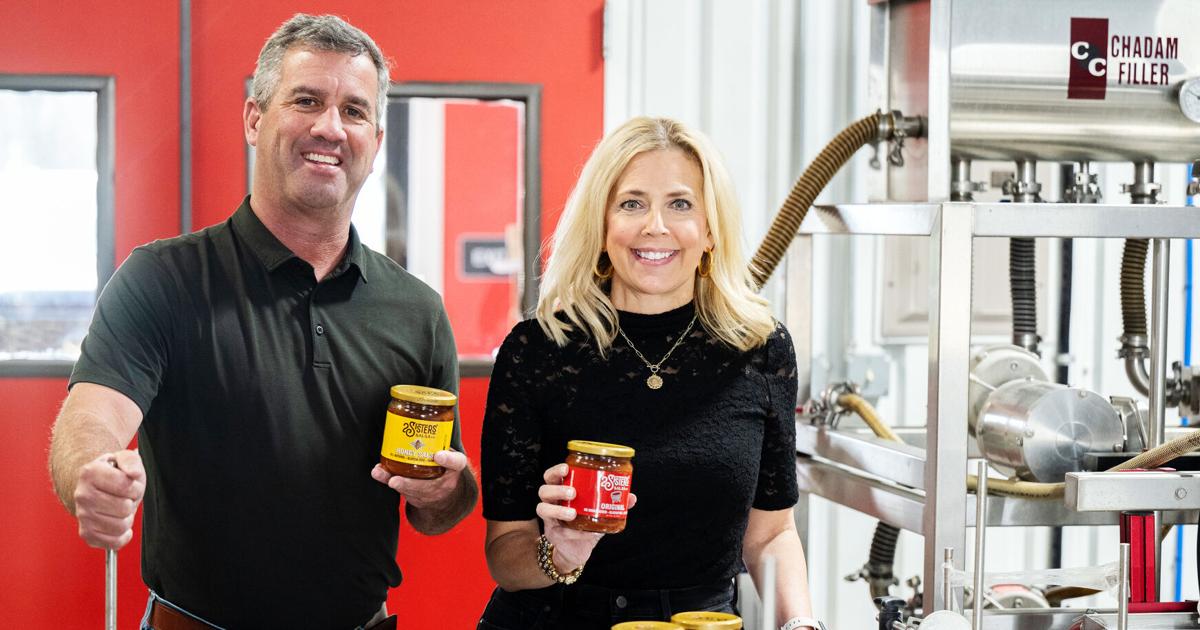
Company Founder Patrick Deshotels and Owner Denise Ramon are pictured at 2 Sisters’ Salsa Company Tuesday, February 24, 2026, in Plaucheville, La. Deshotels recently transferred majority ownership of the company to Ramon, who was the longtime president of the company.
During peak production, 2 Sisters’ Plaucheville manufacturing facility operates 24/7, with a handful of employees working 12-hour shifts to produce 16,000 jars a day along a largely automated assembly line. Those jars eventually make their way onto the shelves of more than 6,000 grocery stores around the country.
Earlier this year, the company’s founder, Avoyelles Parish farmer Patrick Deshotels, sold 2 Sisters to Ramon, the company’s president and a longtime employee. She plans to grow 2 Sisters, which has revenues of between $2 million and $5 million a year, by focusing on e-commerce and building out the company’s private label business, or producing goods for other retailers under their own labels.
“People are focused on saving money, but they still want the same quality product, and they’re looking for a ‘better-for-you’ product,” said Ramon. “A lot of grocery stores are going in that direction, and we can help fill that void with private label.”
Widespread distribution
2 Sisters’ makes its salsa from a handful of basic, raw ingredients: onions, jalapeños and cilantro. They’re dumped, along with the fresh tomatoes, into an automated washer and dicer, then loaded into 150-gallon kettles, where locally made Cajun seasoning is added.
Each kettle boils for more than two hours, producing about a thousand jars.
“The sauce is pumped through into these fillers, then from the fillers, there’s a feeder feeding jars,” Ramon said. “The lids are placed on them, torqued, then the label goes on them, and then they go in a box.”

Pallets of 2 Sisters’ Salsa are pictured Tuesday, February 24, 2026, at the salsa company’s warehouse in Plaucheville, La.
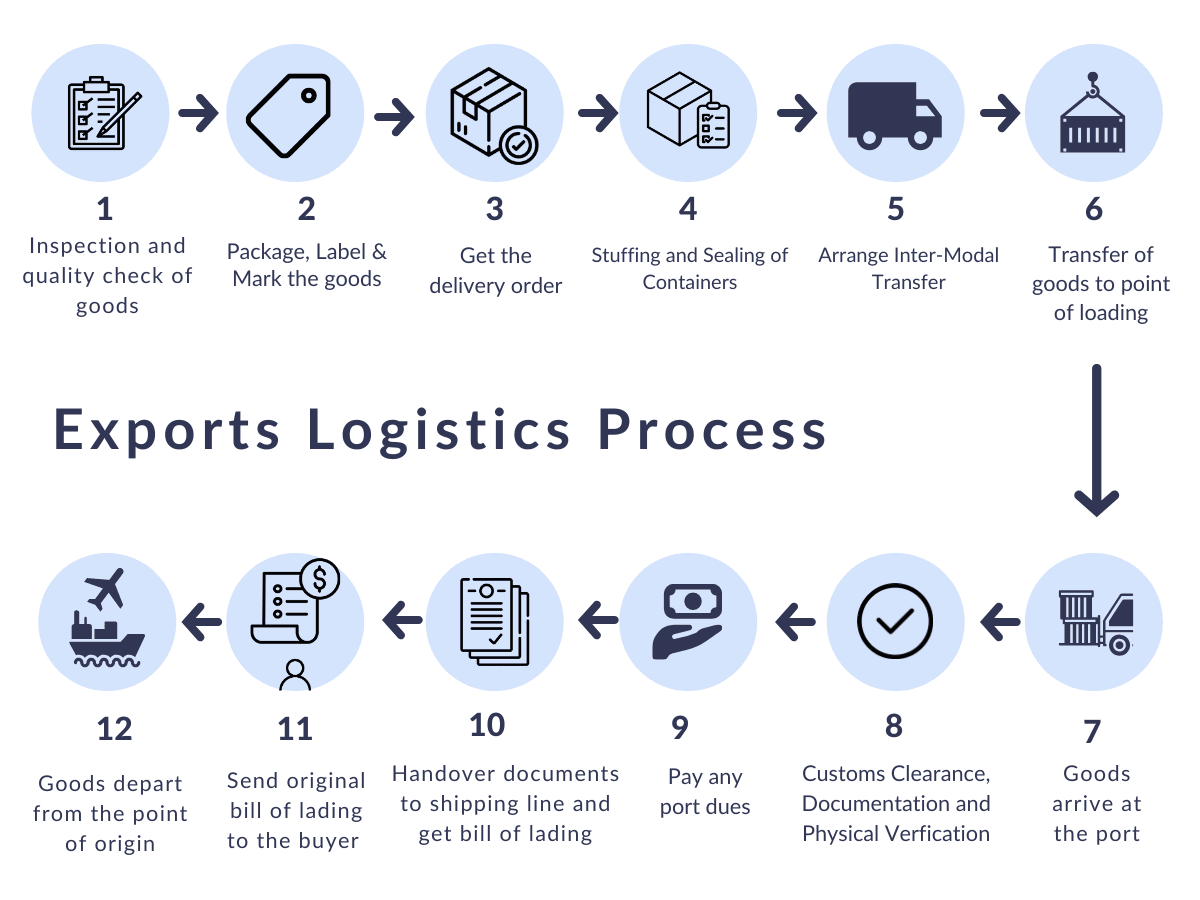
The boxes are stacked on pallets with room for 1,200 jars each. They await pickups from trucks, which distribute the salsa across the country.
2 Sisters is sold in mom-and-pop retailers as well as regional and national chains — about half its sales come from the 1,000 Walmart locations that shelve its jars.
A crossroads
When Deshotels started 2 Sisters’ Salsa a decade ago, he wasn’t chasing a dream of becoming a condiment baron. Rather, his garden produced too many tomatoes and he wanted to put them to use.
He started experimenting with different salsa recipes in his kitchen before testing them out at local farmers markets.
From there, 2 Sisters — named in honor of his daughters, now students at LSU — began distributing to grocers and wholesalers, starting with Rouses Markets and eventually growing to include more than a dozen supermarket chains and warehouse groups.
The company now produces five salsa flavors and employs about 15 people, a third of whom are brokers who act as liaisons between the company and the retailers.
Late last year, Deshotels found himself with another kind of surplus — piloting his own small plane to sales meetings for his growing salsa company, while juggling responsibility for 5,000 acres of soybeans, sugar cane, rice and crawfish.
“I just went through and said, ‘Look, my plate is a little too full,’” Deshotels said.
After a conversation with his wife, they decided it was time to sell.
Ramon, who started as a sales manager in 2018 and has been company president since 2021, bought a majority stake in the salsa company in February.
The deal allows Deshotels to retain ownership of the plant through a holding company, while Ramon owns 90% of the brand, including its recipes and intellectual properties.
The sale coincides with a redesign of the salsa’s packaging, which now emphasizes that it is “farm fresh” and has no added sugar.
Room to grow
In 2022, the company completed an approximately $400,000 expansion that more than doubled the size of its production facility. Now it has the capacity to produce 5 million jars of salsa every year from the 17,000-square-foot complex.
Company Founder Patrick Deshotels and Owner Denise Ramon are pictured at 2 Sisters’ Salsa Company Tuesday, February 24, 2026, in Plaucheville, La. Deshotels recently transferred majority ownership of the company to Ramon, who was the longtime president of the company.
“We still have the capacity to grow into the facility, which was on purpose,” Ramon said. “We sit on close to 10 acres of property, so there’s definitely room for growth as we continue to scale the brand, both in terms of the facility and the land.”
But Ramon hopes that an increased focus on e-commerce, combined with an expansion into the private labeling and food service markets, can help boost sales volume beyond the 1 million jar mark.
The company has already found some international distribution, launching in Costa Rica in 2024 and in Hong Kong earlier this year.
The recent focus on e-commerce also includes partnerships with influencers and affiliates to increase awareness of the 2 Sisters’ brand in a very competitive category.
“Back in the day, you stuck it on a shelf, put it there, and they will come,” said Ramon.
Not anymore. Now, you need to run in-store promotions and create a secondary location in the store with high-visibility displays. And, she said, brands need to ensure that their product can reach customers outside of the grocery store.
That means selling on Amazon, improving its own website and getting more involved in sales through social media channels like TikTok Shop.
“We definitely want to get incremental business, but we also want to use it for brand awareness,” she said. “If somebody is out of town and walks into a store, buys the salsa and loves it, we want them to be able to get online and find it.”