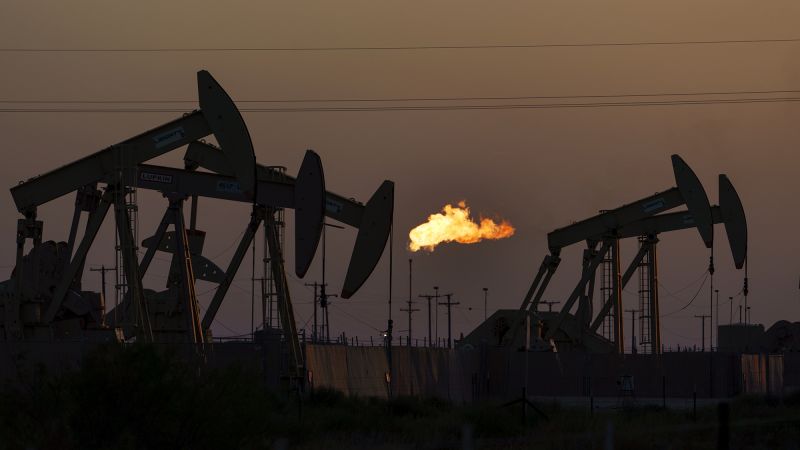
The United States is producing more oil than any country in the history of the planet. Yet the war with Iran has sent gas prices up 20 cents a gallon, or 7% in just a few days.
Why?
One way to look at it: Without all of the United States’ substantial crude production, Americans could already be paying $4 or even $5 a gallon for gasoline. That makes the energy spike caused by the Iran war even more painful.
And no matter how much oil the United States produces domestically, oil is traded in a global market – one that President Donald Trump just upended.
The United States exports nearly a third of the oil it produces, and it imports nearly a third of the oil it consumes, according to the US Energy Information Administration. That’s because the US produces a particular kind of crude that is good for making gasoline, but lousy for other petroleum products like diesel, kerosene and other fuel oils. So it needs to bring in those products or heavier crude from other locations.
This week’s events prove that prices at US gas pumps are controlled not only by domestic wells in Texas, New Mexico and across the United States – but by traders looking at supply and demand around the planet and placing bets on what’s going to happen next.
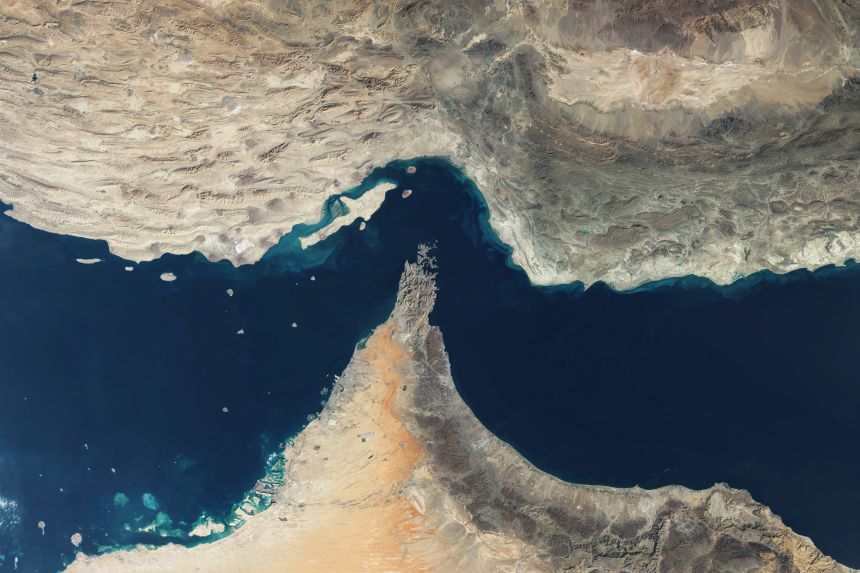
Right now, those traders are alarmed by what they’re seeing: A de facto shutdown of the Strait of Hormuz, the critical waterway off the coast of Iran that Gulf oil producers rely on to get their crude to the rest of the world.
Unless this war ends quickly, Americans will probably pay a lot more for gasoline, no matter how much is being produced at home.
The US oil boom has prevented bigger price increases, both this week and during other recent market upheavals, such as sanctions on Russian oil after it invaded Ukraine.
“The emergence of the United States as an oil giant has definitely smoothed out geopolitical spikes,” said Robert Yawger, commodity specialist at Mizuho Securities. “It’s fair to assume prices for gasoline would have been elevated exponentially from where they are now.”
The US has been a major oil producer since the 19th century, but it wasn’t until early in this century that an oil boom took off in this country. It was driven by the increased use of “fracking.”
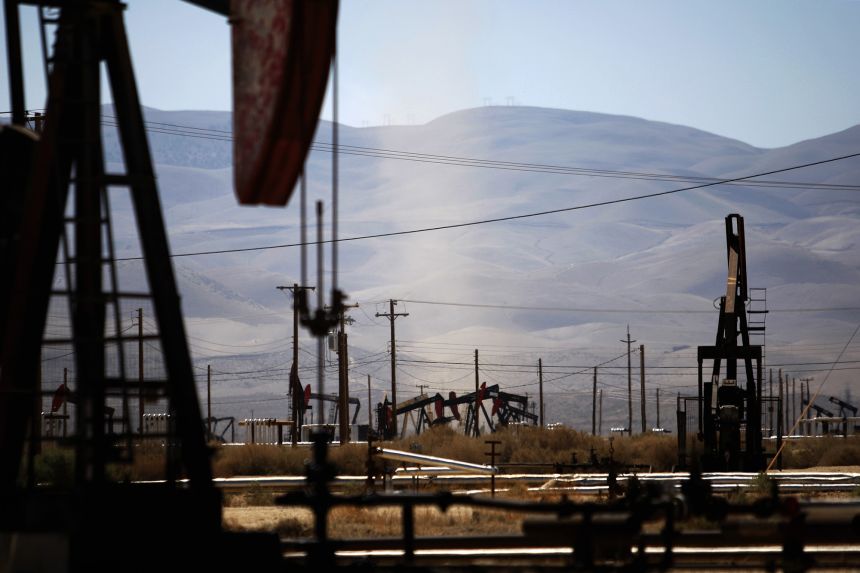
Fracking is the injection of water deep into the ground to free oil trapped in shale formations in states across the center part of the country. The process is used across America’s oil patch, from Texas up to North Dakota, and from Wyoming east to Pennsylvania
Fracking has been around for more than a century, but only become commercially viable over the past two decades, thanks to higher oil prices and geologists discovering how much oil was trapped in shale formations.
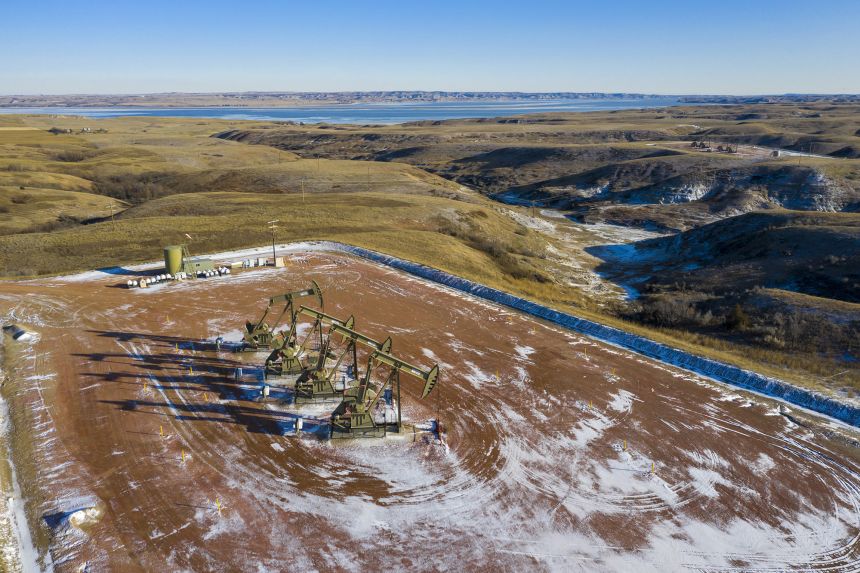
The fracking boom started in 2009, the first year growth after a decade of declining production. By 2018, output had increased enough to boost US production to first place globally, passing both Russia and Saudi Arabia.
By last year, production had increased 167% from 2008, according to federal data. That’s the biggest growth period in US oil industry since production surged in World War II following the Great Depression.
Gas and oil prices in the United States are still rising rapidly this week.
That’s because traders are waiting for signs that the vital Strait of Hormuz, through which 20% of the world’s oil passes, is reopening and that the damaged oil infrastructure of oil-rich US allies in the Middle East are quickly brought back online.
If the Strait of Hormuz doesn’t open “soon,” oil prices are likely heading to $100 a barrel and above, catapulting gasoline prices back above $4 a gallon nationally, according to Bob McNally, president of Rapidan Energy Group.
“We still have a ways to go,” McNally, a former energy adviser to President George W. Bush, told CNN on Tuesday.
The average retail price of gas at US stations jumped 9 cents a gallon on Tuesday, after gaining 11 cents on Monday – the biggest one-day increase in prices since Hurricane Katrina hit the US Gulf Coast in 2005.
In the scheme of things, Iran is a fairly modest oil producer, producing about 3.5 million barrels per day in January, according to the International Energy Agency.
That’s more than Kuwait (2.6 million) but less than Iraq (4.3 million), and far behind Russia (9.3 million) and Saudi Arabia (10.3 million).
Despite operating under sanctions, Iran’s oil is getting into world markets, being purchased by countries like energy-hungry China. Cutting off the flow of Iranian oil is forcing its customers to go elsewhere, driving up global prices.
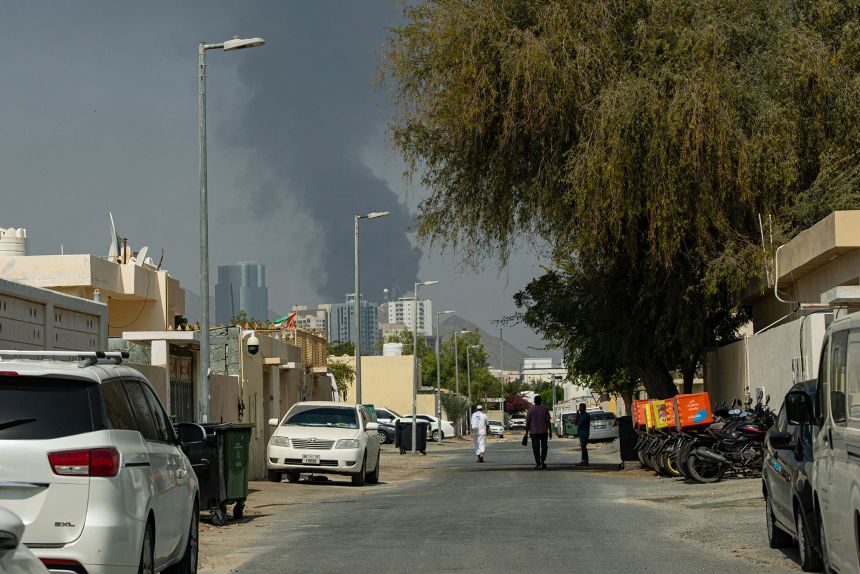
Traders are also concerned about the risk to oil facilities in countries like the United Arab Emirates, Qatar, Kuwait and Saudi Arabia, the world’s largest exporter.
Even when the Strait is reopened, if there’s significant damage to facilities in those countries, it will take a while to resume normal production.
The fact that traffic through the Strait of Hormuz has slowed to a crawl is not just delaying the supply of crude out of the Middle East. It’s filling up storage tanks in the region, forcing some countries to cut production – just when it’s needed the most.
“If you can’t put oil in storage, what are you going to do with it?” said Andy Lipow, president of consulting firm Lipow Oil Associates.