Manny González has run Manny’s Tortas, his Mexican sandwich booth inside Midtown Global Market in Minneapolis, with his 68-year-old sister for more than 25 years. Since early December, four of his 10 employees have stopped showing up to work, out of fear they will be detained by U.S. Immigration and Customs Enforcement agents, he says.
González, 65, is worried, too, he says. The trained chef, who immigrated to the U.S. from Mexico City in 1982, now carries his passport everywhere. His average monthly revenue is down roughly 50%, he estimates. He and his sister, who typically looks after the company’s books, are working 12-to-15-hour shifts on their feet making tortas to keep the business running while they’re short-staffed, he adds.
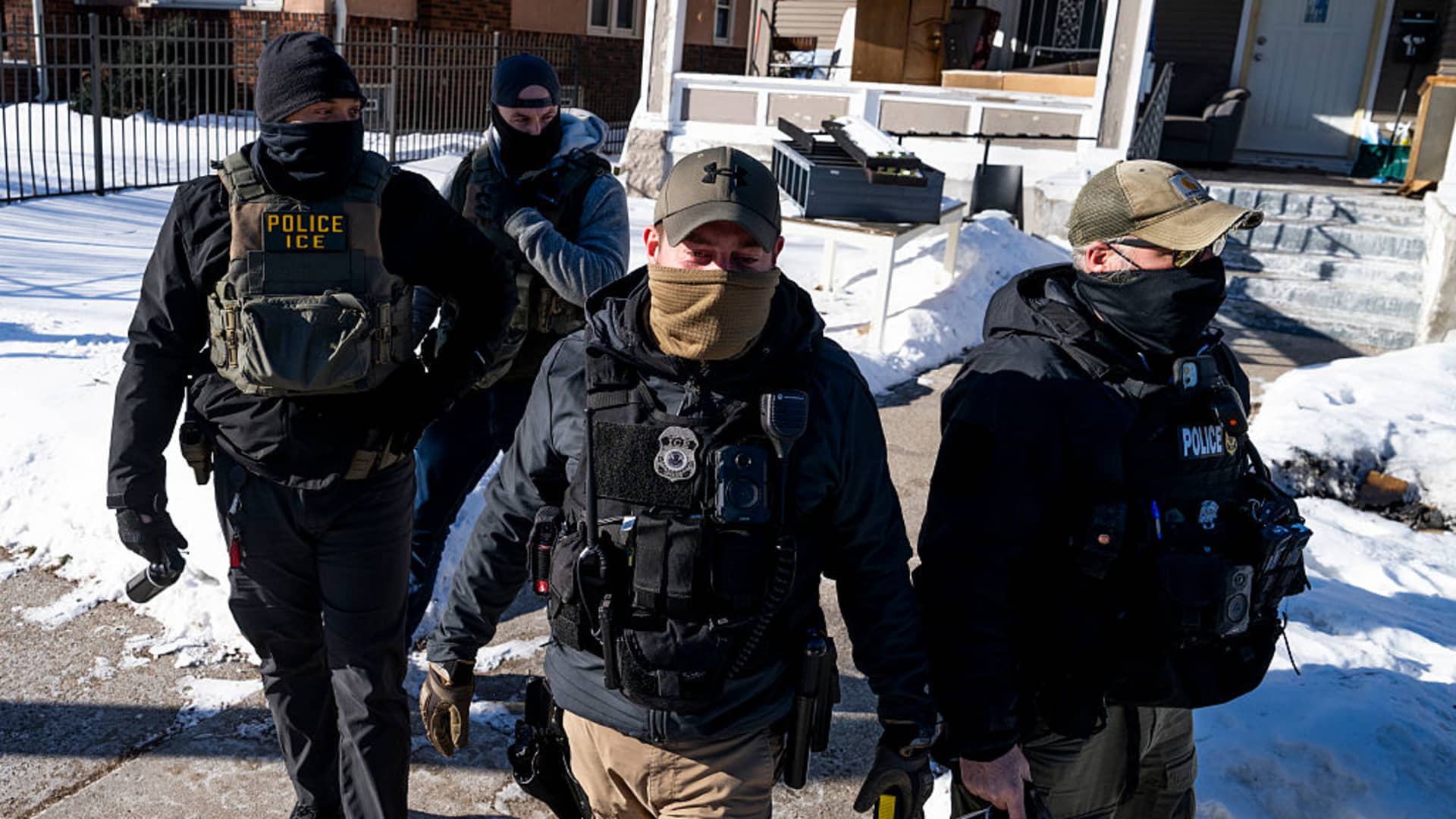
González says small-business owners in Minneapolis like him fear for their personal safety, their community’s safety and their companies’ survival as ICE agents flood the city. The U.S. federal government’s “Operation Metro Surge” brought thousands of ICE agents into Minneapolis beginning in December, and tensions between law enforcement and protesters escalated after two Americans — Renée Good and Alex Pretti — were killed by ICE and U.S. Border Patrol agents in January.
Residents have seen their day-to-day lives reshaped, and local small-business owners are no exception. Many of the businesses along Lake Street — a six-mile stretch of road in Minneapolis that’s home to an estimated 2,000 restaurants, marketplaces and shops — are experiencing an estimated 40% to 100% drop in revenue compared to last winter, says Marie Campos, communications and marketing manager at Lake Street Alliance, a nonprofit that supports small, primarily immigrant-owned businesses in that corridor.
Minneapolis’ small businesses were vulnerable even before December, says Richard Trent, executive director of the Main Street Alliance, a nationwide small-business network. Businesses, some of which survived the Covid-19 pandemic and George Floyd protests, had to recalibrate their business models due to U.S. tariffs on imported goods and federal cuts to Medicaid funding, he says.
Now, with customers and staff members alike staying at home — concerned about witnessing violence or being arrested themselves — sales are plummeting and businesses are running out of cash to pay for their expenses, says Trent.
As the biggest city in the state by population, Minneapolis tends to sway the entire state economy, Trent says. One-third of the Minnesota-based small businesses in Trent’s network, which typically operate with a relatively low amount of cash flow already, are “on the verge of collapse right now,” he estimates.
“When small business has a cough in Minnesota, the entire state catches a cold … When small business is suffering, it can literally bring entire state economies to their knees,” says Trent, noting that roughly half of U.S. job creation comes from small businesses.
Temporary and permanent business closures across Minneapolis
Ordinarily on weekends, Midtown Global Market bustles with live music, laughing children and a diverse array of businesses, says González. It’s quieter now, with multiple shuttered storefronts, though González has heard people blowing whistles outside to signal that ICE agents are nearby, he says.
Roughly half of Minneapolis’ immigrant-owned businesses have temporarily or permanently closed due to safety concerns or lack of staff since early December, Campos estimates. Other businesses are temporarily closing or cancelling events, too.
Some are refashioning themselves as community centers for locals who need warmth or free coffee while protesting or patrolling in the sub-freezing weather. Many business owners recall how community support helped them financially survive the pandemic and George Floyd protests that embroiled Minneapolis in 2020, says Campos.
“[They] recognize the community has given so much back to them,” she says. “It is the environment here where you don’t turn your back on the community that has supported you.”
It is the environment here where you don’t turn your back on the community that has supported you.
Marie Campos
Communications and marketing manager, Lake Street Alliance
Pilllar Forum, a café and event space in northeast Minneapolis, is one such organizing hub, says owner Corey Bracken. The business has a history of hosting protesters, and its revenue is actually up compared to this time last year, whether due to local community support or simply being open when others are closed, says Bracken. But even for businesses not facing imminent closure, stress is high.
On Jan. 11, one of Pilllar’s baristas called Bracken to report an incident with ICE agents outside, Bracken says. The barista told Bracken that agents “picked up” two people who’d left a nearby Latino-owned grocery store, and the barista and some of Pilllar’s patrons rushed outside to blow their whistles, only to be pepper sprayed and beaten with batons, Bracken says.
“Sometimes, it just feels like they’re out there to show their presence. Other days, it feels like they’re there to intimidate and bully,” says Bracken. Four confrontations involving ICE agents have occurred outside Pilllar so far in January, he says.
ICE did not immediately respond to CNBC Make It’s request for comment. When asked by ABC News about economic concerns for the region, Department of Homeland Security spokesperson Tricia McLaughlin pointed to the protests and what she referred to in a statement as “the fact sanctuary policies won’t allow us to work with state and local law enforcement,” the outlet reported on Jan. 21.
On Tuesday, three days after Alex Pretti was killed, U.S. President Donald Trump said, “we’re going to de-escalate a bit,” referencing the tension in Minneapolis in an interview with Fox News. As of Wednesday, the two Border Patrol agents who fired guns during Pretti’s shooting are on administrative leave.
‘There’s no playbook for having to deal with this’
The emotional toll has expanded beyond the confines of the city, says Jessica Peterson White, a city council representative in Northfield, roughly 35 miles south of downtown Minneapolis and home to Carleton College and St. Olaf College. Businesses there are similarly closing due to being short-staffed, she says.
Peterson White, a business owner herself — of Content Bookstore, in downtown Northfield — says that other owners in her store’s neighborhood have been questioned by ICE agents about their hiring practices. She’s begun training her employees on their constitutional rights and what to do if an ICE agent comes into the shop and starts harassing customers, she says.
“I can hardly do my normal job of just running my business, keeping my inventory flowing … because I spent so much time assessing and reassessing, ‘What feels safe today?'” says Peterson White. She and her staff spend some of their working hours dropping off supplies to a group organizing grocery delivery services for families afraid to leave their homes, she says.
“Our Penguin Random House boxes are exactly the right size [for groceries],” Peterson White says.
I can hardly do my normal job of just running my business, keeping my inventory flowing … because I spent so much time assessing and reassessing, ‘What feels safe today?’
Jessica Peterson White
Owner, Content Bookstore
One recent evening, while walking to a local pub, Bracken passed people marching down the streets with candles in a vigil for Pretti, he says. Outside the pub, a bagpipe player played and said a Scottish prayer, says Bracken.
“I’m usually pretty even-keeled with things — able to take on a lot and work with a lot of different people and high tensions,” Bracken says. “This is a whole new level of stress and anxiety that as a business owner, or just as a human being, there’s no playbook for having to deal with this.”