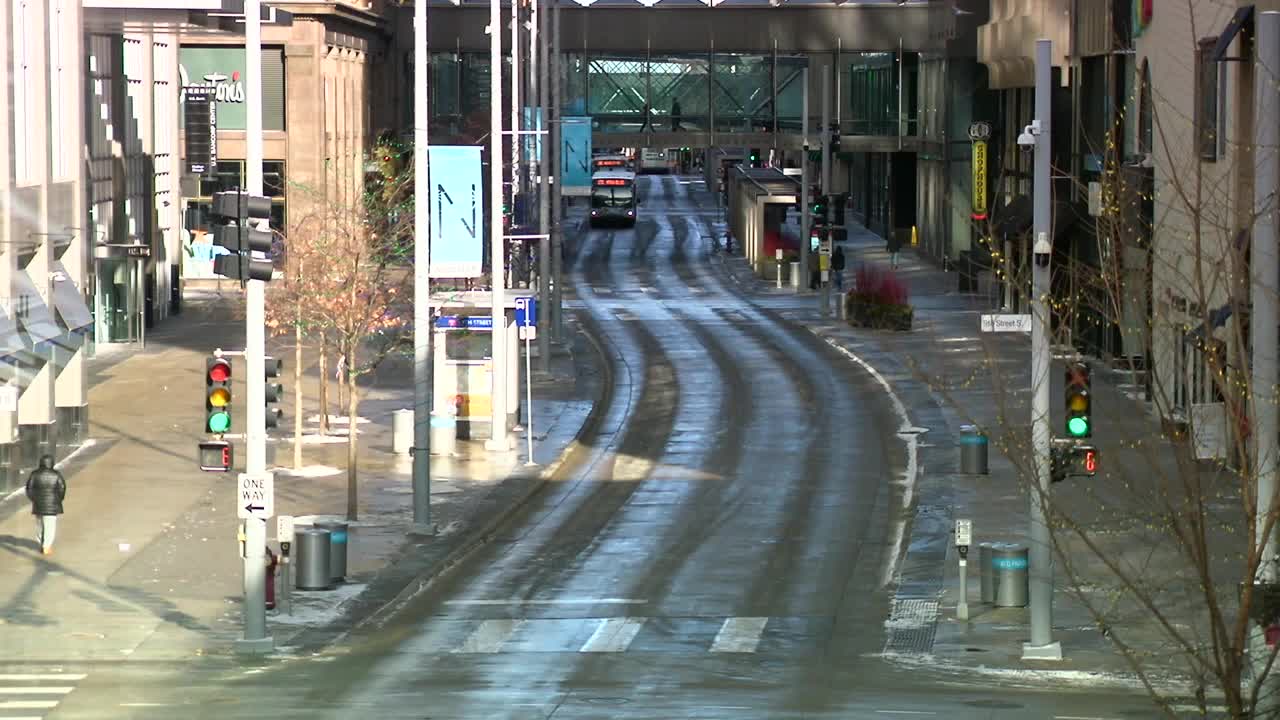
ICE operations and protests have led to event cancellations and business closures in the Twin Cities, affecting the local economy and daily life.
Snowboarders were expected to fill Minneapolis on Saturday, but the event was canceled. Comedy star John Mulaney also canceled three nights at the Armory due to the presence of ICE agents.
“Commerce and business doesn’t do well when there’s uncertainty,” said Adam Duininck, president and CEO of the Minneapolis Downtown Council.
Duininck said restaurants are hit hardest, with closures not seen since 2020. They are still counting the temporary closures, which are definitely in the dozens.
“I think it’s an uncertainty about whether customers are going to be out. I think that there’s a safety concern from the employees,” Duininck said.
RELATED: Hundreds protest ICE in downtown Minneapolis; at least 29 people detained
Economic impact
Kayia Wilson, a restaurant worker, said, “I am personally terrified.” She continues to work, but nearby Hell’s Kitchen has closed for a week, citing “complicated and challenging times.”
“It’s just been really slow,” Wilson said.
Duininck said they are still tallying revenue loss from closures and reduced foot traffic. One restaurant manager reported a 50% drop from a normal January.
“He knows general managers all across the city, and he’s hearing about it from bars, restaurants, you know, upscale places, and just your run-of-the-mill family restaurant, that’s where I think we’re really seeing the impacts, kind of everywhere,” Duininck said.
What financial aid is available?
The Downtown Council is discussing financial aid for local businesses at a level not seen since the pandemic. “I think we granted out around a million dollars in 2020 in increments of about 10 to $20,000 per company,” Duininck said.
The exact amount for this time has not yet been finalized, but a similar investment is under consideration.
“The impacts right now are significant… And unless something changes, we’ll be dealing with these challenges,” Duininck said.
Duininck said that as long as federal operations continue at this level, economic uncertainty will likely persist, potentially setting back business growth and recovery since 2020.