
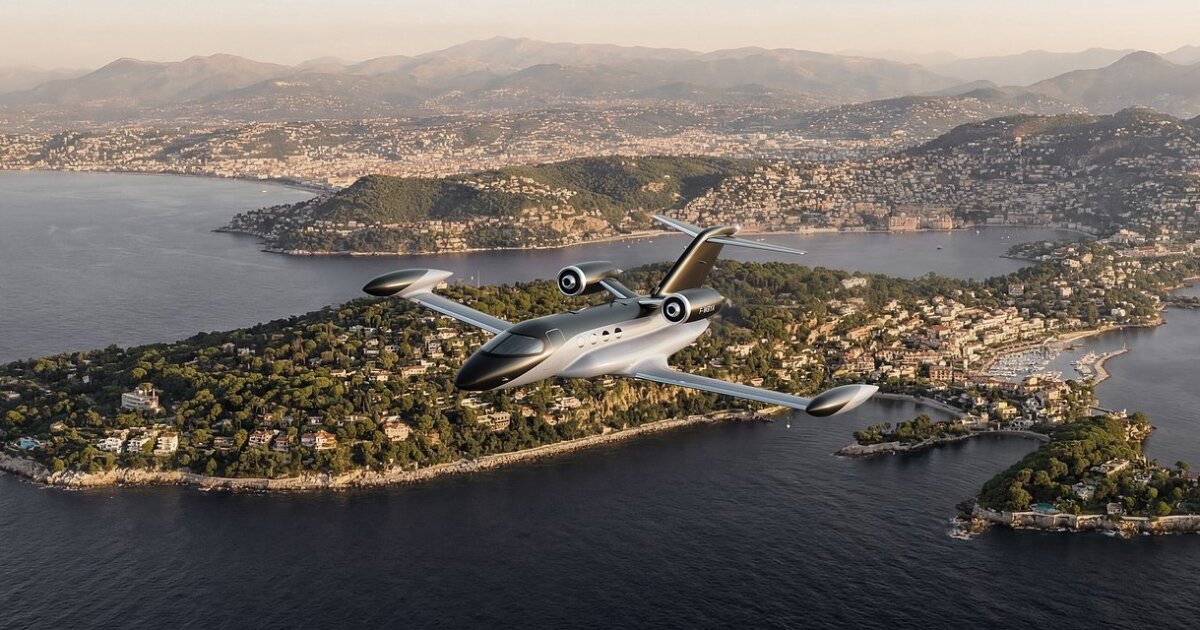
If you’ve ever hankered after a hydrogen-powered business jet, your wait might not be much longer. French aerospace startup Beyond Aero’s BYA-I One aircraft has completed its Preliminary Design Review, pushing it along the path to certification.
On paper, a hydrogen-powered business jet seems like a good idea. Hydrogen is about as green a fuel as you can get, producing only water as an emission and by using a fuel cell that runs electric propfans the resulting noise is much quieter than conventional gas turbines.
Mind you, there are a number of drawbacks, aside from not having anything like an actual hydrogen economy to supply the fuel – and certainly not one that doesn’t depend on fossil fuels. Compared to conventional aviation fuel, hydrogen has a very low energy density, so you need a lot of it to do the same job. This is made worse by the fact that handling cryogenic hydrogen is extremely difficult, expensive, and requires a lot of specialized gear.
Beyond Aero
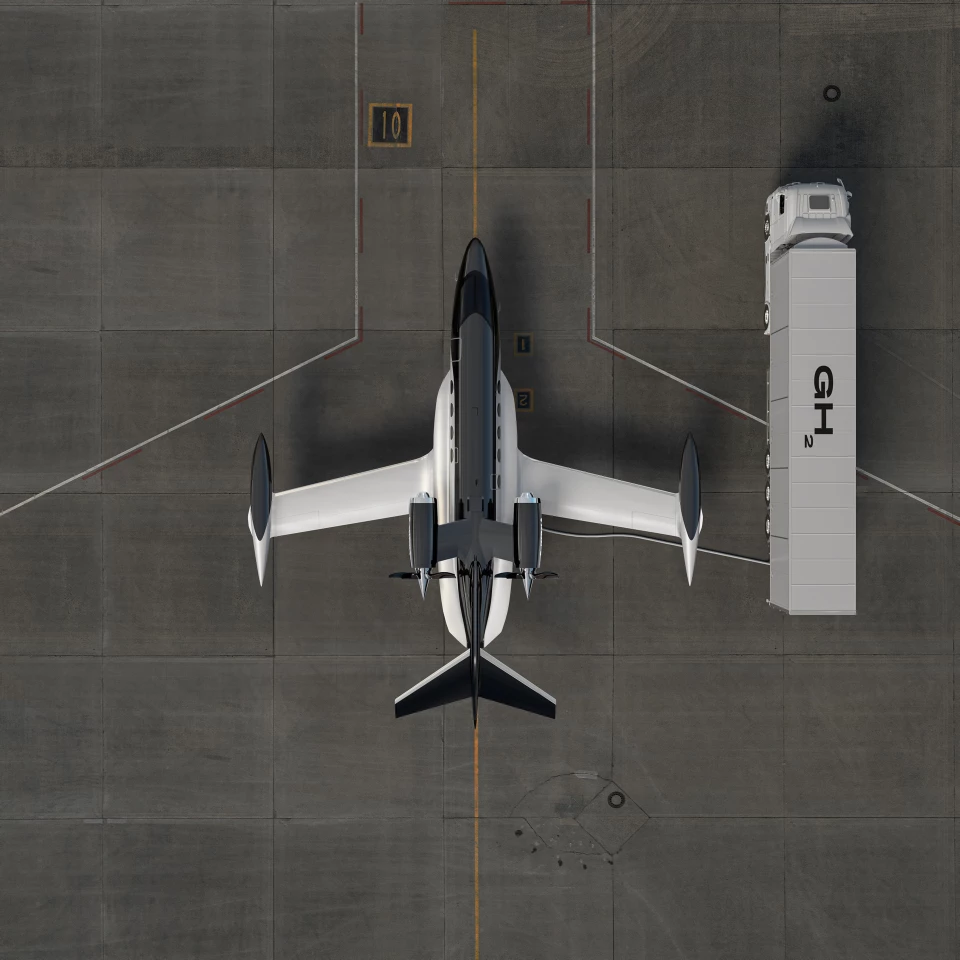
Beyond Aero hopes to get around a lot of this by simplifying its design. Instead of using cryogenic hydrogen, the company is using gaseous hydrogen that’s been pressurized to 700 atmospheres. This way, the BYA-I can rely on existing high-pressure technology that’s already been developed, doing away with the complex ultra-cold liquefaction plants. This also makes thermal management much simpler and means that heavy Dewar tanks aren’t needed.
Unfortunately, there’s still the need for high-pressure carbon-fiber tanks where up to 44 lb (20 kg) of tank are required to hold each 2.2 lb (1 kg) of fuel. That not only adds dead-weight, it also hampers performance at high-altitude airports in hot climates.
However, the company shows considerable confidence in the advantages of the BYA-I. Designed for short-range flights of under 800 NM (920 miles, 1,482 km) at a cruising speed of 300 knots (345 mph, 556 km/h), it can carry up to eight passengers plus a crew of two for a maximum takeoff weight of 21,164 lb (9,600 lb).
Beyond Aero
Because of its redundant fuel cell configuration, the six 400-kW cells powering the turbofan motors are claimed to have a system resilience that rivals that of conventional engines. In addition, the zero-emissions powertrain makes the BYA-I immune to carbon taxes and “flight shaming” regulations.
Currently, Beyond Aero is seeking a CS-25/Part 25 certification from the EASA and the FAA, which is the highest standard of airworthiness that is normally reserved for large airliners. Apparently, the company is confident that its first-of-its-kind hydrogen powertrain will meet the stringent safety requirements so it can meet its service entry target of 2030.
“The Preliminary Design Review confirms that the aircraft configuration and its major systems – propulsion, hydrogen storage, aerodynamics and avionics – have reached the level of maturity required to support a certifiable architecture,” said Luiz Oliveira, Chief Engineer at Beyond Aero. “With this milestone completed, the program moves on schedule into detailed design and verification of the aircraft’s integrated systems.”
Source: Beyond Aero