Introduction: Venezuela news drives up gold and defence stocks
Good morning and welcome to our rolling coverage of business, the financial markets and the world economy.
Donald Trump’s strike on Venezuela last weekend, and the capture of its president, Nicolás Maduro, and his wife, Cilia Flores, is sparking a dash for safe haven assets, and shares in defence companies, today.
Gold has jumped by more than 2% this morning to $4,420 per ounce, towards the record highs set at the end of last year.
Silver’s up around 4% at $75.50 per ounce, adding to its strong gains in 2025.
Trump’s move on Caracas on Saturday morning means markets being forced to react to political shockwaves just as investors return to their desks after the Christmas and new year break.
Ipek Ozkardeskaya, senior analyst at Swissquote, says markets are “barely flinching” at the Venezuelan news, although a risk premia is creeping back into asset prices.
Ozkardeskaya explains:
Unsurprisingly, safe-haven assets — led by gold — are enjoying a positive ride this morning. The yellow metal, which traded at a fresh record above $4’500 by the end of December but closed the year with a sharp decline below $4’400, is back above that level this Monday. Silver is up more than 3.6% at the time of writing, while the Swiss franc is softer against a broadly bid US dollar, and there is no particular sign of stress or lack of appetite across risk assets.
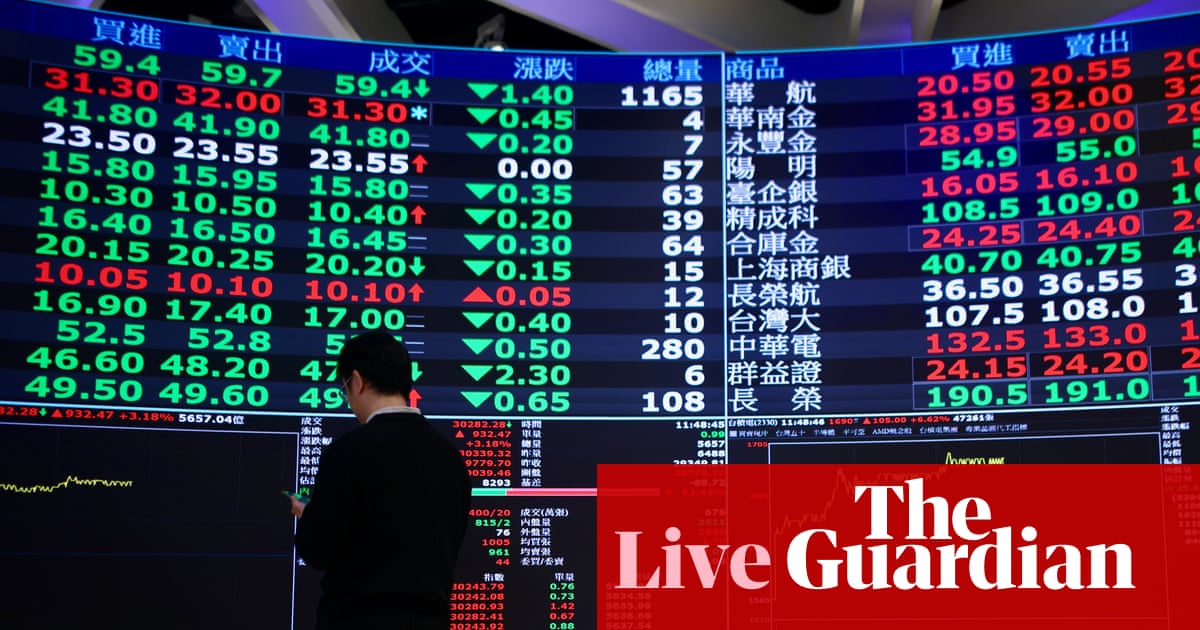
Most Asia-Pacific stock markets have risen today, with defense stocks rising across Japan and South Korea.
In Tokyo, defence contractor IHI has jumped 9% today, with Mitsubishi Heavy Industries up 8.4%.
Shares of South Korean defense giant Hanwha Aerospace are up 7%.
The agenda
-
9.30am GMT: Bank of England money and credit report
-
9.30am GMT: Bank of England mortgage approvals data
-
4pm GMT: ISM survey of US manufacturing
Key events
Although the near-term economic and financial implications of the capture of Venezuelan president Maduro are “minor”, the geopolitical ramifications could keep some risk premia elevated, says Thomas Mathews, Head of Markets, Asia Pacific, at Capital Economics.
Mathews told clients this morning:
The key channel through which turmoil in Venezuela might affect global markets is energy. Recent developments don’t look like a game changer for the global oil market. Venezuelan supply accounts for about 1% of the that market, and even if production returned to its glory days of a decade ago it would only be about 2% of it. So, it’s not surprising that so far the effect on oil prices has been limited.
That makes for a stark contrast with, for example, the spike in those prices around the Israel-Iran conflict last year. But that episode also suggests that other markets should remain calm even if oil does ultimately move in response to the developments in Venezuela.
Looking further afield, the White House could use concerns over drugs and organised crime to extract concessions from other countries in the region.
Mathews adds:
Mexico is perhaps the most obvious candidate, and was indeed called out by Vice President Vance in remarks on X following the raid. With that in mind, it wouldn’t be surprising to see higher regional risk premia for a while.
Bitcoin has risen by almost 1.5% this morning, amid growing geopolitical tensions.
The world’s largest cryptocurrency has climbed to $92,495, adding to gains over the weekend.
The US dollar is rising on the foreign exchange markets this morning; its up 0.25% against a basket of other currencies.
Oil price drops
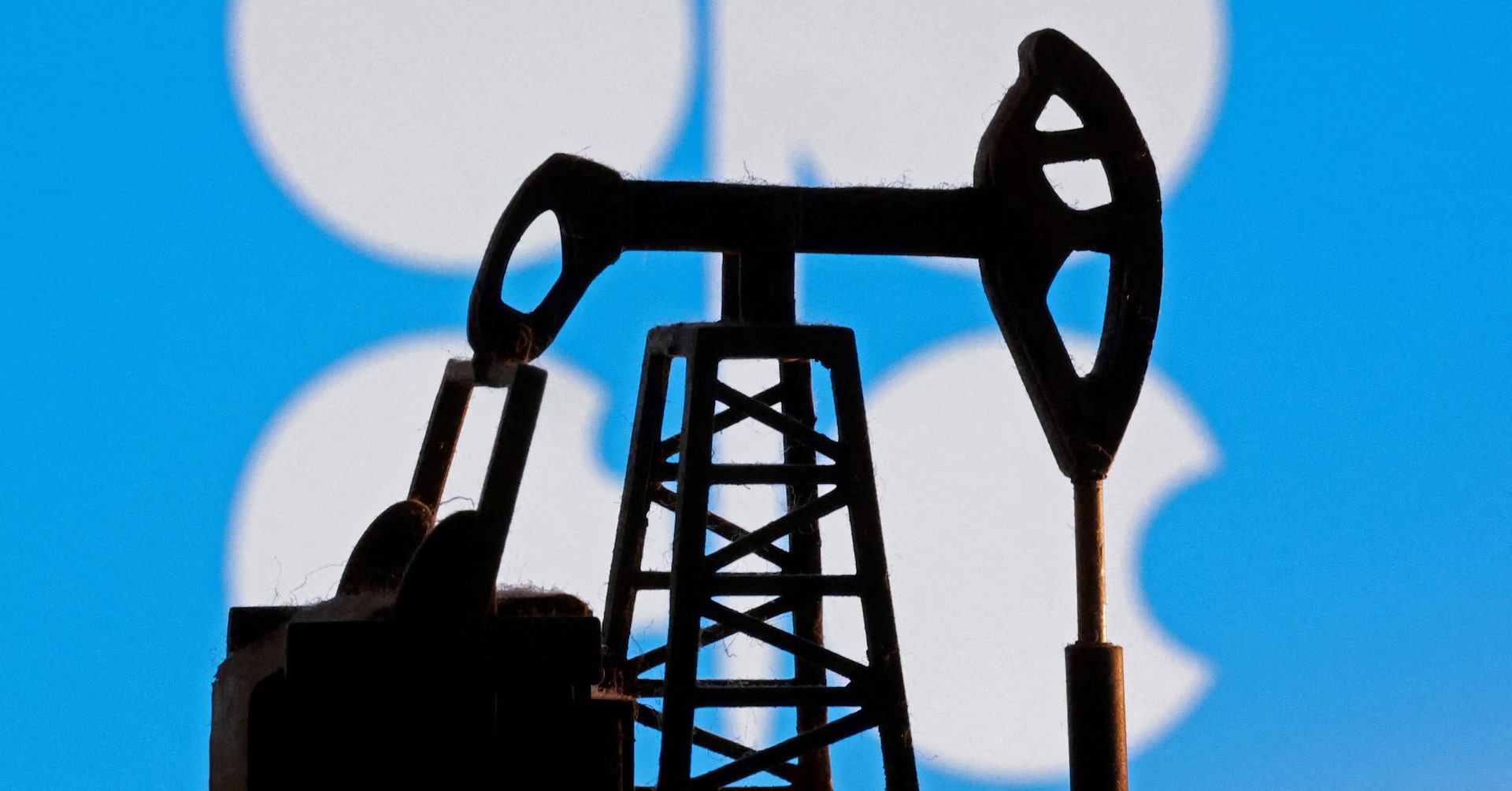
The oil price has dipped this morning, as traders weigh up events in Venezuela.
Brent crude, the international benchmark, has dipped by 0.67% to $60.34 per barrel.
Donald Trump has put Venezuela’s oil reserves at the heart of his plan for regime change in the country, suggesting US oil companies will spend billions of dollars on its infrastructure.
Analysts, though, point out that it could take years before there is a meaningful increase in Venezuela’s oil exports.
“This morning there’s still a lot of uncertainty, and for markets, there’s a debate about the extent to which any short-term oil supply disruption from the upheaval will end up being outweighed by a longer-term supply boost from higher Venezuelan production,” reports Jim Reid, market strategist at Deutsche Bank.
Reid adds:
After all, the US Energy Information Administration have said that Venezuela has the world’s largest proven crude oil reserves, at 17% of the global total. But despite those reserves, production has declined significantly over recent years, with crude oil production in 2023 down 70% from its 2013 levels.
So the prospect of a long-term supply recovery would serve to lower oil prices, and Trump himself said over the weekend that US oil companies would “go in, spend billions of dollars, fix the badly broken infrastructure, the oil infrastructure, and start making money for the country”. Indeed, those expectations have already brought down oil prices this morning.
Introduction: Venezuela news drives up gold and defence stocks
Good morning and welcome to our rolling coverage of business, the financial markets and the world economy.
Donald Trump’s strike on Venezuela last weekend, and the capture of its president, Nicolás Maduro, and his wife, Cilia Flores, is sparking a dash for safe haven assets, and shares in defence companies, today.
Gold has jumped by more than 2% this morning to $4,420 per ounce, towards the record highs set at the end of last year.
Silver’s up around 4% at $75.50 per ounce, adding to its strong gains in 2025.
Trump’s move on Caracas on Saturday morning means markets being forced to react to political shockwaves just as investors return to their desks after the Christmas and new year break.
Ipek Ozkardeskaya, senior analyst at Swissquote, says markets are “barely flinching” at the Venezuelan news, although a risk premia is creeping back into asset prices.
Ozkardeskaya explains:
Unsurprisingly, safe-haven assets — led by gold — are enjoying a positive ride this morning. The yellow metal, which traded at a fresh record above $4’500 by the end of December but closed the year with a sharp decline below $4’400, is back above that level this Monday. Silver is up more than 3.6% at the time of writing, while the Swiss franc is softer against a broadly bid US dollar, and there is no particular sign of stress or lack of appetite across risk assets.
Most Asia-Pacific stock markets have risen today, with defense stocks rising across Japan and South Korea.
In Tokyo, defence contractor IHI has jumped 9% today, with Mitsubishi Heavy Industries up 8.4%.
Shares of South Korean defense giant Hanwha Aerospace are up 7%.
The agenda
-
9.30am GMT: Bank of England money and credit report
-
9.30am GMT: Bank of England mortgage approvals data
-
4pm GMT: ISM survey of US manufacturing