
Credit: Courtesy of Meristem Communitie
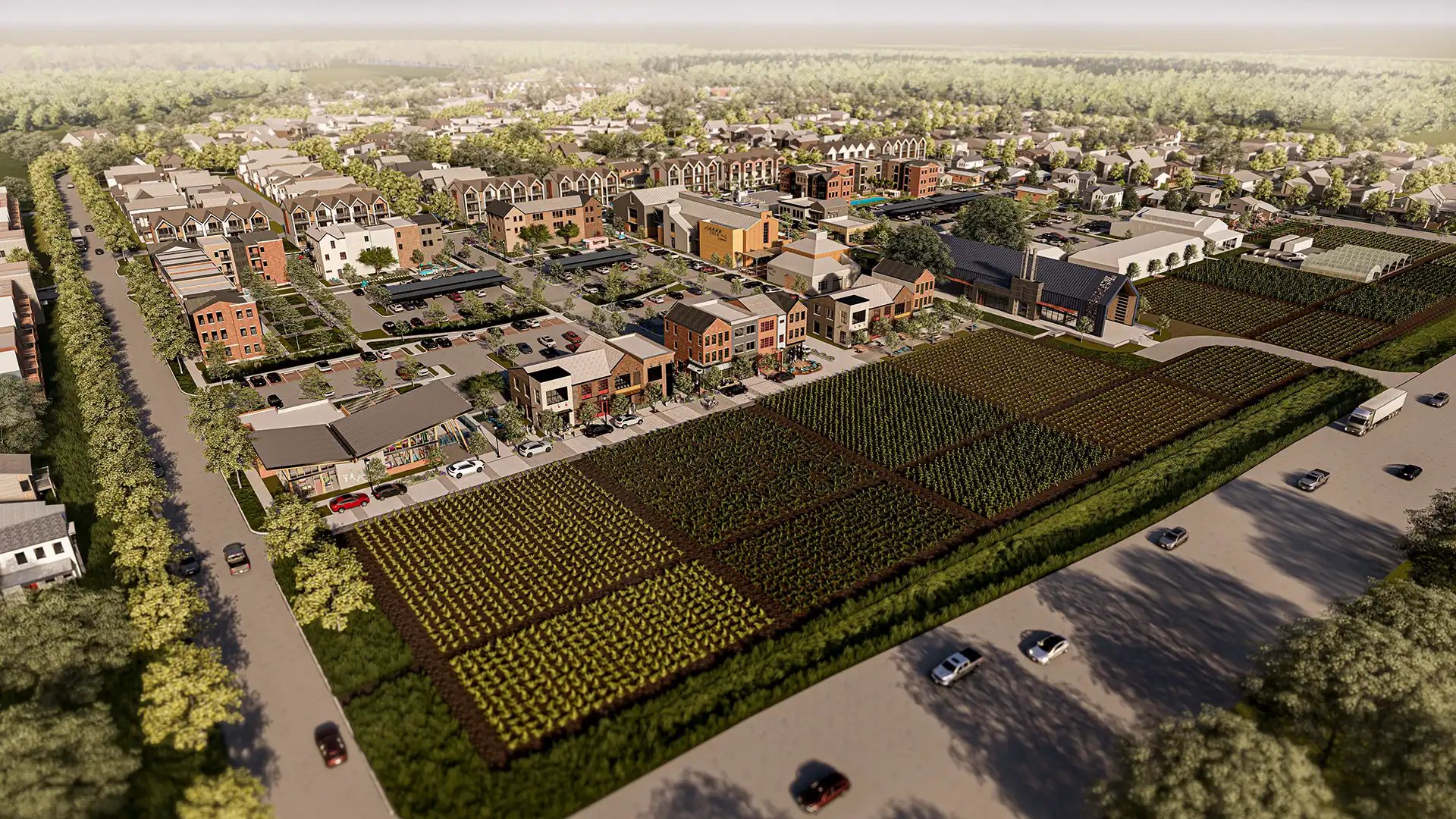
The first residents of Indigo, a new neighborhood in Fort Bend County, are settling into “agrihood” living — providing opportunities for suburban Texans to engage with agriculture in a way their daily lives do not include. Homes are centered around a working farm, shared green spaces, walking trails and other elements that support healthy living.
Residents of the 235-acre master-planned community moved in earlier this year, marking a key milestone in a multidisciplinary Texas A&M University study led by the School of Public Health examining how living in an agriculturally integrated suburban neighborhood may influence overall health. Launched in July 2025, the initiative will track how living in an agriculturally integrated neighborhood affects diet, physical activity, nature contact and social connectedness, comparing residents of the agrihood with participants in a nearby traditional suburban community with similar demographics.
There are about 100 such agrihood communities planned or in development globally. At Indigo, 42 acres are dedicated to agriculture, including crop fields and a livestock pasture. Plans also emphasize walkability, with more than half of the land dedicated to car-free green spaces
Agrihoods are still a relatively new concept for healthier, more sustainable living, and little data exists on their measurable impacts on health and wellbeing. The Texas A&M-led study aims to fill that gap by gathering data on residents before and after they move into an agrihood.
With homeowners now living in Indigo, researchers will soon launch focus groups and time-use surveys for study participants. Baseline surveys on residents’ health and lifestyle are also nearing completion.
During the course of the study, the team will monitor changes in residents’ physical activity and nutrition as well as biomarkers like blood pressure, cholesterol and other metabolic health indicators.