Cold chain packaging is shifting from disposable to reusable, service-driven assets, driven by biologics growth, compliance demands, and digital logistics innovation.
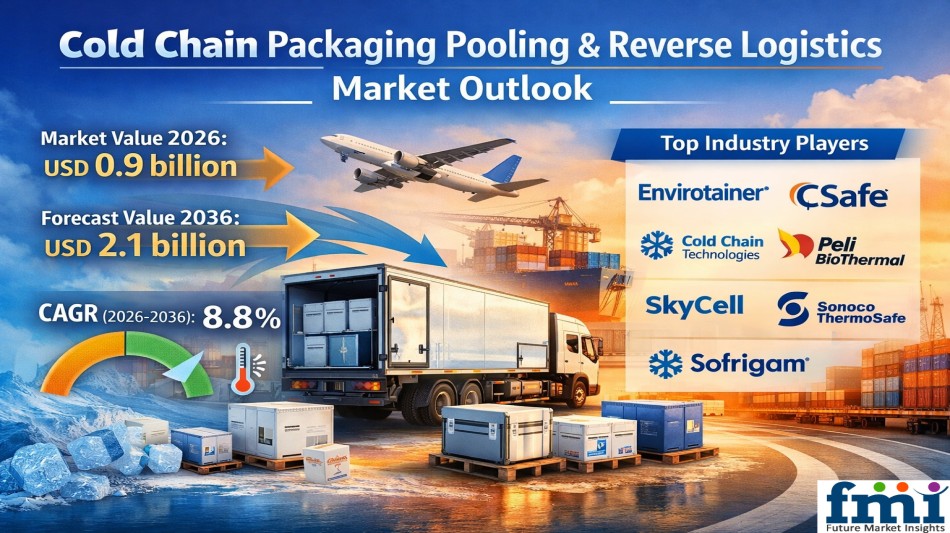
NEWARK, DE / ACCESS Newswire / April 6, 2026 / The global cold chain logistics ecosystem is entering a decisive transformation phase as pharmaceutical supply chains shift toward circular, service-driven models. The Cold Chain Packaging Pooling and Reverse Logistics Services Market, valued at USD 0.9 billion in 2026, is projected to reach USD 2.1 billion by 2036, expanding at a robust CAGR of 8.8%.
This growth reflects a fundamental industry shift: temperature-controlled packaging is no longer treated as a disposable operational input, but as a strategic, reusable asset embedded within regulated pharmaceutical distribution networks.
According to a comprehensive analysis by Future Market Insights (FMI), the market’s expansion is closely linked to the increasing adoption of biologics, the rise of global clinical trials, and stricter compliance requirements for temperature-sensitive healthcare logistics.
Market Metrics at a Glance (2026-2036)
-
Current Market Value (2026): USD 0.9 Billion
-
Projected Market Value (2036): USD 2.1 Billion
-
Global Growth Rate (CAGR): 8.8%
-
Top Growth Market: India (11.2% CAGR)
-
Leading Service Model: Rental Programs (52% Share)
Discover Growth Opportunities in the Market – Get Your Sample Report Now
https://www.futuremarketinsights.com/reports/sample/rep-gb-32577
The Circular Shift: From Disposable Packaging to Managed Asset Ecosystems
The economics of cold chain logistics are undergoing a structural reset. Pharmaceutical manufacturers are rapidly moving away from single-use thermal shippers toward pooled, reusable systems that integrate packaging, tracking, and recovery into a unified service model.
This transition is not just about sustainability-it is about operational control. Reusable packaging programs enhance chain-of-custody visibility, reduce material waste, and ensure consistent thermal performance across complex global supply chains.
“Cold chain packaging is evolving into a service-centric infrastructure layer,” notes an FMI analyst. “Competitive advantage will increasingly depend on network density, turnaround speed, and asset visibility-not just packaging performance.”
However, this transformation comes with complexity. High upfront investment in thermal fleets, reverse logistics coordination, and refurbishment infrastructure creates barriers to entry, favoring established players with global service networks.
Reverse Logistics: The Hidden Engine of Performance
While forward distribution often captures attention, reverse logistics is emerging as the critical determinant of system efficiency. Asset recovery speed directly impacts container availability, service reliability, and total cost of ownership.
Fragmented return networks-especially at first-mile collection points such as clinics and pharmacies-continue to challenge operators. Retrieving parcel-sized thermal units from decentralized locations increases logistical complexity and cost per unit.
To address this, logistics providers are investing in:
-
Localized wash and conditioning hubs
-
Courier-integrated return networks
-
Real-time tracking and telemetry systems
These innovations are helping improve asset utilization rates and reduce turnaround times, ensuring that reusable fleets remain economically viable at scale.
E-Commerce of Logistics: Digitalization Drives Market Efficiency
Digital infrastructure is becoming the backbone of cold chain pooling services. Advanced tracking systems, IoT-enabled telemetry, and predictive analytics are enabling real-time monitoring of both temperature conditions and asset location.
Track-and-trace regulations, coupled with the need for rapid recall responsiveness, are pushing pharmaceutical distributors toward data-driven logistics ecosystems.
This digital-first approach allows operators to:
-
Optimize asset allocation across global trade lanes
-
Predict demand surges and reposition inventory proactively
-
Ensure compliance with stringent regulatory frameworks
As a result, cold chain logistics is evolving into a highly digitized, intelligence-driven service industry.
Segment Spotlight: Pooling, Parcelization, and Precision
Pooling Services (34% Market Share):
Pooling remains the dominant service model, driven by the growing preference for asset-light logistics strategies. Pharmaceutical companies increasingly rely on third-party providers to manage container fleets, reducing capital expenditure while improving flexibility.
Parcel Shippers (38% Share):
The rise of decentralized clinical trials and direct-to-patient delivery models is fueling demand for smaller, highly validated parcel shippers. These units enable precise dose-level tracking and maintain strict compliance standards.
2-8°C Temperature Band (41% Share):
Refrigerated conditions continue to dominate, as most biologics and vaccines require strict adherence to this temperature range. Managing high volumes within this band demands significant conditioning infrastructure and operational precision.
Biopharma End Use (44% Share):
Biopharmaceutical products represent the largest demand segment, driven by their high value and zero-tolerance for temperature excursions.
Rental Programs (52% Share):
Rental-based contract models are leading adoption, as they align costs with shipment volumes while eliminating the need for asset ownership and maintenance.
Regional Powerhouses: Emerging Markets Drive Acceleration
While developed markets maintain strong demand, the most aggressive growth is occurring in emerging economies:
-
India (11.2% CAGR): The fastest-growing market, driven by expanding clinical trial networks and increasing pharmaceutical exports.
-
China (10.4% CAGR): Rapid biopharma scale-up and structured distribution systems are accelerating adoption of reusable packaging networks.
-
Brazil (10.0% CAGR): Tightened compliance requirements are pushing distributors toward validated cold chain solutions.
-
United States (8.8% CAGR): A mature market characterized by high biologics volumes and advanced logistics infrastructure.
-
Germany (8.5% CAGR) & United Kingdom (8.3% CAGR): Strong growth supported by dense logistics networks and regulatory alignment.
-
Japan (7.5% CAGR): Aging population and rising healthcare demand are driving steady expansion.
Sustainability Meets Compliance: Defining the Next Decade
Environmental regulations and carbon reporting requirements are accelerating the adoption of circular cold chain models. Reusable packaging significantly reduces waste compared to disposable thermal shippers, aligning with global sustainability targets.
At the same time, compliance remains non-negotiable. Pharmaceutical companies require validated, auditable systems that guarantee temperature integrity and product safety.
This dual pressure-sustainability and compliance-is reshaping procurement strategies, pushing companies toward integrated service providers capable of delivering both.
Innovation Outlook: Automation, AI, and Network Optimization
Looking ahead to 2036, several transformative trends are expected to redefine the competitive landscape:
-
Automated Conditioning Hubs: Robotic cleaning and refurbishment systems will accelerate turnaround times and improve asset availability.
-
Predictive AI Logistics: Machine learning models will optimize asset positioning, preventing shortages during demand spikes.
-
Cross-Industry Collaboration: Shared logistics networks across industries will enhance efficiency and reduce costs.
-
Advanced Materials: Improved phase-change materials and insulation technologies will enhance thermal performance while reducing weight.
Competitive Landscape: Scale, Network, and Intelligence
The market remains moderately fragmented but increasingly competitive. Leading players such as Envirotainer, CSafe, Cold Chain Technologies, Peli BioThermal, SkyCell, Sonoco ThermoSafe, and Sofrigam are leveraging global networks and advanced technologies to strengthen their market positions.
Tier-1 providers dominate through:
Meanwhile, mid-tier innovators are differentiating through specialized capabilities such as lightweight designs, advanced phase-change materials, and enhanced telemetry integration.
Procurement strategies are also evolving, with pharmaceutical companies diversifying supplier relationships to avoid dependency on a single provider and maintain pricing leverage.
The Road Ahead: From Logistics Function to Strategic Infrastructure
The Cold Chain Packaging Pooling and Reverse Logistics Services Market is no longer a niche operational segment-it is becoming a foundational pillar of global pharmaceutical supply chains.
As biologics, vaccines, and personalized medicines continue to expand, the demand for reliable, compliant, and sustainable cold chain solutions will intensify.
Companies that invest in scalable networks, digital intelligence, and circular logistics models will define the next decade of growth. In this evolving landscape, success will not be measured by the number of containers deployed, but by the efficiency, visibility, and resilience of the systems that keep them moving.
For an in-depth analysis of evolving formulation trends and to access the complete strategic outlook for the Cold Chain Packaging Pooling and Reverse Logistics Services Market through 2036, visit the official report page at: https://www.futuremarketinsights.com/reports/cold-chain-packaging-pooling-and-reverse-logistics-services-market
Explore More Research Reports by FMI
About Future Market Insights (FMI)
Future Market Insights (FMI) is a leading provider of market intelligence and consulting services, serving clients in over 150 countries. Headquartered in Delaware, USA, with a global delivery center in India and offices in the UK and UAE, FMI delivers actionable insights to businesses across industries including automotive, technology, consumer products, manufacturing, energy, and chemicals.
An ESOMAR-certified research organization, FMI provides custom and syndicated market reports and consulting services, supporting both Fortune 1,000 companies and SMEs. Its team of 300+ experienced analysts ensures credible, data-driven insights to help clients navigate global markets and identify growth opportunities.
For Press & Corporate Inquiries
Rahul Singh
AVP – Marketing and Growth Strategy
Future Market Insights, Inc.
+91 8600020075
For Sales – sales@futuremarketinsights.com
For Media – Rahul.singh@futuremarketinsights.com
For web – https://www.futuremarketinsights.com/
SOURCE: Future Market Insights, Inc.
View the original press release on ACCESS Newswire