
The restaurant industry will cross the 2025 finish line underperforming forecasts, driven by slower check growth, lower frequency, and negative traffic.
Data firm Technomic predicted a 5.1% increase in foodservice sales going into this year, following a 3.1% increase in 2024. Since then, however, uncertainty over tariff and immigration policies exacerbated, layoffs picked up, and inflation persisted. This equation has caused consumer sentiment to plummet to near-historic lows.
As such, Technomic lowered its forecast by the start of the second quarter and moved into a scenario-based model to derive its forecast, which doesn’t happen too often. Technomic’s nominal sales growth projection has been downgraded to 4.3% for limited-service restaurants and 2.1% for full-service restaurants. Real growth is projected to be flat.
If you look hard enough, however, you can usually find a silver lining in any situation. For the restaurant industry, there remain clear winners writing textbooks on how to thrive in a challenging environment (Chili’s is the best example here). There are also some categories bucking overall trends.
Consider business dining for example, which generates $1 out of every $5 spent at restaurants through team lunches, client dinners, event catering, and meals on the road. A recently released report from Dinova and Technomic finds that the category makes up about $212 billion a year, or about 16% to 20% of the U.S. dining market.
Year-over-year sales and traffic growth in business dining outpaced the overall market. In June, for instance, total dining sales grew 3.5% year-over-year, while total business dining sales increased by 5.3%. Traffic for the broader industry was up a mere 0.4% but grew 1.6% for business dining. The category is on pace for 2% to 4% growth this year.
“While consumer sentiment remains poor across U.S. dining due to personal budget constraints and policy shifts, business dining continues to show resilience,” the report said.
Of course, geography, format, and client mix play a role in business dining trends. Limited-service restaurants, especially fast-casual brands, are capturing a growing share of business dining, which is noteworthy as the fast-casual category struggles overall. In fact, fast-casual brands, including Chipotle and CAVA, experienced the strongest sales growth among business diners in the first part of the year.
Much of this momentum is driven by catering, which is defined as purchases over $150. These larger-ticket orders are often tied to workplace events and present a broader opportunity, as more than 70% of employees who first try a restaurant through such an event will then purchase from that concept again outside of work.
Perhaps it’s no surprise then that catering has become a much bigger part of some fast-casual chains’ strategies. Chipotle recently launched a catering pilot featuring equipment and technology packages aimed at scaling the channel without operational disruption. During the company’s third quarter earnings call, chief executive officer Scott Boatwright said catering represents about 1% to 2% of sales “versus our peers at 5% to 10%.”
“It could represent a meaningful opportunity in the future,” he said.
CAVA is currently testing catering in Houston with plans to expand to a second market and “position ourselves for a broader launch,” CEO Brett Schulman said recently.
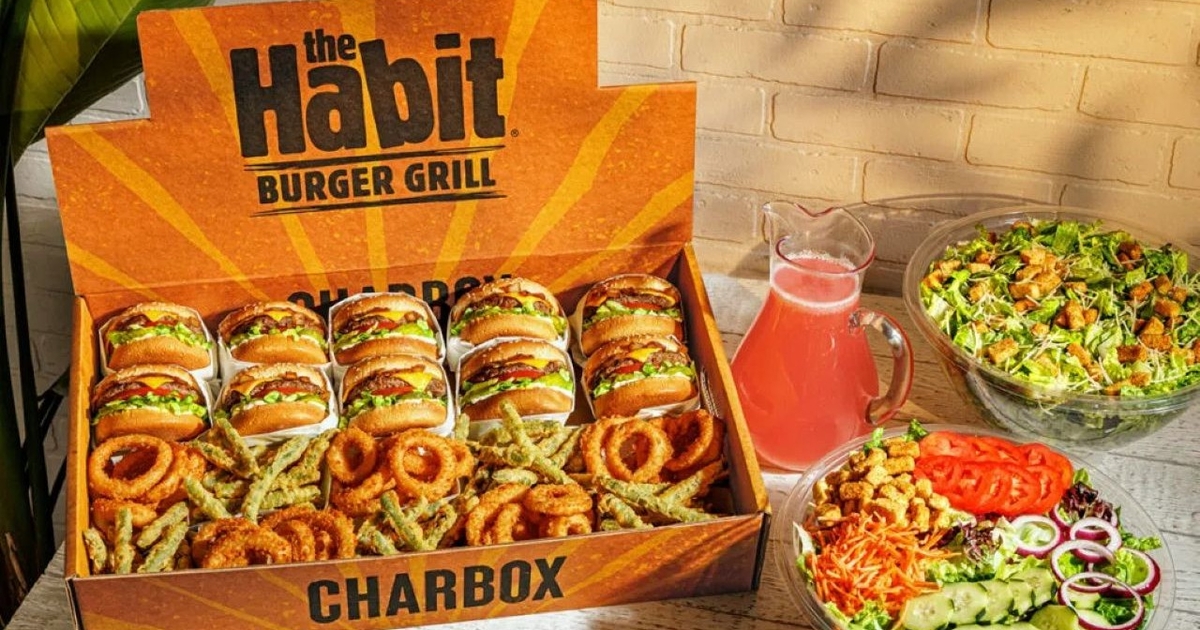
Meanwhile, Habit Burger & Grill launched its first catering program about a year ago, and Potbelly has enhanced its catering channel in the past year with revamped bundles and packaging.
Dinova notes that companies have begun trimming air travel, suggesting they’re redirecting resources toward local, in-person gatherings, which will likely create more catering opportunities.
“As we thoughtfully anticipate reaching a new high in business travel spending this year, the outlook is steady — but the road ahead is more complex.” Global Business Travel association CEO Suzanne Neufang said in the report.
Geographic and industry winners
There are clear geographic winners for business dining in the current environment. San Franscico, Boston, and Miami, for instance, have all experienced double-digit sales growth in the category this year.
Markets experiencing 3-plus-percent growth also include Austin, New York City, Chicago, Denver, Orange County, Calif., Nashville, Northern New Jersey, Detroit, Dallas, and Philadelphia.
Meanwhile, Las Vegas and Washington, D.C., have declined 0.2%, while Seattle is down 1.7%. Houston, Phoenix, and Indianapolis have seen their business-dining sales fall 5%, 5.5%, and 7.1%, respectively.
The financial industry is generating the highest increases in business dining this year, with 10.6% growth, followed by telecom (9.7%), and information technology (9.6%). Health care has been steady at 2.7%.
Industries that have experienced a decline in business dining include energy (-3.9%), consumer staples (-3.6%), and materials (-3.1%).
Contact Alicia Kelso at [email protected]
Follow her on TikTok: @aliciakelso