Europe is weighing retaliation if President Donald Trump imposes more tariffs — and it threatens the US’s big global advantage.
French President Emmanuel Macron pushed to activate what’s commonly referred to as a trade “bazooka” in response to Trump’s recent threat to impose an additional 10% tariff on European countries unless they agree to a deal ceding control of Greenland.
“The anti-coercion mechanism is a powerful instrument, and we should not hesitate to deploy it in today’s tough environment,” Macron said at the World Economic Forum at Davos on Tuesday.
Macron was referring to a tool passed by the EU in 2023 that would allow it to impose tariffs on imports and restrict services from the US.
The hit to services such as pharma, tech, and finance would be the new blow to the US economy, as tariffs tend to focus on goods. While the US has a trade deficit for goods, it has a surplus for services.
The US exported $1.1 trillion in services in 2024, according to data from the St. Louis Federal Reserve, and has exported more services than it has imported for the last five decades, making it the world’s leading services exporter. The St. Louis Fed said in its report that it means “the U.S. can specialize in services and trade with other countries, which leads to greater efficiency and more benefits for consumers.”
The Bureau of Economic Analysis also found that the US exported $489 billion in services to Europe that same year.
Alex Durante, a senior economist at the nonpartisan Tax Foundation, told Business Insider that these threats are “uncharted territory,” and Trump’s push to acquire Greenland could put the US’ international standing at risk.
“America really would lose whatever standing it still has in the world if it were to go forward and do something like that,” Durante said.
White House Spokesman Kush Desai told Business Insider that “the Trump administration has kept its word” on its trade deal with the EU earlier this year, adding, “the EU’s time would be better spent delivering on these trade commitments.”
A trade ‘bazooka’ threatens America’s big economic advantage
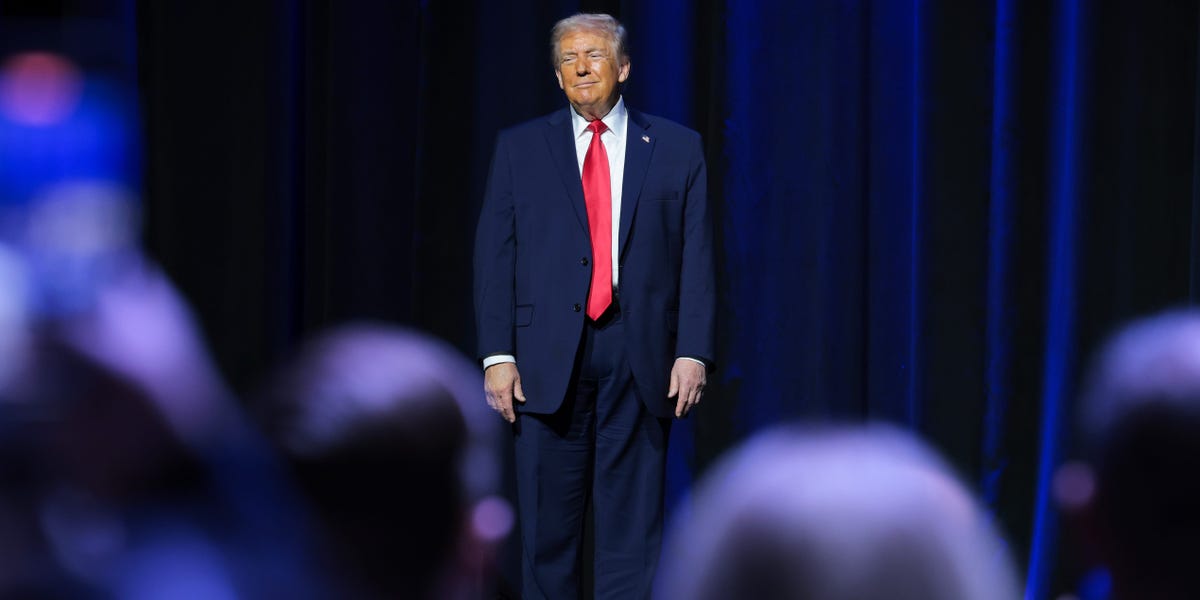
In his plan, Trump called out eight European countries that opposed US control of Greenland and sent troops to the country, including Denmark, Germany, France, and the United Kingdom, as potential targets for more tariffs.
Those tariffs would be raised to 25% in June if those countries do not agree to the deal, Trump said.
“This tariff will be due and payable until such time a deal is reached for the complete and total purchase,” he wrote in a Truth Social post.
A Q&A from the EU Commission said that the anti-coercion tool is “designed to be broad” to allow for an “efficient response to an individual case of economic coercion with minimal or no impact on the EU economy.”
It could restrict access to European markets for US-based service exporters, such as Big Tech companies and Wall Street firms.
The trigger for this tool, per the Commission, would be a situation in which a country pressures a member of the EU into making a decision through trade threats.
Durante highlighted the intellectual property issues; the EU could restrict certain IP licenses for US firms. It could similarly limit US banks’ access to EU markets, increasing costs domestically.
“A lot of those sectors, in terms of the tariffs that Trump has imposed, have been insulated from that because of the exemptions,” Durante said.
If Trump follows through on his threatened tariffs on EU countries, prices of affected goods would likely increase. The Kiel Institute for the World Economy — a German think tank — found in a recent report that examined over 25 million shipment records that 96% of US tariffs have been paid by US consumers between January 2024 and November 2025.
And if the EU rolls out the bazooka, it would take time — the Commission said it would have four months to examine the allegations and up to six months to determine an appropriate response. At the same time, the Trump administration is awaiting the Supreme Court’s ruling on the legality of many of the president’s tariffs, which could limit the tools that Trump has for future trade threats.
American workers could also be affected, Durante said, because the anti-coercion tool would target “natively American firms” and reduce their market access and profitability.
“When you have this kind of tit for tat policy, the US threatens something, the EU responds, and then we threaten something else even beyond that, it could really get out of hand very fast and make citizens of both the EU and the US worse off,” Durante said.