DHL
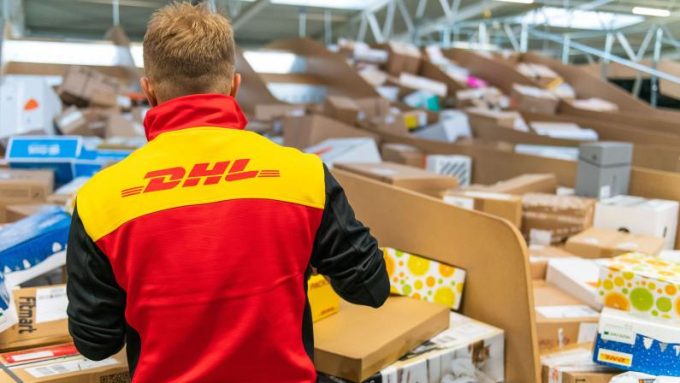
JD.com’s European expansion has moved into a more strategic phase, with DHL Group signing an MoU that formalises a structured trade corridor between Germany, China and the wider EU – at a time when Brussels is tightening rules on low-value imports.
Under the agreement, DHL will support German brands entering the Chinese market via JD.com’s cross-border platform, while JD will provide those brands with access to European consumers through its new EU retail platform, Joybuy.
The deal builds on JD’s recent launch of JoyExpress, a branded last-mile delivery operation spanning the UK, Germany, the Netherlands and France, backed by more than 60 warehouses and depots across Europe. Taken together, the moves suggest JD is embedding logistics, fulfilment and retail infrastructure inside the EU rather than relying primarily on parcel-by-parcel cross-border flows.
The timing is notable. From July, the EU will apply a €3 customs duty to small consignments valued under €150, ahead of the full abolition of the de minimis exemption in 2028. Several member states have already introduced handling charges.
A new report from Ti Insight, Cross-Border E-commerce Forecasts for a Post-de Minimis World, says the EU’s reforms are expected to “remove simplified treatment for small consignments and increase compliance requirements, creating additional friction for cross-border parcel flows into the bloc”.
While Ti does not forecast a collapse in cross-border ecommerce, it warns that higher compliance costs “may either suppress low-value trade or accelerate shifts toward regional fulfilment and nearshoring models”. That latter scenario appears to be happening.
Chinese platforms including Shein, Temu and TikTok Shop have expanded EU-based warehousing and local fulfilment options in recent months. JD’s JoyExpress network and its partnership with DHL add further weight to the localisation trend, suggesting that large players are designing a post-de minimis environment by positioning inventory inside Europe and managing customs processes in bulk.
Ti’s data underlines the broader context: cross-border ecommerce logistics grew from €63.3bn in 2022 to €96.1bn in 2025, but domestic logistics remains dominant, accounting for approximately 83%-84% of total market value.
International flows, it notes, are expanding “largely in line with domestic demand rather than materially increasing their structural share of the overall market”.
The implication is not that cross-border ecommerce disappears, but that its structure evolves, with greater emphasis on managed corridors, consolidation and regional fulfilment.
For airfreight markets, parcel-heavy ecommerce has been a significant demand driver on Asia-Europe lanes in recent years. If inventory is increasingly pre-positioned in EU distribution centres, the flow may shift from millions of small parcels to more consolidated, inventory-led movements and selective air use for replenishment.
Ti notes that similar policy shifts in the US created a “structural headwind” for cross-border flows after the removal of simplified low-value treatment – a pattern Europe may now replicate.
The timing of the DHL-JD partnership announcement, made while German chancellor Friedrich Merz is in Beijing, is also notable.
Chancellor Merz described the widening trade imbalance between Germany and China as “not healthy”, noting that imports from China were more than double exports last year. He called for steps to reduce the deficit, which has expanded sharply over the past five years.
German industry groups have warned that competitive pressures from China are weighing on core sectors such as automotive and machinery. At the same time, Berlin has rejected outright decoupling, arguing that economic ties must be recalibrated rather than severed.
In that context, the DHL–JD corridor offers a more structured model of engagement: facilitating German exports into China while anchoring JD’s European retail operations within EU logistics networks.
Listen to this clip from The Loadstar Podcast of Sinan Ozcan, senior executive officer and board director at DP World Trade Finance, explain how digitizing is still the biggest hurdle in supply chains