BRIDGEPORT – Connecticut’s problem with cross-border fraud, in which people from New York, Massachusetts and beyond bring in their nickel-deposit empty cans and bottles to take advantage of the region’s only 10-cent redemption system, is not occurring at Fred Miers’s massive recycling operation on Boston Avenue here, he says.
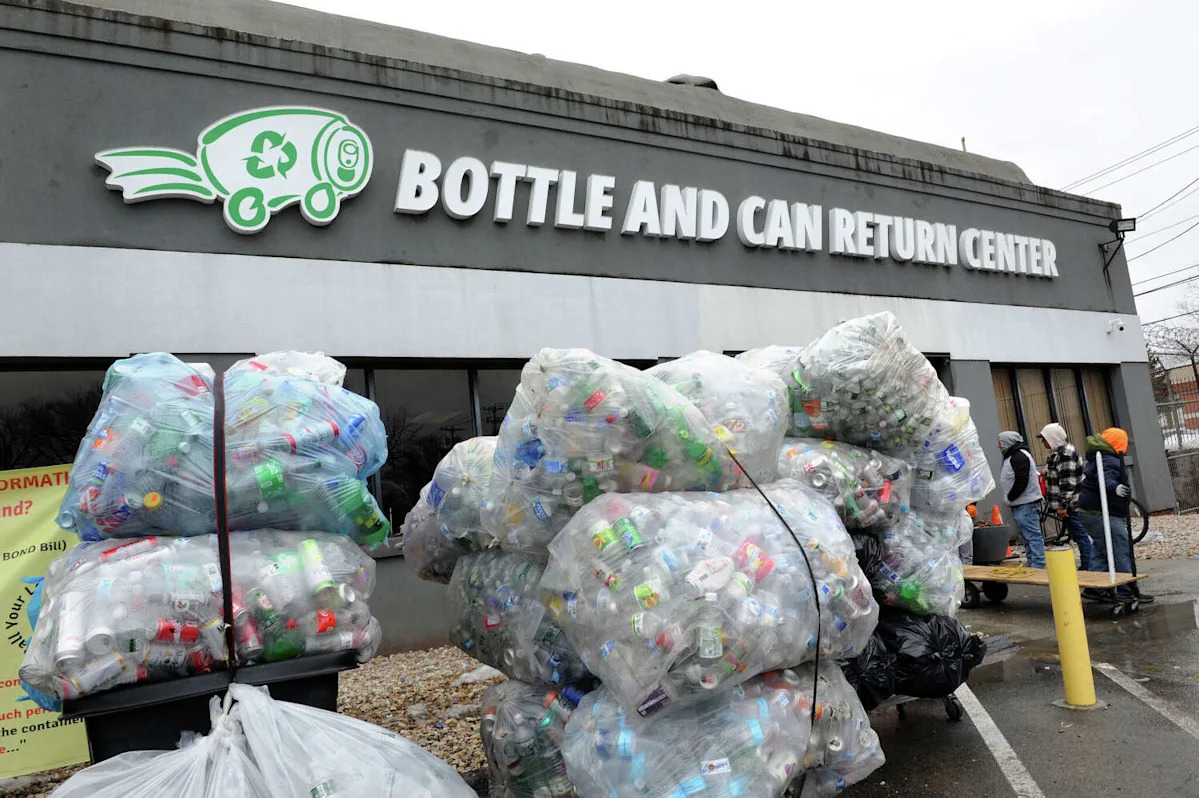
Outside, in all weather, people wait in line for as long as two hours, then show photo identification to prove their residency. Eventually, they are directed to one of eight lanes where employees dump out the bags on steel tables and put the containers through digital counters. The cans and bottles then fall onto conveyors running to a back room, where dozens of workers sort them by hand. Plastic water bottles here, beer and soda cans there. Odd-shaped containers are put into their own clear plastic bags.
The sorting operation is fast-paced at Miers’ Simple Bottle Return. Back near the entrance, people line up at pay windows for their cash on the way out.
A customer dumps a bag of cans and bottles onto a counting machine at Simple Bottle Return in Bridgeport on March 6, 2026. (Arnold Gold/Hearst Connecticut Media)
Farther back in the sprawling warehouse at the corner of Helen Street, 125 big bags of cans at a time get crushed into 800-pound squares of metal called bales, for sale as scrap in Miers’ longtime deals with beverage distributors. Bags of clear water bottles are put into box trucks. Glass is crushed and shipped by weight. People redeem about a million cans and bottles a day, in what might be the state’s largest deposit-container location, which redeems about 25% of the billions of empties returned in Connecticut annually.
Miers says that the state’s new, redesigned redemption law, creating $2,500 annual licenses; limiting the number of empties that can be redeemed daily; and requiring him to introduce new scanner technology or he’ll lose about a third of his handling fees, is threatening the business.
“This is all about serving the public,” he says during a Friday morning tour of the facility, motioning toward the 100-yard long line of people and their bulging plastic bags. “This is a chess game. They’re eliminating the pieces across the board. The technology will basically eliminate my employees. Is the legislature’s intention to close me down?”
Inside, in a meeting room, Miers sits around a table with Francis Bartolomeo, of Watertown and P.C. Patel of Middletown, who own much-smaller operations. They voice concerns about the future as they consider ramifications of the new law, which took effect with Gov. Ned Lamont’s signature on March 3, days after the law was approved under the General Assembly’s emergency rules. The law aims to crack down on people traveling over state lines with their cans and bottles purchased out of state and redeeming the extra money.
Miers says he hopes that a follow-up proposal, scheduled for a public hearing on March 13, will help fix what he believes is an onerous law, developed without public input and hastily pushed through the legislature.
The new law, approved by the Senate on Feb. 24 and the House of Representatives the day afterwards, also raises the former $50 penalty for out-of-state fraud, up to as high as $2,000 and a year in prison for third-time offenders. There’s a quarter million dollars for local police enforcement throughout the state; and a $6 million fund for beer distributors who can prove that they are victims of the fraud.
“We’re kind of all still stunned that this actually went through,” Miers says of the legislation. “I’ve had a good relationship with the distributors for decades. I’ve been processing and baling for them for decades. This isn’t something new.”
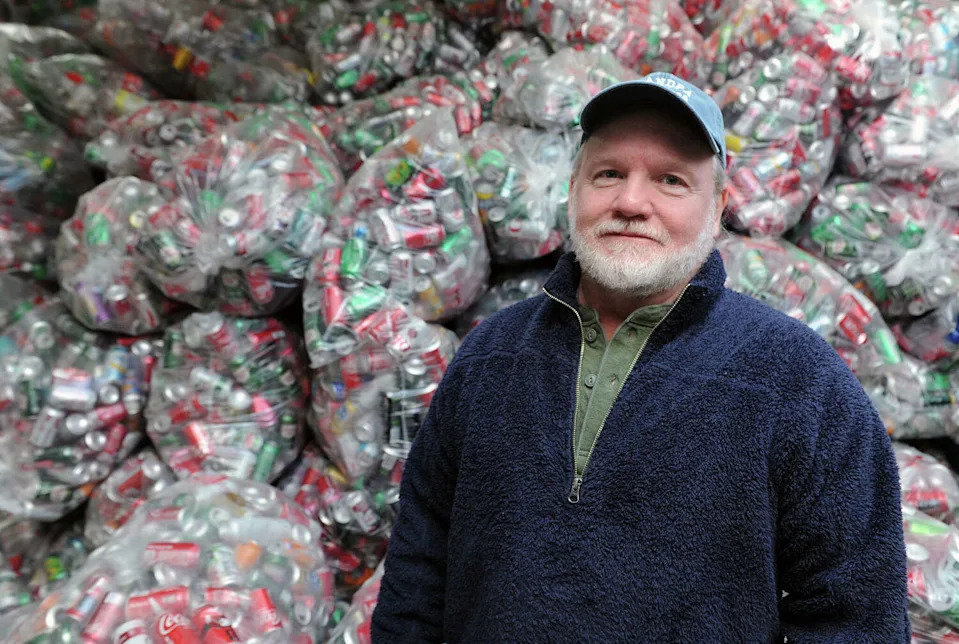
Fred Miers, owner of Simple Bottle Return, is photographed at his recycling facility in Bridgeport on March 6, 2026. (Arnold Gold/Hearst Connecticut Media)
“What private industry is told that you can’t make money?” Bartolomeo says.
The easiest thing to do, the trio recommends, is to bring back the nickel deposit law that began in 1980, while lawmakers consider a multi-state solution to increase recycling and together raise the redemption price to a dime, “Going from 10 cents to 5 cents would eliminate the whole thing about cross-border fraud,” said Patel.
Rolling back to a nickel is unlikely, because state lawmakers wanted to create an expanded recycling industry, which is taking root. The 10-cents, which took effect on Jan. 1, 2024, increased the state’s redemption rate from about 40% to around 95%. Litter has decreased and in-state redemptions have risen, but the influx of nonresident redemptions has resulted in beverage distributors losing millions of dollars, while New York and Massachusetts have reaped millions in unclaimed deposits called escheats as cans and bottles made their way to Connecticut.
Also on Friday, a group of about a dozen redemption centers, in a statement to CT Insider, agreed that the new law has unintended consequences for small businesses that will have to face new realities, including reduced profit margins.
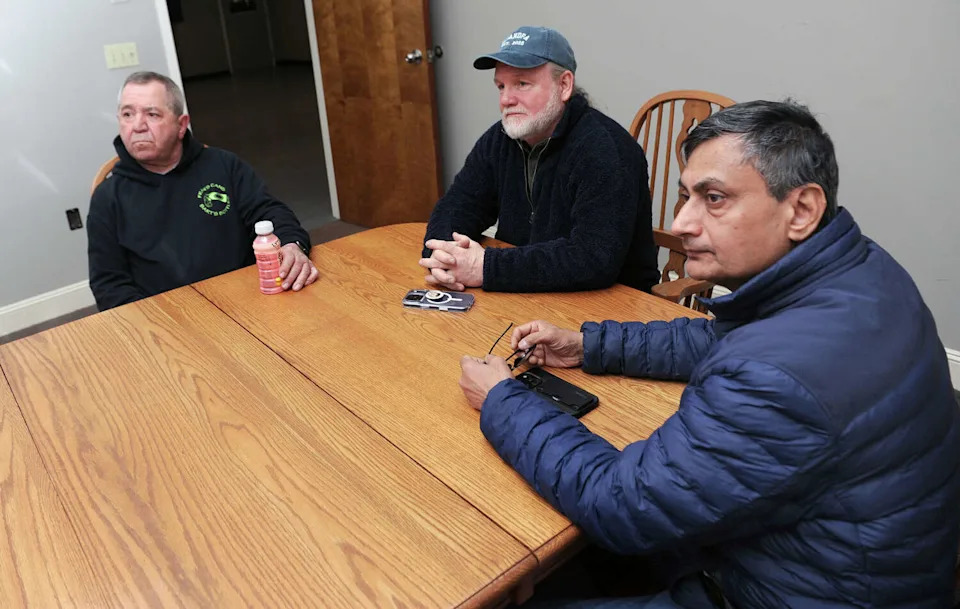
From left, Francis Bartolomeo, owner of Fran’s Cans & Bart’s Bottles, Fred Miers, owner of Simple Bottle Return, and P.C. Patel, owner of Empty Bottle Return, talk about the new Connecticut bottle law at Simple Bottle Return in Bridgeport on March 6, 2026. (Arnold Gold/Hearst Connecticut Media)
“Many centers are already operating under challenging conditions, including rising labor costs, transportation expenses, and facility overhead,” said the group, including companies in Bloomfield, East Hartford, East Haven, Hartford, Manchester, New Britain, Orange, Torrington and Vernon. “Without meaningful support or adjustments, these new requirements may force some centers to reduce services, or close entirely. If redemption centers disappear, consumers will have fewer convenient places to redeem their deposits, recycling rates will decline, the burden of handling containers will shift to retailers and municipalities, and cross-border fraud will not be addressed.”
But they support a part of the new bill that Miers dislikes that would require him to purchase barcode technology or lose a cent per can or bottle. “While we would prefer that all manufacturers provide such barcode labeling, we know that barcode scanning technology is the next best alternative and limits the ability of fraudsters to target high-volume redemption centers that may be more likely to turn the other way,” the group said. The handling fee ranges from 2.5 cents to 3.5 cents and is a major factor in revenue.
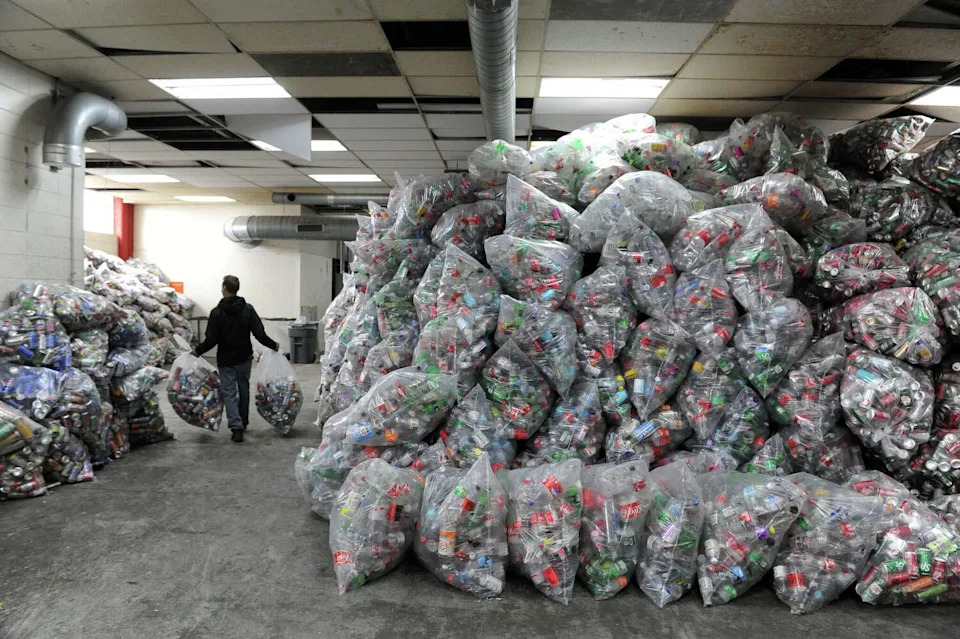
Sorted bags of redeemed recyclable cans and bottles inside Simple Bottle Return in Bridgeport photographed on March 6, 2026. (Arnold Gold/Hearst Connecticut Media)
Mike Noel, public affairs director for TOMRA, the Shelton office of a Norwegian resource and recycling equipment company, said Friday that focus might finally persuade beverage distributors and manufacturers to adopt state-specific bar codes that would finally discourage fraud. “Distributors are now seeing the consequences of not using state or region-specific barcodes, and for some, it may make more financial sense to take a closer look at them,” said Noel, whose firm has studied Connecticut’s interstate deposit issue.
Noel noted that the new law does not require large operations such as Miers’ to purchase new eqiupment, called reverse vending machines, or barcode scanners, but cuts handling fees if they don’t. “This provision applies only to redemption centers, not retail stores, that redeem more than 50 million beverage containers per year, which is a large redemption center by Connecticut standards,” Noel said. Miers collects 50 million containers in less than two months.
Back at Simple Bottle Return, Charles Fuller Jr., 53, is inside and waiting to open the bag containing about $10 or $12 worth of containers. “It’s such a great thing,” he says of the operation. “I have like a system. I go around to gas stations. The most I ever made was $34. I take full advantage of it. Sometimes, you know, when people see what I do, they give me bottles, cans and glass. I love to help the less-fortunate. I love this business.”
Outside, the parking lot is jammed with people lugging everything from black garbage bags holding a few dollars worth of empties, to people with shopping carts with multiple several huge clear plastic bags, with several thousand containers.
Latika Pettway of Bridgeport’s East End is bundled up in the cold, gray morning and expects to wait a half hour more in her monthly trip to the redemption center. “You just bring in the bottles, get the ticket and go up to the register and get your cash,” Pettway says. “It’s pretty simple.”
This article originally published at Connecticut’s new bottle and can redemption law has unintended consequences, business owners say.