Residents are turning to rain barrel systems to conserve water and cut costs, boosting demand for local businesses.
DENVER — A small Colorado business is seeing increased demand for residential rain barrel systems as the state faces below-average snowfall and rainfall, pushing residents to find alternative ways to conserve water and cut costs.
Lindsay Singh, manager of Colorado Rain Catcher, said interest in rainwater collection systems has grown sharply this year, driven by a combination of drought conditions and steep municipal water bills.
“Interest in rain barrels on your own residential property has skyrocketed, and it does not seem like it’s slowing down anytime soon,” Singh said.
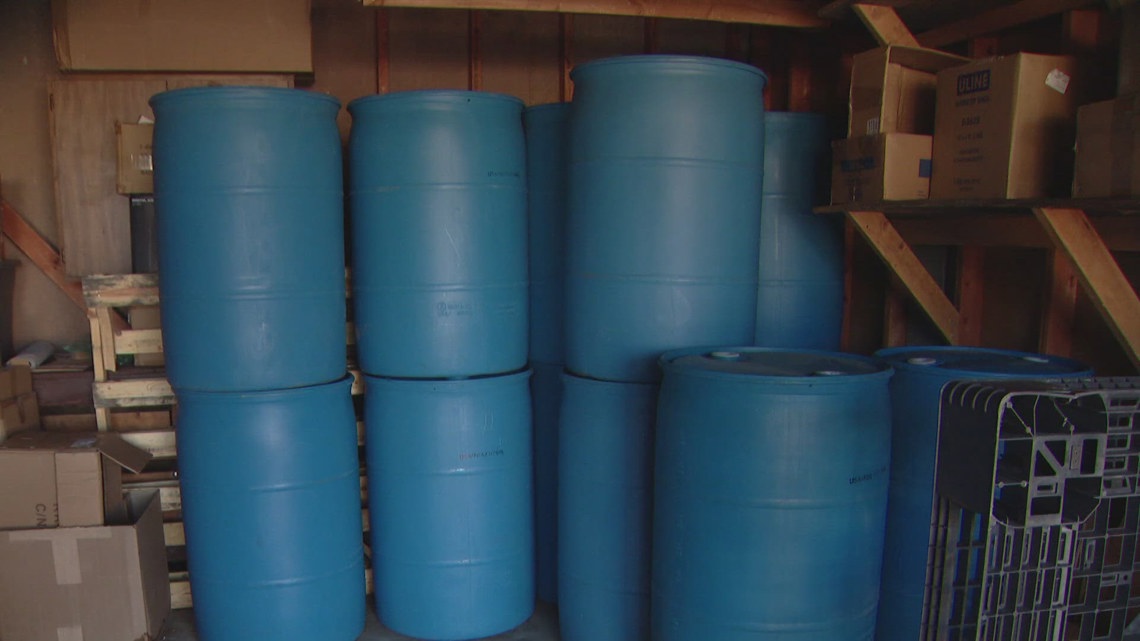
Colorado Rain Catcher, based in Fort Collins, sells 55-gallon rain barrels along with installation kits designed to connect to standard residential gutter systems. The business has already sold nearly 500 barrels this year. The company’s busy season runs from March through September.
Under Colorado law, residential property owners are permitted to collect rainwater using up to two 55-gallon rain barrels per property, allowing for a maximum storage capacity of 110 gallons.
Singh said the system works by attaching a diverter to an existing downspout, channeling roof runoff into the barrel. Once the barrel reaches capacity, water is automatically redirected back through the gutter system as normal.
“This system is designed for anybody’s gutter system at home, except for the chain gutters,” Singh said.
Singh pointed to Colorado’s difficult climate year as a key factor behind the surge in interest.
“As we navigate changing climate situations, everybody in Colorado knows we didn’t get the snowfall this year that we should have gotten, nor the rainfall that we should have gotten,” she said. “It’s becoming more and more imperative to conserve what we do have.”
Water costs have also pushed residents toward rainwater collection. Singh said some residents in Wellington reported receiving monthly water bills between $500 and $800.
“People are concerned. It’s hitting their wallets a little bit more, and this is a one-time fee,” Singh said. “They pay for it and then they can utilize what they already have for free for years and years.”
Singh said the systems are built to last decades. Collected water can be used for landscaping, gardening or other uses. She cautioned, however, that the water is unfiltered roof runoff and should never be used for drinking, for food preparation or for animals.
For Singh, a former Peace Corps volunteer, the business represents more than a commercial venture.
“I think it’s important that we start kind of recognizing what resources we already have, what we can use already in our own backyard,” she said. “It seems like it is a community effort to kind of band together and be more resourceful.”