
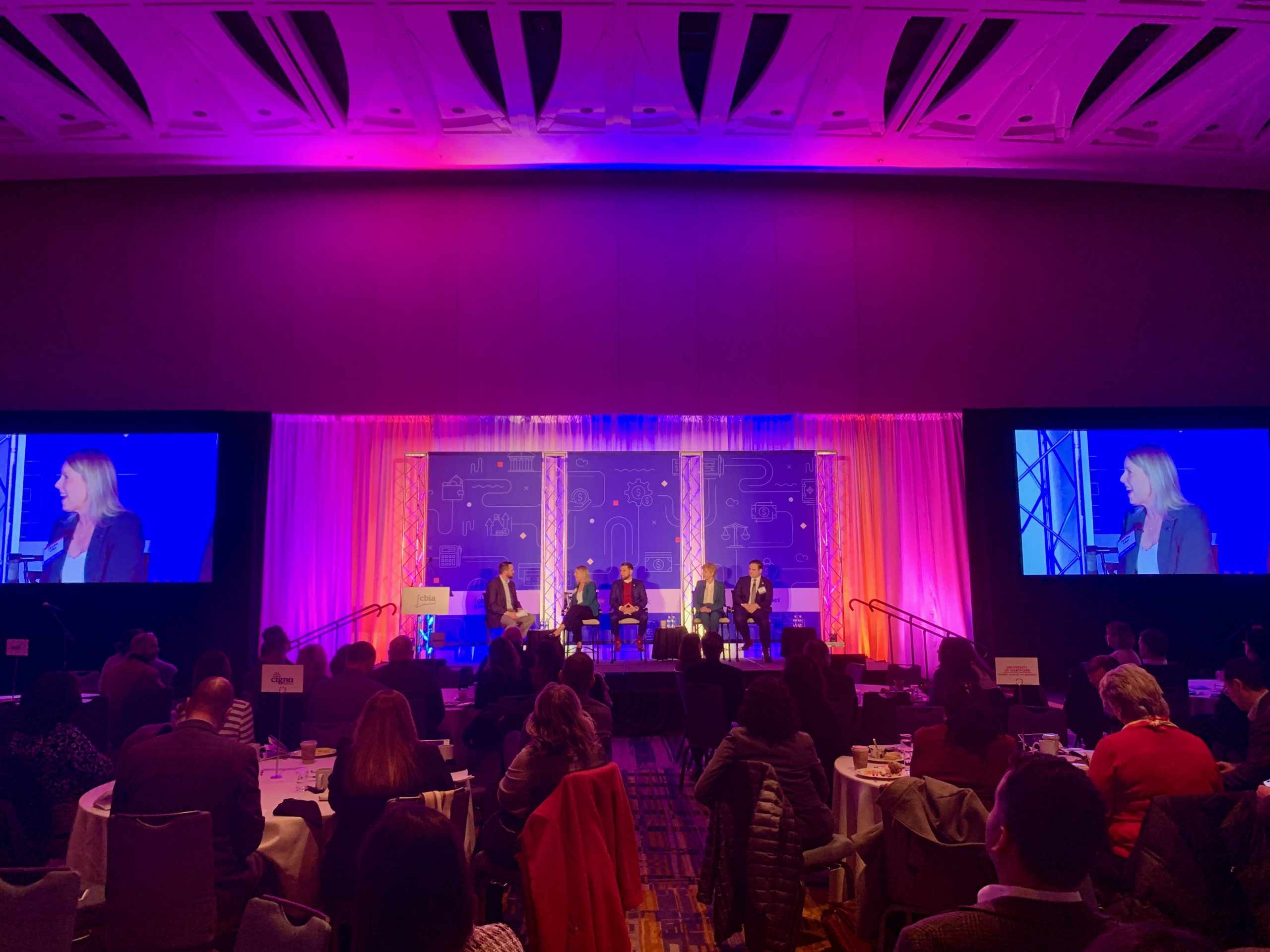
With the 2026 legislative session less than a week away, Connecticut’s largest business association laid out a policy agenda that focuses on the needs of the state’s small businesses.
On Thursday morning, the Connecticut Business and Industry Association released a 10-point policy agenda at the organization’s annual economic summit, an event that brings together the state’s business community, lawmakers and policy experts.
At a time of heightened policy uncertainty at the federal level, business leaders say that local policy has become even more important. “State leadership is so critical right now,” said Chris DiPentima, the president and CEO of CBIA. “We cannot control every external factor, but we can create conditions that make Connecticut the best possible place to do business and live despite all the uncertainty around us.”
Gov. Ned Lamont, who is seeking support of Connecticut businesses as he continues his campaign for a third term, offered remarks at the event. The governor floated a few policy proposals during his address, including a possible rebate on energy bills, along with support for the CBIA’s call to expand research and development tax credits for small businesses.
“We’ve worked very hard to stay ahead of the pack and make sure that everybody, not just the big business, the big guys, feel like they’re included in what we’re doing,” he said.
Throughout the summit, speakers framed Connecticut as being at a crossroads. The state currently faces a mixed economic picture with progress on GDP growth as job numbers decline and thousands of positions remain open. Businesses are also dealing with continued uncertainty due to federal policy changes, inflation and growing concerns over affordability.
Business advocates say if the state wants to boost its economy, it will need to make it easier for businesses, in particular small businesses, to operate.
Connecticut businesses face a number of policy challenges
The CBIA event highlighted a number of policy concerns, including persistently high costs of child care, housing and energy in the state. In recent weeks business leaders have also raised concerns about state health care insurance requirements and their effect on increasing premiums, as well as the continued adoption of new business regulations more broadly. All that can make Connecticut a hard place to start a business.
Connecticut lawmakers also discussed the ongoing back and forth over AI regulations, a continued source of disagreement in the state legislature. The CBIA has said too much regulation could limit Connecticut’s ability to take advantage of new AI-related innovations.
“If we’re going to overregulate AI, I think it will hinder the successful use of it in the future and also hurt businesses,” said Sen. Paul Cicarella, R-North Haven. “We’re trying to find a way to find that balance, have that consumer protection piece and not hurt our businesses.”
Workforce development and readiness came up several times during the event, as various speakers said the state needs to do something about recent declines in the labor force. The state currently has more than 70,000 job openings, but shed some 20,000 workers last year.
The event also included a broader look at the national economy and how Connecticut is navigating economic issues. Guy LeBas, the chief fixed income strategist for Janney Capital Management, said the state has fairly low unemployment but faces other challenges.
LeBas added that Connecticut is unable to adopt some economic development projects taken up in other states. For example, state geography and high local energy costs leave Connecticut unable to capitalize on things like AI data centers, which have popped up in recent years in states with lower costs of living, even as residents in those states worry about the environmental harms of those projects.
In its new policy agenda, CBIA calls for focus on affordability
Many of the topics raised at the summit are reflected in CBIA’s new “Championing Small Businesses” policy agenda. Released early Thursday, the agenda focuses on three areas: affordability, efficiency and workforce readiness.
The policy proposals seek to provide regulatory relief to the state’s small businesses, which account for more than 90% of businesses in the state and employ nearly half of Connecticut’s workforce.
The agenda includes calls for supporting innovation through things like the R&D tax credit and a state-funded program, similar to the existing Manufacturing Innovation Fund, that can help businesses adopt AI technology.
The association also called for policies that would reduce business expenses, including eliminating the sales tax on energy and gas bills, creating association health plans that include fewer mandated insurance requirements, and capping license costs to make it easier for people to obtain occupational licenses.
The policy agenda highlights that while the state has succeeded in recent months on some metrics — most notably state GDP growth — and has a well-educated workforce, Connecticut ranks towards the middle or bottom in a number of state metrics including on cost of living, energy costs, business friendliness and job growth.
“When small businesses succeed, the state’s economy, communities, and families succeed with them,” DiPentima and Brian Montanari, the chair of the CBIA Board of Directors and President and CEO of HABCO Industries, wrote in an introduction to the policy agenda document.
It wasn’t the first time the association has raised some of these issues. The Connecticut business community’s concerns were previously highlighted in CBIA’s annual survey. Released last September, the survey said businesses were navigating a period of uncertainty and seeking regulatory relief from the state.
With the legislative session set to get underway next Wednesday, speakers at the event said helping the state’s business community needs to be top of mind for lawmakers.
“It is incredibly important to hear from small businesses when we’re doing legislation,” said state Rep. Tami Zawistowski, R-East Granby. “The only way we’re going to know is if you tell us.”