
Four participants said the event, which expanded to two weeks this year, resulted in increased patronage and extra revenue for the city’s economy.
Nicolas Ciminiello & Kelly Kong
Staff Reporter & Contributing Reporter
Nicolas Ciminiello, Contributing Photographer
Tourists and locals alike took advantage of fine dining discounts during New Haven’s Restaurant Week, which features 23 participating restaurants city-wide.
Market New Haven, a city partner organization that supports economic activity in downtown New Haven, manages Restaurant Week, which ran from Nov. 2 to Nov. 15. Four participants said that the event increased business, especially during lunch.
“After 18 years the promotion remains a fixture in the city’s dining calendar with many restaurants planning around it each season,” Bruno Baggetta, the chief marketing officer of Market New Haven, wrote in an email. “It consistently brings added activity to dining rooms and nearby businesses throughout New Haven, which is why the program continues to earn strong support year after year.”
According to Baggetta, any restaurant that adheres to the price points set by an advisory committee of participating restaurant owners can join Restaurant Week. This year, lunches were fixed at $25 for a two-course meal and dinners cost either $45 or $55 for a three-course meal.
He also wrote that all restaurants contribute a moderate fee to offset marketing costs, as well as a donation to Connecticut Foodshare. The Wallingford-based food pantry coordinates with restaurants to donate surplus food to those in need. This year’s donation was $5,000.
Joseph Iannoccone, the owner and executive chef of the Italian restaurant Casanova, said that Restaurant Week was beneficial for the new business. During the two-week event, he estimated that the restaurant served an additional 20 to 25 more customers for a weekday lunch than usual.
“For the students, it’s a nice thing,” Iannaccone said of the price discounts, which allowed customers to order a multiple-course meal without paying a typical fine dining price. “It’s all about exploring, getting new customers in and getting the word out.”
During Restaurant Week, a meal at Casanova cost between $20 and $30 less than it usually would, according to Iannaccone.
Iannaccone also said he was confident that the event drove up tourism in the city.
“It pulls people in from all over the place,” he said. “There’s a million more people coming to New Haven just because of Restaurant Week.”
According to Kenna Loren, the front of house manager for Melting Pot, another recently-opened downtown restaurant, Restaurant Week was an important way for new businesses to build community ties. Melting Pot is a franchised restaurant, specializing in its multiple-course fondue menu. The recently opened New Haven location is Connecticut’s only Melting Pot.
“We’re trying to participate in every event we can, just because this not only is our first year, but we’re locally owned and operated, so our owners really like to be involved in the community,” Loren said. “Just any event that we can participate in and be involved and network and meet other restaurant owners, we would definitely be interested in.”
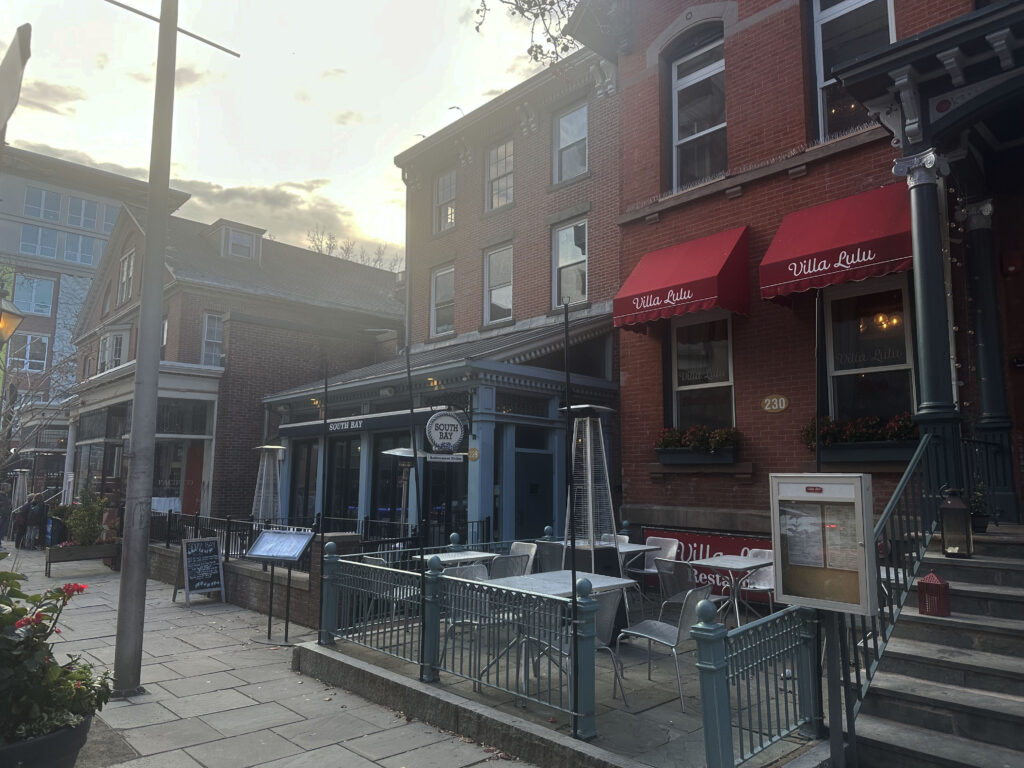
Moe Gad, the owner of downtown restaurants Pacifico and Villa Lulu, said that Pacifico was one of the first participants in Restaurant Week when it started 18 years ago. His second restaurant, Villa Lulu, joined the event this year.
Gad said that with the fixed price points, customers were able to enjoy lunch and dinner at around a 25 percent discount. The event led to around a 25 percent increase in customers, but a much higher one during lunch, according to Gad.
Sean D’Addio, the general manager of ZINC, said that Restaurant Week brought a different spirit to the restaurant.
“In general, it’s a nice way to have people want to come out to restaurants, overall, and experience places that they may not have had the opportunity to experience in the past,” D’Addio said. “It’s really kind of a no-brainer. It brings business and makes the vibe in the restaurant itself feel a little more lively and uplifting.”
According to D’Addio, ZINC has recently undergone a transition, expanding from its classically modern American cuisine to one with more widespread influences.
He pointed to this change as an attempt to bring a renewed focus on the city’s burgeoning fine dining scene.
“We’re really looking to put New Haven back on the map, especially back on the map in the food scene, and elevate what we’re doing,” D’Addio said.
The participating restaurants spanned eight neighborhoods throughout the city.