
- Abu Dhabi is investing heavily in air cargo infrastructure and partnerships to become a regional logistics hub by 2030, with the East Midfield Cargo Terminal (90,000 sq m) and ADA Free Zone providing capacity, connectivity, and business incentives for e-commerce, pharma, and high-value sectors.
- Strategic diversification targets multiple high-growth verticals—e-commerce, pharma, perishables, aerospace, and emerging technologies—while leveraging Etihad Cargo’s expanding freighter fleet to strengthen transshipment and international trade flows.
- Sustainability and resilience are embedded across operations and infrastructure, including Estidama-certified terminal design, electrified ground equipment, renewable energy integration, and efficiency-focused daily operations, aligning environmental goals with long-term cargo growth.
Rising cross-border e-commerce, growing demand for pharma logistics, and shifting trade routes between Asia, the Middle East and Africa are reshaping cargo flows. At the same time, operators face mounting pressure to build resilience in a complex geopolitical and economic environment, while making serious progress on sustainability.
In the Gulf, Abu Dhabi is positioning itself to capture a larger share of this rapidly evolving market. Investments in new facilities, free zone policies, and partnerships with global players are designed to transform the emirate into a regional cargo powerhouse by 2030.
New facilities
Few sectors are expanding as quickly as e-commerce. Middle East online retail sales are forecast to hit US$57 billion by 2026, with platforms such as JD.com, Noon and Amazon scaling up operations across the region. Abu Dhabi is betting heavily on this growth to boost its cargo volumes.
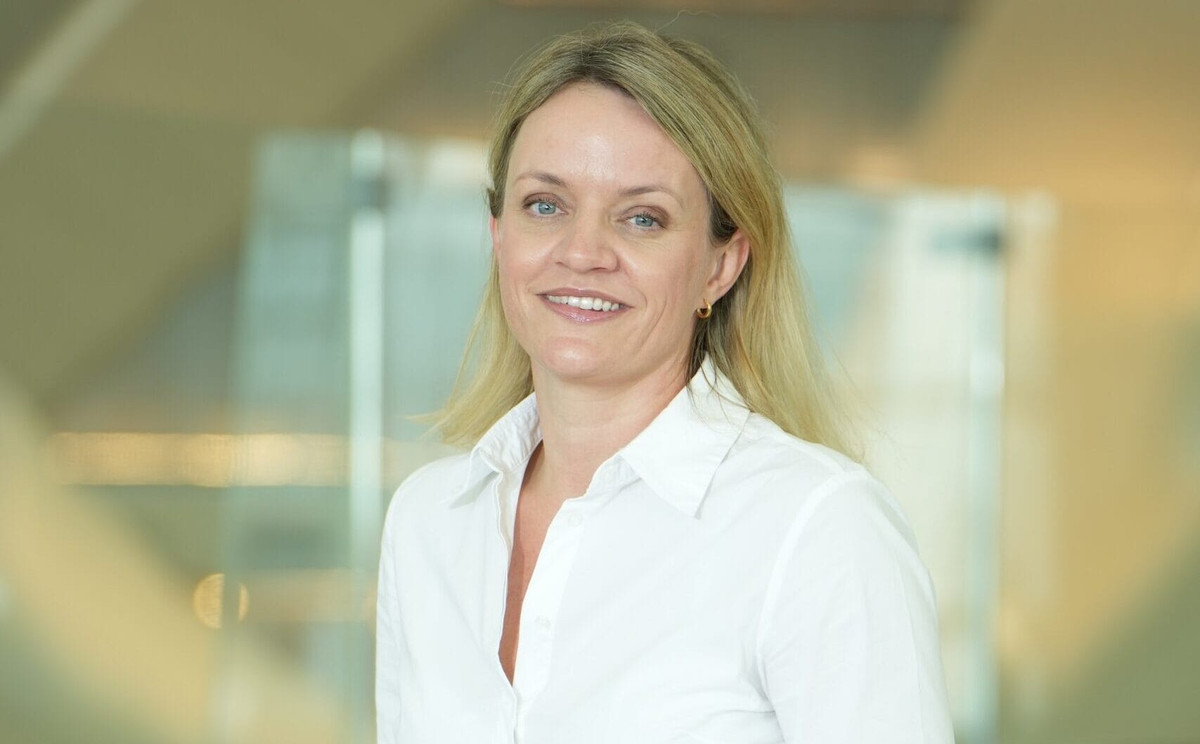
“We indeed witness a surge in cross-border e-commerce,” says Nathalie Jongma, vice president of aviation development at Abu Dhabi Airports. “Providing the necessary enablers are deployed, specifically that of connectivity and vertical infrastructure, in an unconstrained environment, we look at more than doubling our e-commerce throughput.”
Central to this strategy is the East Midfield Cargo Terminal, currently under construction and scheduled to open in 2027. At 90,000 sq m, it will double handling capacity and serve as the backbone of the emirate’s airfreight expansion.
Equally significant is Abu Dhabi Airports Free Zone (ADAFZ) which acts as what Jongma calls “a one-stop-shop with end-to-end business solutions.” Companies benefit from duty-free imports, 100 percent foreign ownership, corporate tax incentives, and the ability to assemble or re-export goods without tariffs.
The organisation has also struck a joint venture with JD.com’s infrastructure arm, JINGDONG Property, to build two state-of-the-art warehouses covering more than 70,000 sq m. “This is a perfect illustration of how we anchor opportunities through collaboration with the leaders in the sector,” Jongma explains.
Regional market
Operating in the Middle East brings both opportunities and risks. The region sits at the crossroads of Asia, Europe and Africa, making it ideal for transshipments, but it is also exposed to geopolitical volatility, energy market cycles and fierce competition from rival hubs.
“It’s a multifaceted strategy,” Jongma says of Abu Dhabi Airports’ response. “Our play is for our freezones to create a stable economic ecosystem around the airport and to diversify the focus across e-commerce, logistics, aerospace and defence, pharma, biotechnology, food and agritech, industrial and consumer, emerging technologies and mixed-use developments.”
Diversification is a deliberate hedge against over-reliance on oil and gas flows. Instead, the airport is banking on high-value verticals such as pharma and perishables. Etihad Cargo’s dedicated freighter fleet – scaling up from six aircraft today to 13 by 2026, including 10 new Airbus A350Fs – further strengthens its offering.
Regional competition, Jongma argues, can be turned into a strength. “Competition can indeed dilute air traffic and cargo volumes but also signals strong demand. We prioritise resilience through strong crisis readiness, the right infrastructure, diversified connectivity, a flexible approach to design and scalability.”
Sustainability and resilience
Abu Dhabi Airports’ cargo ambitions are unfolding in parallel with a push on sustainability. The East Midfield Cargo Terminal is being built to Estidama environmental standards, covering water and energy efficiency, sustainable materials, indoor air quality and advanced urban design.
“This builds on our proven track record at Zayed International Airport, where sustainability principles were embedded from the outset of design through to construction,” Jongma says. “AUH achieved Estidama certification at the highest levels, giving us both the expertise and the practical know-how to replicate and advance these measures within the cargo precinct.”
Beyond infrastructure, the operator is tackling emissions across all three scopes. Plans include electrifying ground service equipment, integrating renewable energy and driving efficiency across daily operations. “This holistic approach ensures that environmental sustainability is embedded not only in the infrastructure but also in the day-to-day functioning of the cargo ecosystem,” Jongma notes.