
Chalk it up to resiliency, inflation or simply good timing, but the list of companies that have surged past the $1 billion mark in revenue has increased exponentially in recent years.
Across the U.S., there were more than 5,100 U.S. companies with annual sales of more than $1 billion in 2024, according to the NAICS Association, an industry classification and data collection group. That number was just 29 in 2013, and a majority of those were in the consumer tech industry.
In Baton Rouge, alone, at least seven companies have achieved that milestone, according to Baton Rouge Business Report’s 2025 Top 100 Private Companies ranking.
Andrew Schwartz, a professor in LSU’s E.J. Ourso College of Business, says companies that reach the $1 billion mark tend to share three commonalities: clarity of purpose, scalability in operations and data-driven decision-making. “At that level, growth isn’t accidental,” Schwartz says. “The organizations that get there have built business models that scale efficiently, often by leveraging technology and process automation early.”
Many companies begin deploying predictive analytics for supply chain, customer retention and workforce planning. “In Louisiana’s energy and logistics sectors, we’re starting to see that transformation—companies using AI-driven digital twins to simulate operations and test scenarios before making multimillion-dollar decisions.
“Strategies evolve from growth-focused to optimization-focused. At smaller scales, companies chase expansion; at $1 billion, they focus on resilience, efficiency and data leverage.”
Complexity becomes the dominant challenge. Data flows from every direction, decisions span multiple business units and customers expect personalization at scale. “The $1 billion threshold represents a transition from entrepreneurial scaling to institutional management,” Schwartz says. “It’s the moment when informal systems break down and governance, process and technology infrastructure need to be formalized.”
One common pitfall is underestimating the human side of scaling. As technology advances, leadership often struggles to evolve the culture, governance and talent pipeline fast enough. “I’ve seen Louisiana companies with tremendous technical potential stall because they couldn’t adapt their management mindset,” he adds. “What worked at $100 million doesn’t work at $1 billion.”
Joseph Cabral, assistant professor of entrepreneurial studies at LSU, says rapid growth into the $1 billion realm can be a delicate transition. The focus becomes more about organizing the company—where to build the next location, what market to expand into, what internal units to combine/separate, increasing and improving manufacturing or value chain components, etc.
In the process, these firms can lose their creativity and entrepreneurial spirit. “They all take attention and resources away from the product and services that ultimately provide value to the customer,” Cabral says. “In essence, rather than focusing on customer value some of the attention gets refocused and pulled toward managing operations.”
From a marketing perspective, $1 billion-plus companies tend to get increased visibility and attention as well. This is particularly true for the so-called “unicorns”—a term coined in 2013 to reflect their rarity at the time—which are privately held startups typically characterized by rapid growth, disruptive innovation and global potential.
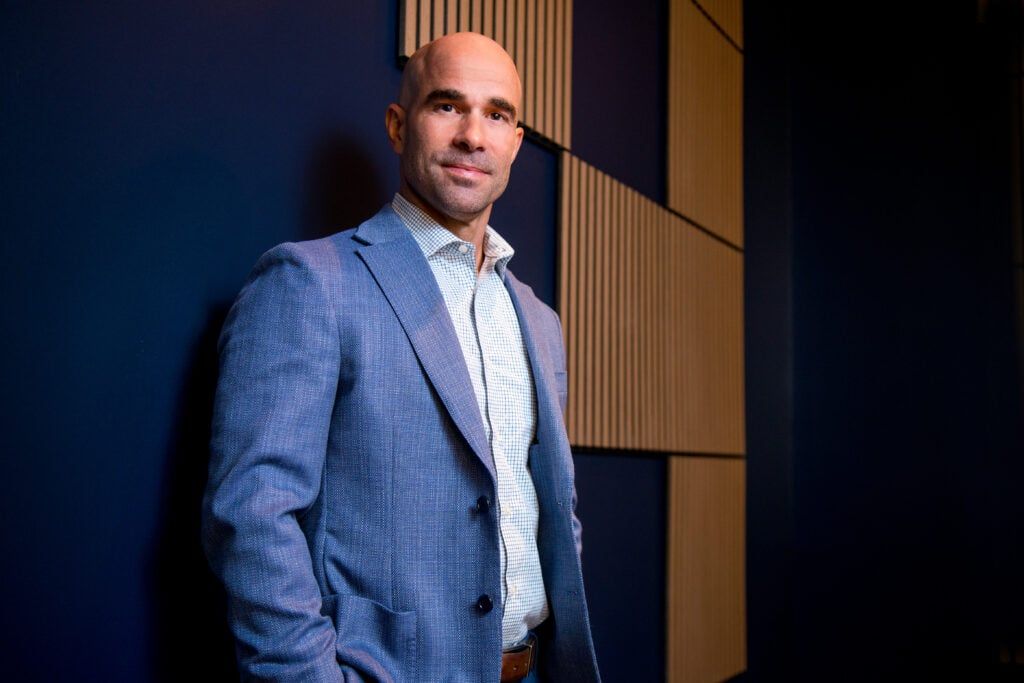
Cabral says unicorns are more likely to emerge in large markets where there is limited competition and they can scale quickly. “If you’re the only solution to a huge problem you will generate a lot of value for the market and will hopefully be able to capture a lot of that value you’ve created,” he adds.
Regardless of how quickly companies reach the $1 billion market, though, they all must endure increased scrutiny of their activities, along with an outsized influence on the world around them.