
Trump slammed ‘stupid people’ at Pennsylvania rally
President Donald Trump held his first domestic rally in months to kick off the 2026 midterm campaign trail.
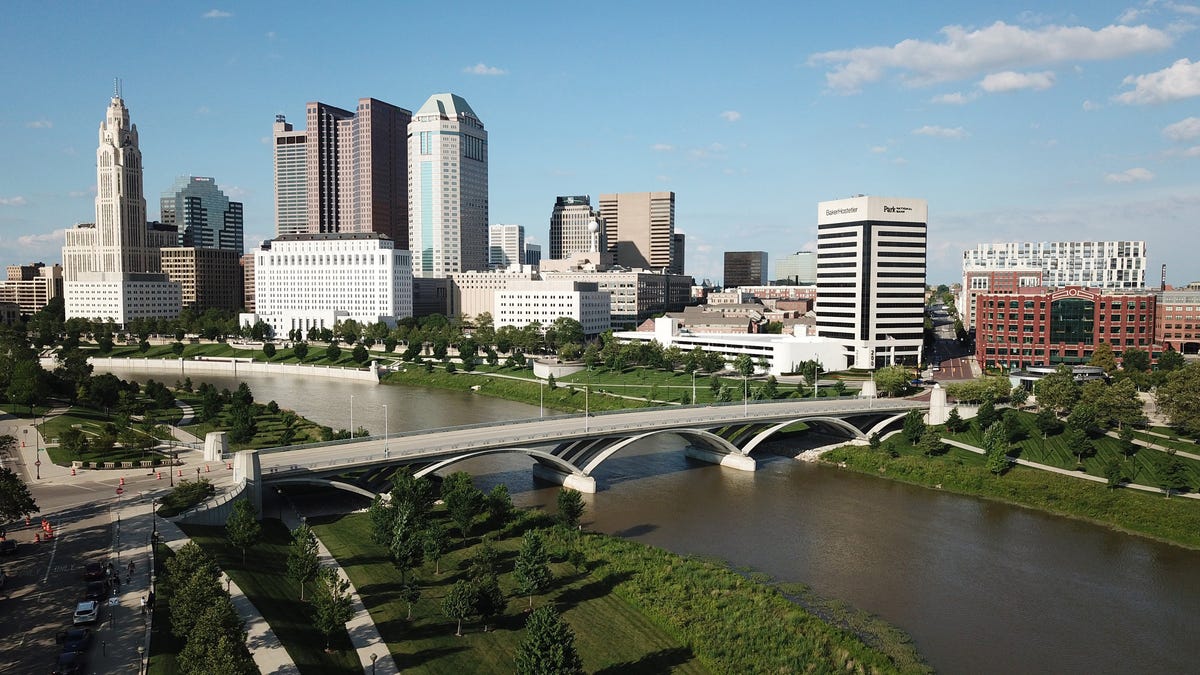
While U.S. economic growth is likely to slow in 2026 due to tariffs, waning consumer confidence, stubborn inflation and immigration crackdowns, central Ohio is forecast to outpace the nation in jobs growth and other measures, according to economist Bill Lafayette.
Lafayette, owner of Regionomics, said he and his peer economists believe that a recession is unlikely this year.
Speaking to the Dispatch ahead of his appearance at the Columbus Metropolitan Club’s Annual Blue Chip Economic Forecast, he said that even small changes of 1-2% in forecasts are meaningful to businesses planning in the new year.
Preliminary figures from the Bureau of Labor Statistics (BLS) of the Columbus metropolitan statistical area (MSA) show that employment in 2025 seemed closer to reality than those in 2024. Typically the estimates are adjusted by economists honing in on local and updated data..
“Last year’s forecast (of 0.5% jobs growth) and forum was a pretty bleak affair. But when the (revised) estimates came out in March at 1.2%, that made my forecast meaningless,” Lafayette recalled. “This year I was a whole lot more skeptical.”
The 14,600 new jobs (1.2%) in the Columbus MSA outpaced the nation’s (0.9%), but will likely slow in 2026, while still exceeding the U.S. average.
The forecast for this year is 0.7% job growth, still better than the 0.5% growth expected for the U.S., Lafayette said.
Statewide, Ohio’s employment growth was 1.1% in 2025, according to BLS figures, even as construction and business services sectors outperformed the U.S. and transportation and leisure were notably weak.
“We ought to see slower growth in 2026, but still growth. And growth better than the national average,” Lafayette said.
One key wildcard may include ongoing immigration crackdowns.
“If you look at patterns of growth in Ohio, in the 2010s we had a pretty natural balance including net migration into and out of the U.S. But so far in the 2020s we’ve seen a slower rate in the natural increase (more deaths than births) and changes in international net migration (more people being taken from or leaving the country than those entering).”
“If you kill off international net migration, there goes our growth rate…. there are fewer people available to fill jobs, fewer consumers to buy things that local companies produce and sell. And so our economic growth slows.”
Chase survey shows Ohio business leader optimism
While local optimism remains, there are mixed opinions among top business leaders entering 2026, according to JPMorganChase’s annual Business Leaders Outlook survey of small and midsize companies.
“Optimism is recovering, though worries remain,” according to the survey’s executive summary.
“Top concerns among the more than 1,400 mostly CEOs and CFOs include economic uncertainty (49%), revenue/sales growth (33%), and tariffs and labor (both at 31%). While just over half do not expect a recession in 2026, only 39% express optimism about the national economy.”
The survey showed local business leaders to be more hopeful, with 46% of Ohio business leaders optimistic about the national economy. Only 43% were optimistic on the local economy, however.
Business leaders were more bullish about their own prospects compared to the country’s with 71% of respondents expressing optimism compared to 58% in June and 75% in January, 2025. About 73% project increased revenue about the same as a year ago. And 48% expect to increase staffing compared to 51% a year ago.
Of the Ohio leaders surveyed, 41% plan to increase headcount while 48% don’t anticipate any changes in headcount.
Growth and development reporter Dean Narciso can be reached at dnarciso@dispatch.com.