When Fred Meyer announced it was closing five “underperforming” Seattle-area stores last year, it was the public-relations equivalent of kicking a bees’ nest.
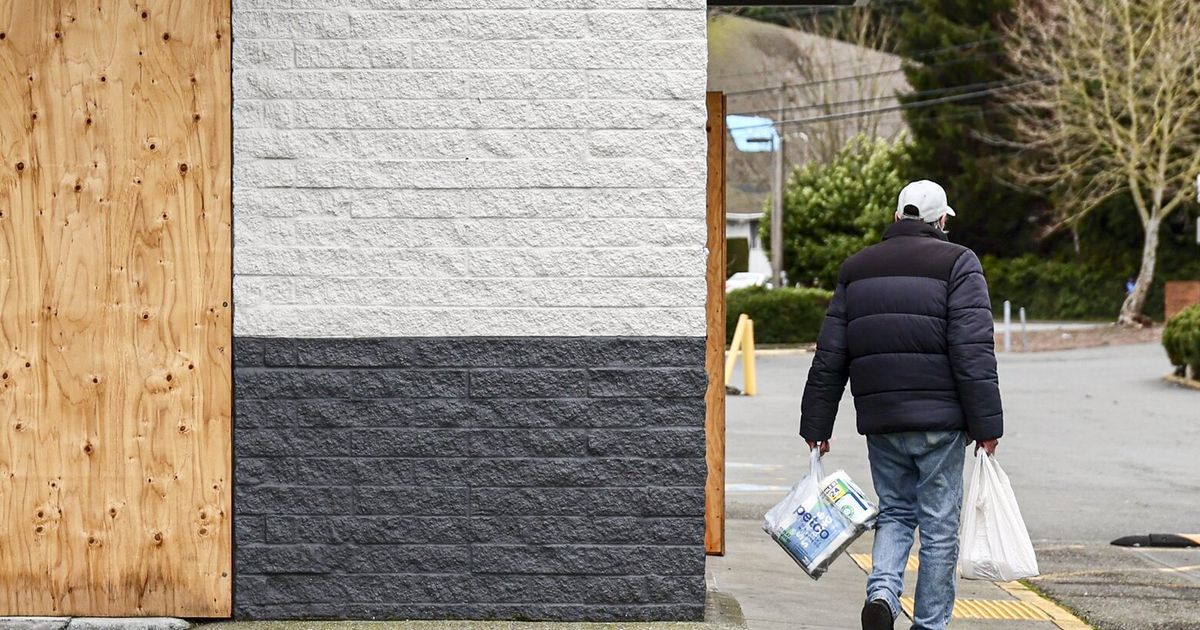
Tempers ran especially hot in places like Seattle’s Lake City and Tacoma’s South End, where grocery options were already limited and many lower-income and older residents would have to travel farther for groceries and prescriptions.
“Where are the people that don’t have a car going to shop?” demanded Muriel Lawty, a Lake City Fred Meyer shopper, after the closure was announced.
Coming so soon after other retail disappearances, including dozens of Rite Aid and Bartell stores, the Fred Meyer closures quickly turned political.
After Fred Meyer’s owner, Cincinnati-based Kroger, declined to reconsider shutting the stores, state lawmakers stepped in.
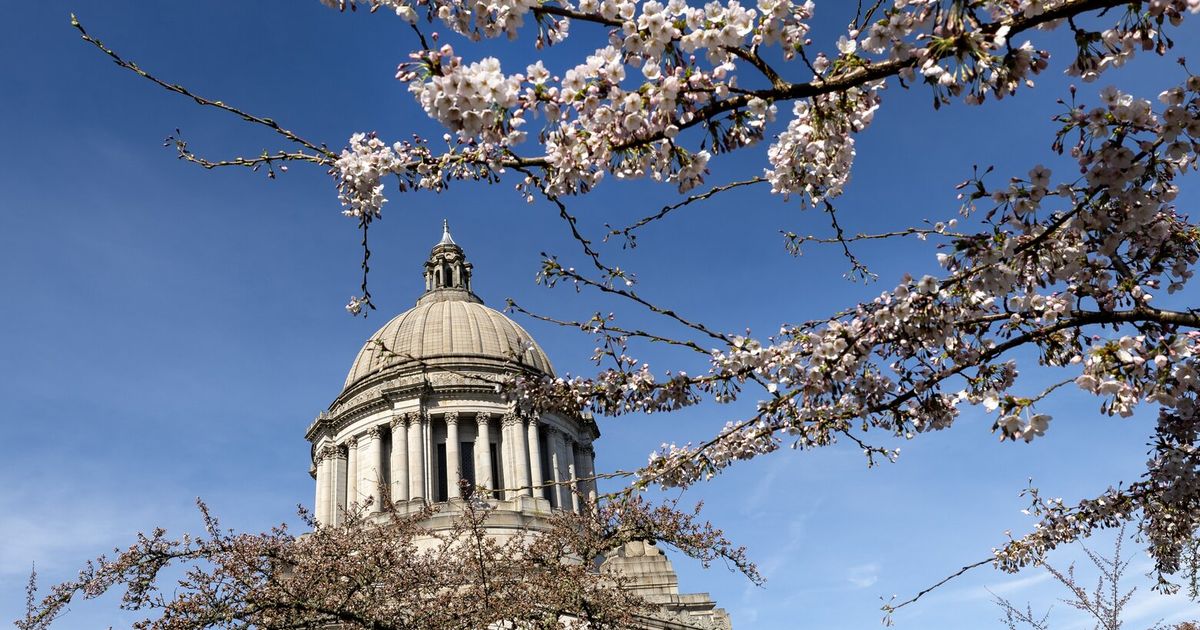
At this year’s legislative session, legislators rolled out a handful of bills aimed at keeping grocery stores open, particularly in underserved neighborhoods.
The Democratic bills ran from the modest, such as requiring six months’ notice for grocery closures, to the ambitious, such as stiff penalties for vacant stores and even a proposal for government-owned groceries.
Yet despite broad public concern around the loss of grocery stores, and backing by labor and anti-hunger groups, legislators had scant success.
Four of five bills stalled out under industry pressure, budget realities and the constraints of a short session dominated by a wealth tax debate.
And even though legislators say they’ll be back next year, they concede that passing new laws won’t fix all the issues — from shoplifting to labor costs to changing consumer habits — that cause retailers to abandon any given neighborhood.
“It’s not a silver bullet,” conceded state Rep. Darya Farivar, D-Seattle, of the failed tax cuts measure she pushed after the closure of the Lake City Fred Meyer, in her North Seattle district.
By the time a company like Kroger closes a store, Farivar added, “it’s for a whole host of reasons.”
‘You didn’t even give me a call?’
The failed bills highlight how complicated things are getting for shoppers, and politicians, as grocers have become increasingly, sometimes ruthlessly, selective about where they operate.
In the last decade alone, the broader Seattle area has lost at least 18 full-service grocery stores, including three Amazon Fresh locations in January. Of those, only two appear to have been replaced by new grocery stores at or near the same location.
Anxieties have been especially high around two national players with local footprints — Kroger, with 54 Fred Meyer and 54 QFC stores in-state, and Boise-based Albertsons, with 10 namesake stores and 189 Safeways here.
Kroger and Albertsons face rising competition from mega-discounter Walmart and online giant Amazon, the world’s largest and second-largest retailers.
But Kroger and Albertsons have also complained about the Seattle area’s persistent shoplifting and Washington’s high business taxes.
Four recent Seattle closures — a Safeway and an Albertsons in 2018 and two QFC stores in 2021 — followed criticism from the companies about local taxes and wage laws. In 2024, Albertsons warned that without the cost savings from its proposed merger with Kroger, which was later blocked, more closures were “on the table.”
But tensions hit a tipping point last summer when Kroger said it would shutter 60 “underperforming” locations nationally, including its Fred Meyer stores in Tacoma, Kent, Everett, Redmond and Lake City, and a QFC in Mill Creek.
Reaction was swift and predictable.
Shoppers said they were losing not only grocery and pharmacy access, but crucial commercial anchors and social hubs as well. “That was the center for everyone,” said Aemro Ambaw, of the Lake City Fred Meyer where he and his wife had shopped for years.
Not everyone bought Kroger’s explanation that the closures in Kent, Lake City, Redmond and Everett were “due to a steady rise in theft and a challenging regulatory environment.”
While shoppers in Lake City agreed that shoplifting had been a huge problem, customers in low-crime Redmond found the theft rationale risible.
Police statistics at both the Lake City and Everett Fred Meyers indicated declining theft and emergency calls since the early years of the pandemic, though many retailers do not always report thefts.
City and state lawmakers, meanwhile, said they’d been blindsided by the closures and given no opportunity to address Kroger’s concerns.
“Basically, they told me the decision had been made already,” said state Sen. Steve Conway, D-Tacoma, of his subsequent calls with Kroger about the Fred Meyer in the neighborhood he has represented since 1993.
“A store that is so crucial to my district (and) you didn’t even give me a call?” said Conway, who is retiring this year. “I was mad, and so I looked around to see what we could do.”
‘There’s going to be a price to be paid’
What Conway did was draft a bill requiring grocery retailers to give six months’ notice of closures in grocery “deserts,” which the federal government defines as low-income areas where a “substantial” number or share of residents have poor access to “retail outlets selling healthy and affordable foods.”
Conway’s bill also would require retailers to “meet and work in good faith” with local officials to look for “alternative outcomes” to closure.
“This bill is not anything that shakes the world,” Conway said. It’s just “asking these large grocers to come and talk with communities.”
Other grocery-related proposals were also coming together.
In Lake City, where Kroger has said it may redevelop or sell the 5.5-acre site, the vacant store and parking lot is “a hole in the middle of Lake City” that invites crime and hurts local businesses, said state Rep. Gerry Pollet, D-Seattle, who represents the area along with Farivar.
Pollet introduced a bill authorizing a one-time per-acre “nuisance” fee up to $250,000, and an annual per-acre excise tax up to $500,000 on grocery properties left vacant, to defray policing and other government expenses.
If retailers plan to close stores without regard to community impacts, Pollet said, “there’s going to be a price to be paid.”
Farivar takes an entirely different approach.
Rather than penalize departing retailers, she would encourage them to stay by cutting property taxes and business taxes.
Farivar’s bigger proposal, however, would put government squarely in the grocery business, either as a landlord leasing space to a retailer or a nonprofit, or as a government-owned and -operated store, like commissaries on military bases.
Public grocery stores made headlines last year after Zohran Mamdani endorsed them as he ran for New York mayor. The idea also got pitched by challenger Kate Wilson and then-incumbent Bruce Harrell during last fall’s Seattle mayoral campaign.
Farivar says a public-grocery option could be as ambitious as a city-run grocery. But it could also be as “as simple as the city … purchasing the Lake City Fred Meyer property and then leasing it out to a grocery store.”
‘Edge cases’
For all the attention they’re getting, there’s little consensus as to whether these kinds of policy fixes can actually preserve grocery access in neighborhoods that private companies have abandoned.
Experts say grocery closure decisions typically reflect a given location’s long-term profit potential, which is driven by a complicated mix of factors.
That includes obvious things, like falling sales and rising theft. But it can also be less-visible ones, like changes in neighborhood buying habits or the arrival of a new competitor, says Chris Anderson, a University of Washington economist who studies food systems.
A neighborhood like Lake City might still be profitable for a smaller-format discounter, such as Grocery Outlet, or an ethnic specialist, like Goodies Mediterranean Market. But it may no longer generate sufficient revenues for a massive Fred Meyer, with its huge product array and 200 employees.
Once a retailer has pegged a neighborhood as unprofitable, Anderson said, the question for policymakers is pretty basic: “What is the level of incentive that would get them to change their mind?”
Anderson said he thinks that in a high-cost place like Seattle, cuts in property or business taxes might help tip the balance in favor of keeping a store open.
But he cautions that those kinds of incentives are only likely to work in “edge cases” — stores that are in promising neighborhoods and are close to profitability. In those cases, a big tax cut or even a low-cost lease in a city-owned property “might put them over the line,” he said.
And even hefty incentives are unlikely to tip the balance in locations with deeper challenges, whether that be rising theft or more mundane considerations, like an aging property that would be more profitable redeveloped as apartments.
“The main thing that I heard directly from (grocery operators) was, ‘The money is nice, but it will not get us to locate somewhere we wouldn’t otherwise choose to locate,’” said Laine Cidlowski, a food policy expert who worked to keep grocery stores in underserved neighborhoods in Denver and Washington, D.C.
It’s notable that even outwardly attractive neighborhoods can struggle to bring in a new grocery to replace one they’ve lost. Plans to put a Town & Country Markets store in a proposed apartment building on the site of the old Wedgwood QFC stalled in January in part because lenders consider a grocery tenant too risky.
Requiring advance notice for closures also carries risks.
David Rogers, a consultant who helps grocers choose sites, likes the idea of an “early warning system” to give local officials more time to address theft or other cost issues.
But Rogers worries such a system could easily devolve into a vehicle for “corporate welfare shakedowns,” with retailers saying, “‘We’re thinking of closing, therefore give us more money.’”
And some local officials question whether an earlier warning would really stave off closures.
In Everett, police had already stepped up enforcement at the Fred Meyer, in direct response to complaints by the retailer, and had seen a measurable decrease in theft, said Everett City Councilmember Paula Rhyne. “But they closed it anyway.”
Government job
Given such challenges, some advocates think public ownership is the only realistic way to preserve grocery access in neighborhoods that private retailers have rejected.
But the idea hasn’t been an easy sell.
Government-owned and -operated grocery stores have had mixed successes — and several high-profile, costly failures, including in Kansas City and in Florida.
Many advocates see public-private hybrids as the lower-risk public option.
One example is downtown Atlanta’s Azalea Fresh Market, where the city provided space and some startup funding for a small store run by a local grocery chain.
Other advocates want to see more widespread use of the decades-old public market model, such as Seattle’s Pike Place Market, where governments or quasi-governmental entities lease space to multiple food vendors.
And public-private models are also easier to sell to voters, especially with governments budgets already under stress.
Politically and financially, government’s safest approach to subsidizing grocery access in underserved areas is to “make it a real estate development project,” said Andrew Lamas, an urban studies expert at the University of Pennsylvania who has advised on government grocery access initiatives.
Governments can offer cheap leases and even help with construction or renovation, he says, but then “turn the keys over to a private operator.”
No sale
From the start, Washington’s grocery fixes faced an uphill struggle.
Industry did support Farivar’s tax-breaks legislation, to no one’s surprise, but it was ultimately killed as too costly in a budget crisis. Her public grocery measure never got out of committee amid vague industry claims that public subsidies would put private grocers out of business.
Industry groups also objected to penalties for vacant properties, arguing that the law would effectively punish grocers for being unwilling to stay open due to high taxes and government inaction on crime.
Pollet hoped to salvage some of his language on vacancy penalties by inserting it into Conway’s closure notification bill, which initially appeared to have momentum.
But that, too, succumbed to pressure from industry, with one lobbyist dismissing the bill as “an unnecessary compliance measure that would be very unlikely to change the outcome of the closure.”
Legislators’ lone win was a separate bill limiting the ability of grocery retailers to block competitors from using an abandoned property for a new grocery store.
Lawmakers seem undaunted, and vow to bring the measures back next session, including the public grocery option.
Both Farivar and Pollet think public worries about closures will only intensify as retailers face more pressure on their physical spaces. As Farivar notes, even Amazon is closing brick-and-mortar locations to focus on grocery delivery.
In the store-less neighborhoods, meanwhile, residents are eager for solutions, although not entirely optimistic.
Andrea Haug, chair of Tacoma’s South End Neighborhood Council, says the community around the closed Fred Meyer is desperate for a new grocery. But many residents want a locally based solution — such as using the property as a community market connected to regional farms.
They’re less excited about giving more incentives to private retailers that don’t want to be in their neighborhood anyway. The current approach, Haug said, “is just spinning our wheels.”
Rhyne, the Everett council member, said her community is equally stressed by the Fred Meyer closure there, which has left carless shoppers to make long walks on extremely busy arterials. She agrees that a state-level strategy is better than trying to preserve grocery access with “a patchwork approach, city by city.”
But Rhyne is reluctant to commit the city or its limited resources to initiatives until policymakers have more fully developed their plans, with “best practices” from successful projects in other states and a “state-level safety net if it fails.”
Until those details come out, “I think there is a bit of a game of who’s going to go first?” Rhyne says of cities like Everett. “Who’s going to be the guinea pig?”