GRAND FORKS – Southbound traffic from Canada at the Pembina crossing continues to slide. For businesses in Grand Forks that have seen significant Canadian traffic in the past, the trend comes with uncertainty.
As the Herald has reported
, Greg Rixen, general manager of Happy Harry’s in Grand Forks, has always kept an eye out for Manitoba license plates in the parking lot of his own business and around town. He’s still tracking those numbers and said Manitoba plates have not been seen as frequently in the last 13 months as they have in previous years.
“You can definitely see and feel the difference,” he said. “You go to Target on a Saturday or Sunday morning and it wouldn’t be odd to see one out of three cars with Manitoba plates on it. Now it might be one out of 10.”
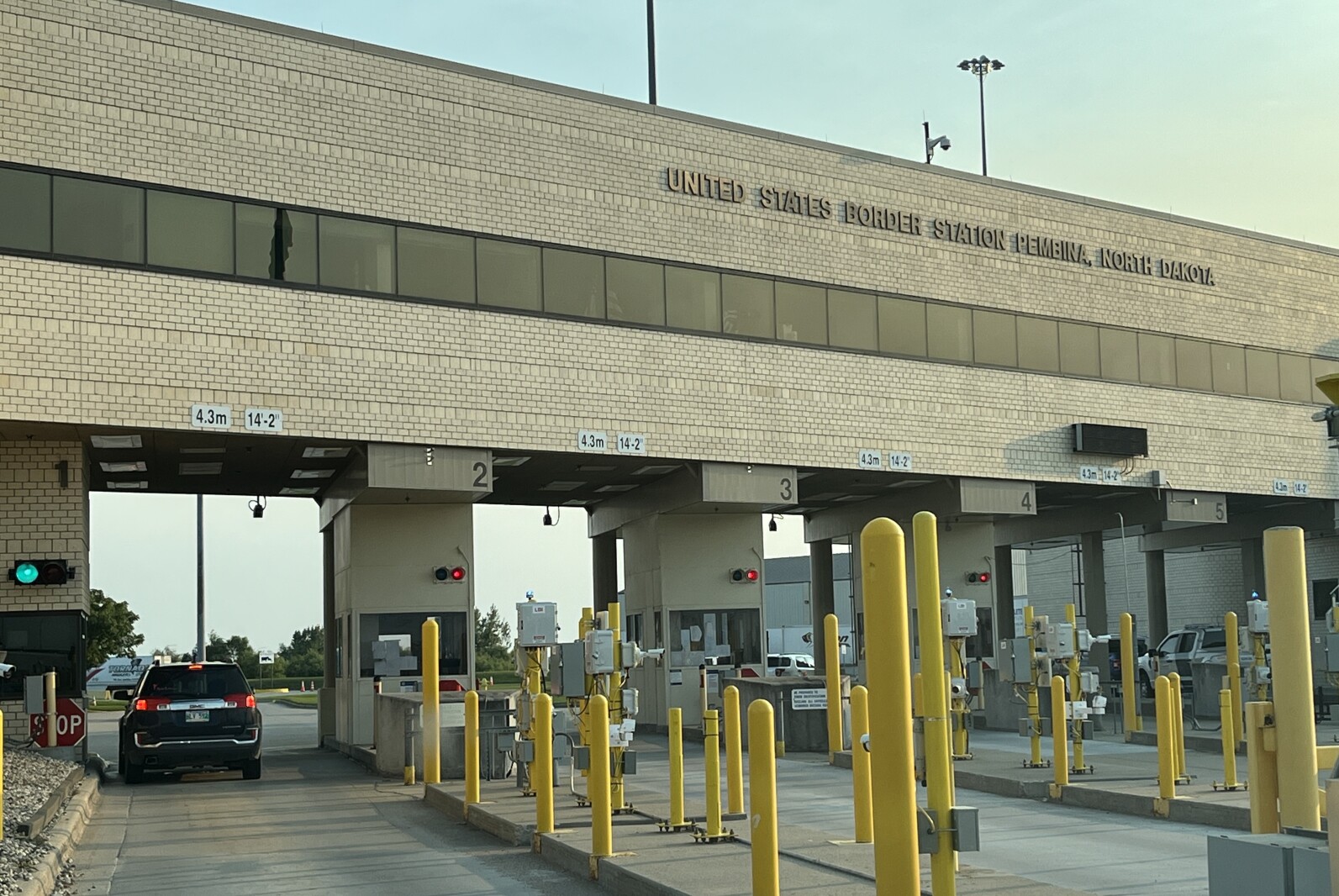
Pembina border-crossing passengers took a significant hit in 2025. The port of entry saw a 202,077 passenger decrease compared to 2024, according to numbers collected by Rixen. The 376,905 passenger total was the lowest the port had seen since 2022. In December, North Dakota Tourism and Marketing reported that as of October 2025, the state had lost an estimated $41.3 million in lost visitor spending due to the decline.
January of 2026 followed the trend, as Pembina received 8,904 border crossings. In January of 2025 and 2024, Pembina was over 12,000.
Rixen began tracking border crossing numbers in 2017, as he has a vested interest in Canadian traffic. It has an impact on his business — when Canadian visitors are up, it is noticeable.
“It was a chunk of our business that was significant, but it has always been top of mind. I think back 25 years, when we used to get reports emailed to us from Customs and Border Patrol that gave us all of those stats. Now you have to retrieve it yourself,” he said.
While the exact number is not formally tracked, Rixen estimates that 3-5% of business is Canadian customers. Happy Harry’s popular penny wine sale saw a dip in sales that Rixen and CEO Dustin Mitzel attribute to the reduction of Canadian customers.
“It shifts in certain cases, but the impact was felt,” Mitzel said. “We’ve certainly seen a lot less in the last 13 months.”
Grand Forks Chamber President Barry Wilfahrt is noticing it, too. Trading and political climate could be a factor, but Wilfahrt adds that it has been noticeable for more than a decade.
“You go back to early 2011, ’12, ’13, ’14. … That was our real boom time in terms of Canadian traffic. Since then, it has been off significantly,” he said.
A peak came in the summers of 2012, 2013 and 2014. In August of each of those years, more than 130,000 passengers crossed the Pembina border into the U.S. This roughly coincided with, and shortly followed, a period when the Canadian dollar was at par with, or even worth more than, the U.S. dollar.
The Canadian dollar rates at roughly $1.30 against the U.S. dollar, meaning that when Canadians shop in the U.S., their dollar is worth 70 cents.
“If you get under 85, 80 cents, you really see it start to impact traffic from Manitoba,” Wilfhart said.
The decline in Canadian traffic isn’t just being felt in border states. Las Vegas has also reported a 30% decline in traffic from Canadians, and the housing market in Mesa, Arizona, is down due to Canadians selling and leaving the area. A survey from Nanos Research found 43% of Canadians said they are less likely to come back to the U.S.
The next steps for cities like Grand Forks are unclear. Financially, there is an option for businesses to offer the Canadian dollar at par. The Las Vegas Review-Journal reported recently that more than 15,000 Canadians visited certain casinos in the first 30 days of an “at par” promotion.
For Happy Harry’s and other businesses, marketing across the border has become a challenge. Mitzel said it would not be beneficial to pursue marketing in Canada.
“We’re in a wait-and-see period for now,” he said.
Wilfahrt sees the increased value of the Canadian dollar as a factor, but also understands that Canadian trade is not where it once was.
“I don’t know if there is anything at this point that we can do. We certainly hope it comes back. It would be beneficial for our business community, our restaurants, our hospitality and retail businesses,” he said.
The 2026 North Dakota Travel Industry Conference will be held in April at the Grand Forks Alerus Center, where topics such as Canadian traffic will be discussed among state leaders in the field.
Rixen is hopeful for stabilization. The first glimmer of hope came at the beginning of March when the reciprocal tariffs were stopped and Canadian visitors could become more inclined to bring goods back over the border.
“We’ve seen a few more Canadian visitors in the parking lot. Statistically, there isn’t any hard evidence yet. Once we see the February numbers from the border crossings, I’m hoping that the decline is at least flat, if not recovered a little,” Rixen said.