When epidemiologist Carl Juneau launched Dr. Muscle, his goal was to bring the latest in exercise science to users of his mobile app.
While exercise science had advanced since he founded the company in 2009, the code powering the app had become outdated. A tech recruiter suggested that he rewrite the code, instead of fixing it, a project that, he estimates, would have required five developers.
Operating on a tight budget as a solo founder, Juneau took another route: He rewrote the code using Claude Code, an AI program. The career public health professional worked with a quality assurance engineer on his all-freelance team to debut it.
So far, he’s been very happy with the result. “It’s like having an AI trainer in your pocket,” he says. Customers like it, too. Since Juneau released a beta version of the newly updated app called Dr. Muscle AI Personal Trainer last month in the Apple store and on Google Play, 1,500 people have tried it. Meanwhile, he renamed his original Dr. Muscle Classic as he moves forward in growing the business.
“We’re going at about five to ten times the speed we used to have with the team,” he says.
The process Juneau followed is one that more solo business founders are adopting. Looking for ways to get more done in less time and on slim budgets, they’re taking inventory of all the steps it takes to run a business and knocking off some of those tasks, one-by-one, with AI.
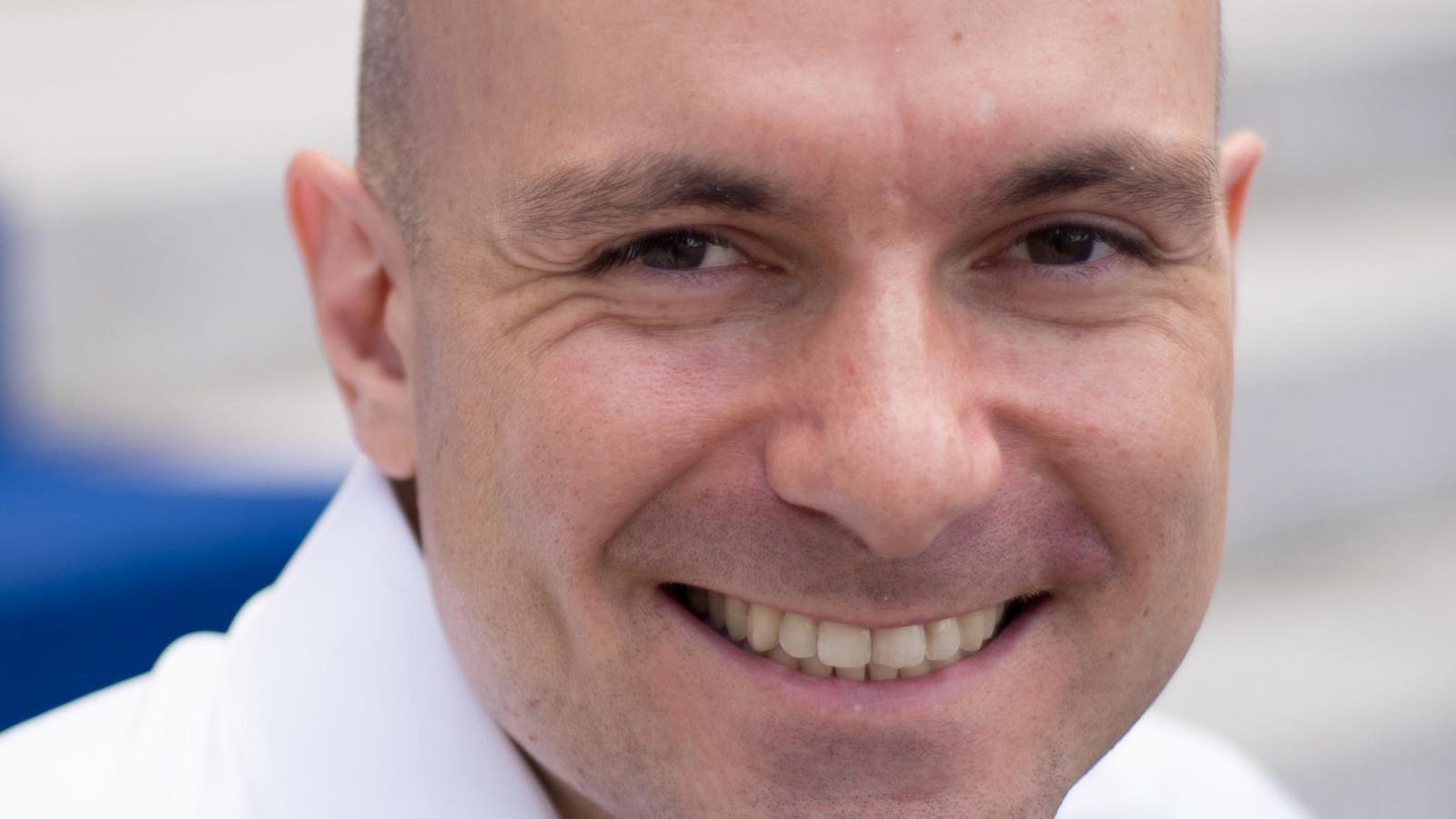
Carl Juneau, who has a PhD in public health, used AI to rewrite the code on his popular app, Dr. Muscle.
Dr. Muscle
Outsmarting the “AI paradox”
Researchers Engin Caglar and Bernd Lapp, based in Zug, Switzerland, see this type of thinking as part of the future of business—one in which billion-dollar, one-person businesses may someday become a reality.
They are co-authors of a recent research report called “One-Person, Billion-Dollar Company: Rethinking the Org Chart.” Caglar is a strategic advisor in the field of AI, blockchain and tokenization; Lapp is a consultant on building AI and crypto products at the firm Old School and a founding member of Ethereum’s advisory board. They have published some of their findings at Solo Unicorn Lab.
In their new report, they project that a single founder will be able to build what amounts to a “billion-dollar impact” in 4 to 9 years. Their definition of “billion-dollar impact” reflects Sam Altman’s 2023 prediction of a one-person, billion-dollar-valuation company, distinct from a company with $1 billion in annual revenue.
“We believe that we are living in AI paradox,” said Caglar in a recent presentation to a small working group on the billion-dollar, one-person business. “On one side, we are talking about billions of dollars, future opportunities. It’s amazing! It’s coming! But on the other side, millions of people are losing their jobs, or they are afraid to lose their jobs because of AI. And we believe this is a paradox: many people are afraid, yet they have to understand. And many of them don’t know how to start. And that’s why we wanted to understand ‘What does the one-person, one-billion-dollar company mean? And what type of new business models can be possible in the future?”
The authors believe that AI, no-code tools and cloud infrastructure will all play a role in enabling solopreneurs to build global businesses with higher margins. “The future is not about fewer people doing the same work,” the report states. “It is about every single person achieving more than ever with new tools and a new culture.”
However, it’s not just AI driving the trend. Factors such as the rise of blockchain and global freelance networks are also contributing, they note. “The one-person, $1 billion business is possible, but not [only] because of AI,” Caglar said. “It’s because there are technical, technical developments, there are financial developments, and there are cultural developments.”
To prepare the data in the report, the researchers analyzed earnings calls and reports from more than 800 S&P firms and high-growth startups, reengineering 50 “high-potential AI-native blueprints, pointing to businesses that offer opportunities to “scale faster, smarter and beyond traditional limits.”
They developed an AI-based methodology to spot gaps in the marketplace that could be opportunities for entrepreneurs to address. “We understand that if we can find the challenges based on our work, maybe we can find some market gaps according to the challenges,” Caglar explained.
A converging concept: the billion-dollar, one-person business
Caglar and Lapp are part of a growing chorus of experts predicting the dawn of the billion-dollar, one-person business. The 2025 Solo Founders Report determined that, among Carta’s database of thousands of U.S. companies, the share of startups with solo founders rose from 23.7% in 2019 to 36.3% in the first half of 2025. The Solo Founders Report was created by Carta, maker of an enterprise resource planning system for private capital, and Solo Founders, a San Francisco-based residency program that supports solo entrepreneurs in growing their companies and raising funds.
Although solo founders accounted for only 14.7% of cash raised in the first six months of 2025, their share of venture capital is growing, as startups such as Polymarket, Vercel and Wander validate the single-founder approach, the Solo Founders Report says. However, many of these one-person startups don’t remain solopreneur companies, the report noted: Solo founders hired their first employee at a median of 399 days, compared to 480 for multi-founder companies.
In a separate initiative, Henry Shi, a co-founder and board member of the money-saving site Super.com, maintains the Top 10 AI-Native Leaderboard, documenting the race to create a one-person billion-dollar company. Currently, Telegram, the Dubai-based messaging startup, is in the lead but has several dozen employees.
Building the billion-dollar, one-person business from the ground up
One key part of the methodology used in Caglar and Lapp’s “One-Person, Billion-Dollar Company: Rethinking the Org Chart” report was built around eliminating business concepts that, in practical reality, require more than one formal employee.
The authors also looked at the required components of each business, such as marketing, sales and legal. They explored whether it is possible to use methods of scaling such as “freemium” sign-up deals that are a doorway into other premium pricing options, for instance.
“If it doesn’t work, it means you need a sales team inside sales team in your company,” says Caglar. “And it’s technically not possible to make one person $1 billion if you need a huge sales team.”
Among the business models they uncovered: an industry-aware AI-model customization suite, ad matching for social campaigns, AI-powered auto campaigns for SMB merchants, intelligent reverse auctions for agri-supply chains, a fleet management platform for autonomous vehicle operations and a no-code platform for indie game developers. They published detailed blueprints for the 50 ideas at Solo Unicorn Lab, along with a “VC sparring partner” tool to help would-be entrepreneurs deverlop and sharpen their pitches.
The idea is to help future founders identify concepts that tap their current expertise, not venture into uncharted career waters, according to Lapp.
“You should be an expert to use AI—not an AI expert but an expert in your field, because you should be the pilot, and AI is your co-pilot,” says Lapp. “It shouldn’t be the other way around. Some people think that now everything can be done by AI, but if I’m not an expert, I cannot verify anything that comes out, and so it’s the old input-output problem. So, if you want to use AI, you have to know how to prompt, and that means knowing your industry. You cannot just take the list, the 50 projects, and say, ‘I picked the most profitable one.’ If you’re not an expert in this topic, it will be really, really hard to instruct the AI to give an output that really is helpful.”
Analyzing the tasks behind billion-dollar companies
To help knowledgeable founders think about where they can use AI, Caglar and Lapp have developed a list of more than 180 business key tasks and functions, from logo design to customer visits and invoicing, which they are still expanding. “I’m sure it could reach thousands,” says Caglar. “To build a one-person, billion-dollar company, you have to think of every single step in a working company.”
If you are starting a company with the intention to do what 1,000 people in a big company are currently accomplishing, he says, understanding all of the steps “is a very big challenge, and that’s why you have to be ready for what you are doing. At the end, it’s a big thing.”
But there may be a way around this. As their report notes, even businesses that have only one formal employee often rely on teams outside the company, such as freelancers and contractors. The trend toward distributed freelance teams is driving the growth of global talent platforms like Mercor, which offers AI analysis of freelancers as demand for high-quality outsourced teams rises worldwide.
“One person is good as a target, but technically, you always need a team, because at the end, every business needs teamwork,” says Caglar. “But that’s why we wanted to add organizational structure to our report and the name of ‘rethinking the org chart,’ because you will need outsourced teams in the future much more than today.”
Building the billion-dollar, one-person business, one task at a time
Juneau, at Dr. Muscle, is already experiencing the benefits of thinking along the lines that Caglar and Lapp recommend, a process he happened upon organically when solving his own staffing challenges. “There’s no way I thought we could do this,” he says.
Empowered by the success of his first coding experiment, he’s now using AI for some editorial processes, which has enabled him to publish the site’s blog more frequently. Since he started augmenting his work with AI, he has grown page views from 10,000 a month to 50,000. “Once we apply AI to other areas of the business, I think we can grow faster.”
Does Juneau think the business could reach $1 billion? He pauses to think about one competitor who has reached about $200 million a year in revenue, by his estimates, then considers the possibilities for Dr. Muscle. “It can be worth $1 billion,” he says. “It can be worth more than that. It’s a big number. I would like to get there, for sure.”