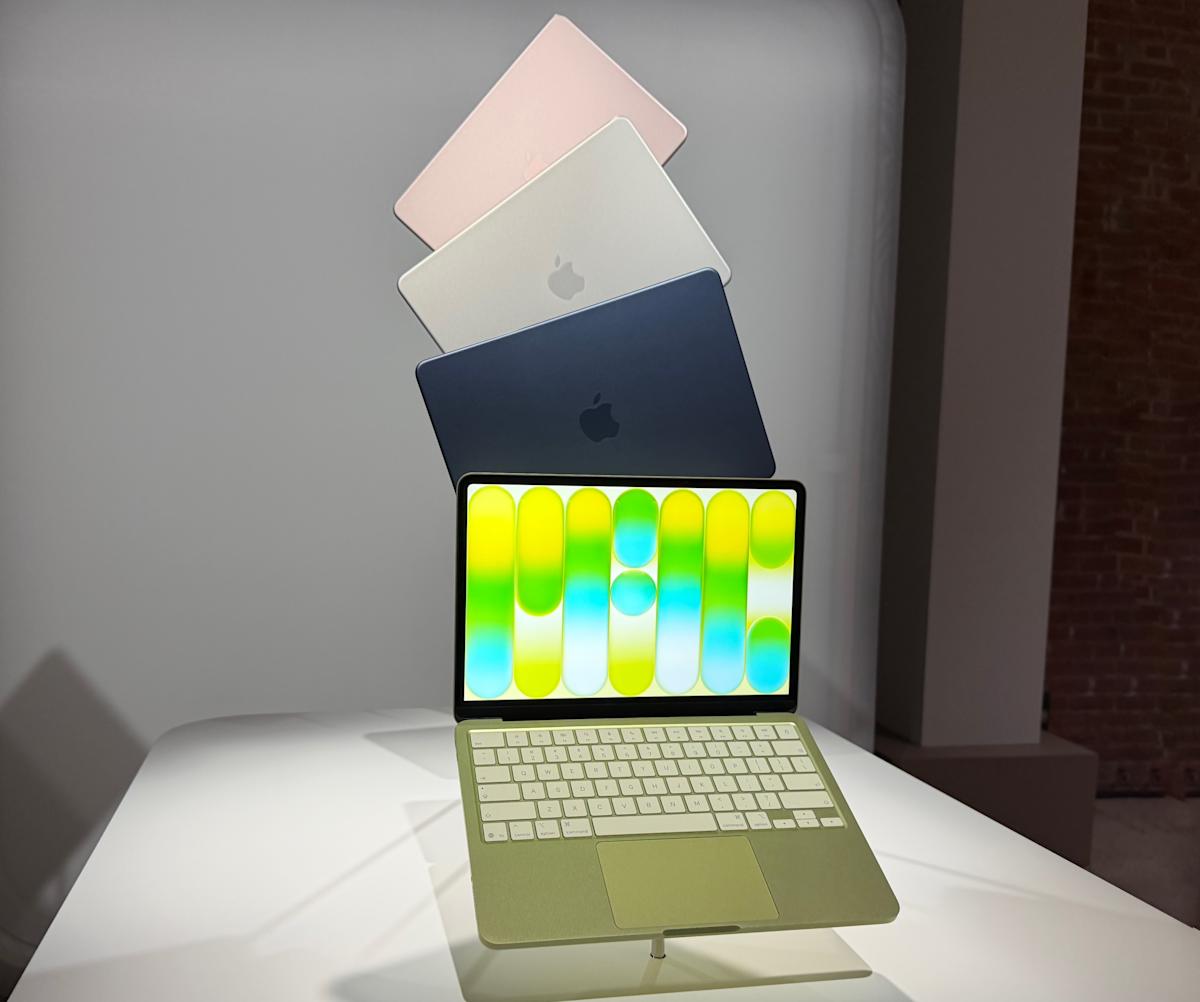
Apple (AAPL) unveiled its MacBook Neo, the company’s long-rumored foray into the low-cost computer market, at an event in New York on Wednesday.
Starting at $599, the Neo comes in four colors, including the splashy yellow-green Citrus, and is designed to appeal to consumers, schools, and businesses looking for a more affordable option than Apple’s recently refreshed $1,099 MacBook Air.
The Neo features a 13-inch screen — a bit smaller than the standard MacBook Air’s 13.6-inch display — and runs Apple’s A18 Pro processor, similar to the chip that powers the company’s iPhone 16 Pro and 16 Pro Max.
But because this is an entry-level offering, the laptop comes with 8GB of memory, rather than 16GB like the standard Air. That means while the Neo will likely run apps and services without any hiccups, if you’re looking to do any more processor-intensive tasks like video editing, you’ll want the more powerful Air or MacBook Pro.
The Neo also comes with 256GB of storage, with a 512GB option for an extra $100. That upgrade also gets you Apple’s Touch ID fingerprint sensor for unlocking the laptop and making payments via Apple Pay.
The system also has two USB-C ports and a headphone jack.
The Neo should serve as a solid alternative for schools, which typically provide students with Chromebooks and, in some cases, iPads.
“This is one of the most important announcements for Apple in the Mac product line and represents a shift in the history of the Mac. Apple has always positioned the MacBook as a premium computing product, with entry prices typically starting near or above $999,” International Data Corporation vice president of client devices Francisco Jeronimo said.
“With such a product, Apple is aggressively aiming to grow market share while expanding the ecosystem,” he added. “By lowering the entry barrier to the Mac, Apple can bring more users into its services and device ecosystem, particularly students and first-time Mac buyers.”
The Neo comes after Apple debuted a host of other hardware earlier this week, including the iPhone 17e, new iPad Airs, upgraded MacBook Airs and MacBook Pros, and the company’s new M5 Pro and M5 Max chips.

Apple’s MacBook segment was its fourth-largest business in 2025, bringing in $33.7 billion, up from roughly $30 billion in the prior year. The company’s iPhone segment — its most important — generated $209.6 billion in 2025.
Apple, like all consumer electronics companies, is dealing with the ongoing fallout from the global AI data center build-out, which has sucked up virtually all of the memory on the market, leaving non-AI companies scrambling for supply.