
Photo-Illustration: Intelligencer; Photo: Amazon
Late last year, some independent online merchants started noticing something strange. Despite never working with Amazon — and in some cases pointedly avoiding it — they were getting orders that seemed to originate from Amazon. Typically, getting your product listed on Amazon is a complicated process, involving either a wholesale relationship or becoming a seller on the platform, and these brands, according to various reports, had done nothing of the sort.
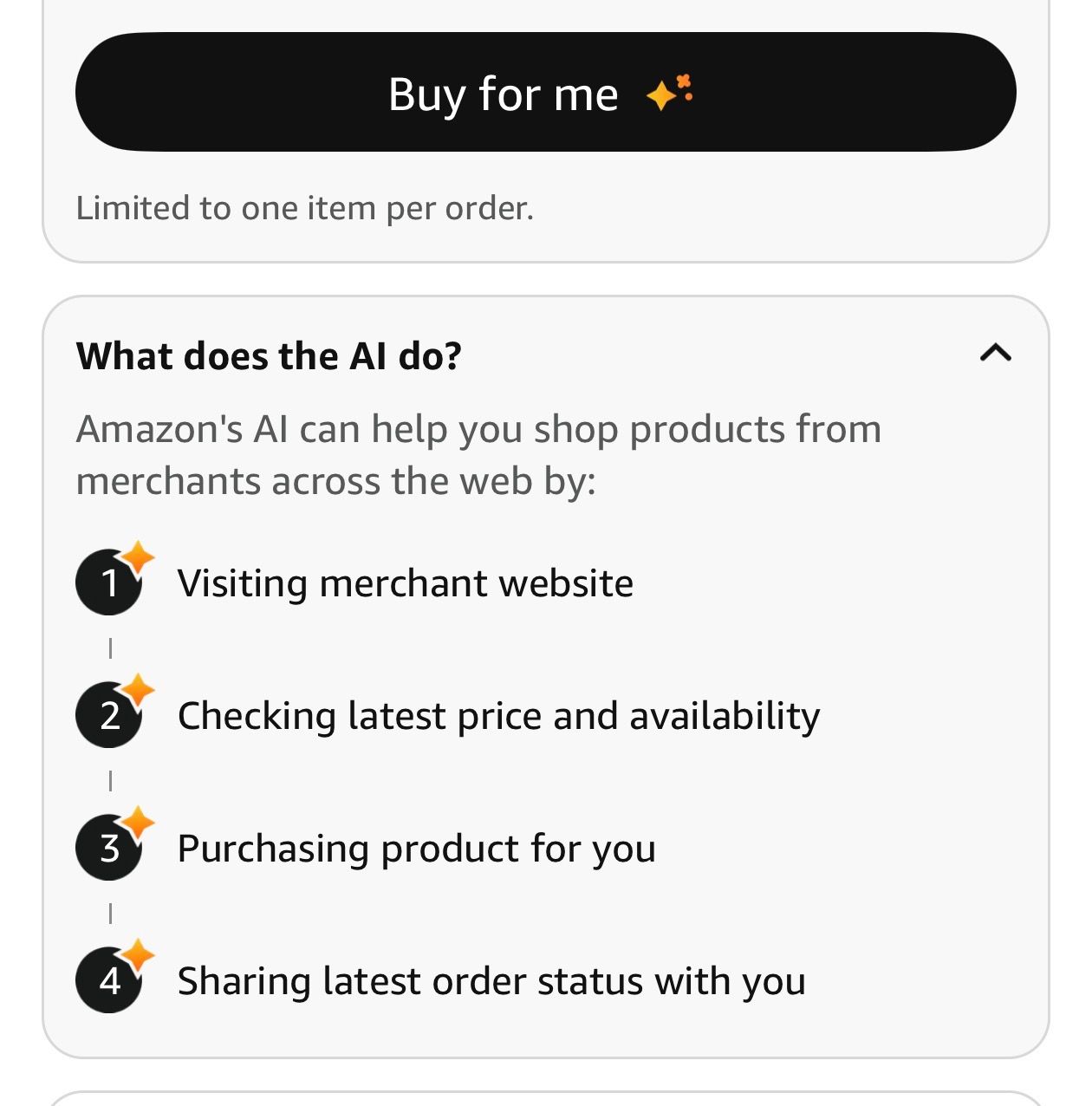
Amazon, it turned out, had been scraping their listings to include in its AI-powered shopping feature, Rufus. In addition to seeing products from Amazon, customers using Rufus were being shown items from outside stores, sometimes with a button labeled “Buy for me✨,” which would trigger an Amazon-powered bot to browse the outside merchant’s website, check the item’s price and availability, place the order, and handle the payment process.
The order numbers were small, so the issue was more unsettling than urgent; for the time being, the consequences of Amazon’s presumptuousness were a few extra sales and a minor sense of violation (Amazon allows outside merchants to opt out). But the feature provides a glimpse of how some in tech are thinking about AI-powered shopping: Not just as a different way to sell things, but as a fresh opportunity to dominate e-commerce as a whole. A few years ago, the idea that Amazon would automatically buy things from other stores on users’ behalf, without those stores’ permission, would have sounded bizarre, unrealistic, and brazen. Now, to hear the company tell it, that’s just how things are going to work — unless, of course, you’re another company attempting to deploy a similar AI shopping feature on Amazon, in which case the company will sue you, accusing you of “covert” and “unauthorized access and trespass.”
Amazon’s e-commerce dominance means that, particularly for smaller brands and retailers, it’s viewed with maximum fear and suspicion. But AI firms with retail ambitions — including Google and OpenAI — seem to share substantially similar visions of a world in which chatbots take control, from the top, of the entire e-commerce experience. It’s a vision in which they’re not just funneling customers to retailers but taking over as much of the shopping, advertising, and purchasing process as possible, potentially driving more sales but also reducing store partners to something more like wholesalers.
Amazon, in other words, might be feeling some pressure. OpenAI has started rolling out an in-chat shopping feature, partnering with Shopify and others in an effort to monetize its massive nonpaying user base. Meanwhile, Google just announced a major push into AI shopping, co-developing a “new open standard for agentic commerce” called the Universal Commerce Protocol, which the company will use to fold products from Shopify, Etsy, Walmart, Target, and others into its AI shopping tools. In addition to broaching the subject of ads — which Google is already testing in AI Mode — the company says it’s testing out some e-commerce features and inducements that retailers, in the past, might have done themselves:
Here’s how it works: Imagine you search “I’m looking for a modern, stylish rug for a high-traffic dining room. I host a lot of dinner parties, so I want something that is easy to clean.” Google already elevates the most relevant products to meet your search criteria. But often, you are only ready to buy if you’re getting a great deal. Now relevant retailers have an opportunity to also feature a special discount. This helps you get better value and helps the retailer close the sale.
Google and ChatGPT are playing it safe here, inviting partners to join their platforms with the promise of more sales — or, at least, of not being left behind if more shopping shifts to chatbots. (They also might not have much of a choice, as much of the web locks down against unauthorized scraping and access by AI agents.) Amazon, in contrast, is being more assertive, attempting to annex smaller retailers into its ecosystem as it rebuilds its platform around AI shopping.
But all these companies are betting on a substantially similar outcome: One in which chat-centric shopping replaces browsing and searching, customers have little need to leave their particular chat interfaces, and brands and retailers depend, even more than they do now, on a few big tech firms for core business functions, from discovering and advertising to marketing and payments. A mass-onboarding to AI tools, and a drift away from the web, could represent a major reset in e-commerce or at least a promising way to monetize expensive tools that are still losing money.
If you’re Amazon, this might look like a chance to reassert yourself as America’s default Everything Store. If you’re Google or OpenAI, it might look like a chance to quickly become one.