The consumer packaged goods industry is dominated by massive conglomerates — companies with teams of specialists and budgets that can eclipse an entire indie brand’s annual revenue.
For solopreneurs trying to get new brands on shelves, the gap in resources can feel overwhelming. That is, until AI hit the scene.
Michaela Vatcheva for BI
“I’m able to keep up with things that bigger brands with bigger teams are able to do,” said Ezra Rufino, founder of functional beverage brand Pow Organics, describing how AI has helped fuel his growth. “Would I prefer to have a big team that could help me? Of course. But it’s way better than just me.”
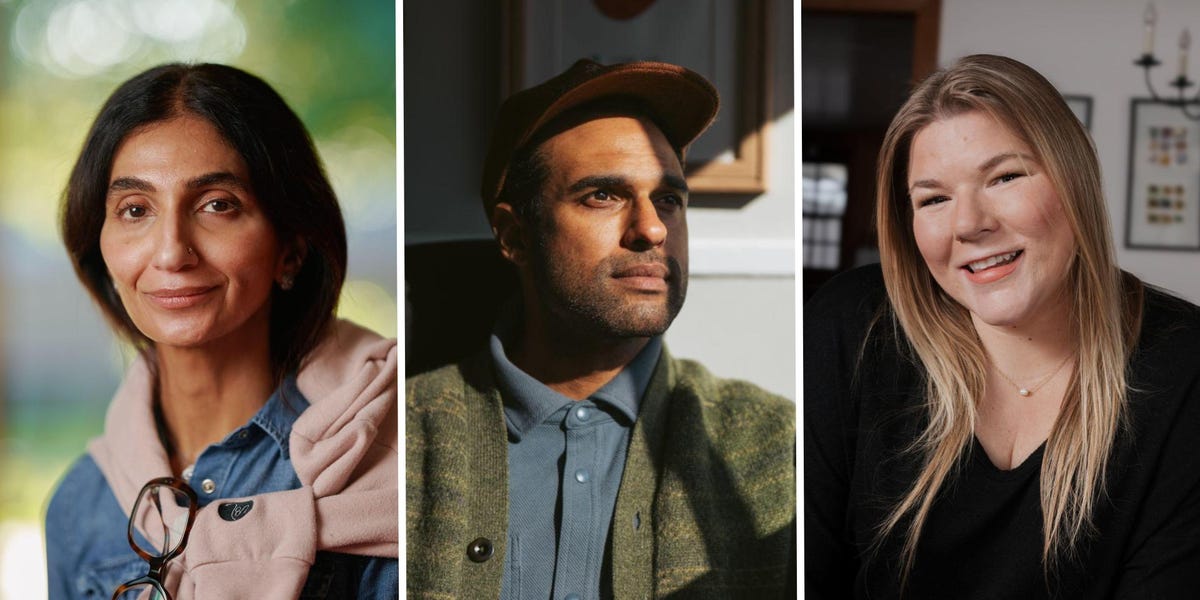
Rufino is far from alone. Here’s how he and two other solopreneurs in the CPG space are using AI to extend their abilities and stay competitive in this crowded industry.
AI shortens the learning curve
Running a consumer brand solo means wearing every hat in the company rather than relying on expert teammates. Amber Chaudhry, founder of teen skincare brand Noori, knows this firsthand.
While she’s a pharmacist by training and deeply familiar with product formulation, she’s also had to learn Shopify, Amazon’s seller platform, Meta ads, Google ads, complex analytics dashboards, and more.
“It was a lot of learning curves over and over — and AI guided me,” Chaudhry said. She’ll upload screenshots of analytics dashboards or tech platform onboarding questions and ask ChatGPT to explain what she’s looking at. It’s quicker than trying to research it on her own. “As a solopreneur, it’s very fulfilling — I almost feel like I can do anything,” she added.
Ian Tuttle for BI
For Ann Ragan Kearns, founder of athlete-focused skincare brand Medalist Skin, AI helped her make simple yet impactful website improvements that would be obvious to user interface experts, but weren’t for her.
“Who knew that I just needed to move my free shipping banner from the bottom to the top?” said Kearns. She said she’s previously spent tens of thousands of dollars on contractors who didn’t end up being the right fit, and feels this has saved her from that kind of cost moving forward.
Rufino has similarly asked AI to act as a consultant to help him tackle low-hanging fruit — specifically, optimizing his listings on the wholesale platform Faire. It came back with rewritten listings, photography suggestions, and other recommendations for improvement.
“I implemented everything, and almost immediately our business started to grow on Faire,” Rufino said, adding that those AI improvements helped him build 305% YOY growth on the platform in Q4 (confirmed from a tracking document viewed by Business Insider).
The alternative to AI’s guidance? Expensive contractors who may not be the right fit. “I feel like there are people who, unfortunately, take advantage of solopreneurs because there’s a ton of stuff that we don’t know,” said Kearns, adding that these consultants can charge exorbitant fees for simple things that AI can now guide her through.
AI helps them keep pace with bigger brands
Beyond understanding the basics, AI helps these solopreneurs to achieve tasks at a speed and scale that may normally require entire departments.
Cassandra Klos for BI
For instance, Kearns uses AI tools like Claude and ChatGPT in lieu of a market research team. She’ll upload reports from industry publications and then chat with AI about what ingredients could make sense for her brand, with prompts like:
- Is this affordable?
- Can it be put into different kinds of formulations?
Only after an ingredient passes this baseline conversation with AI will Kearns spend the time and money to bring it to her fractional product developer.
Rufino has been leveraging Nano Banana to keep his brand looking current, even next to big companies that can spend thousands of dollars on photoshoots for every new product or season. “It’s pretty amazing the photos that it’s able to generate,” he said.
AI offers strategies that work within their limitations
Beyond tactical execution, AI helps these CPG solopreneurs make smarter strategic choices given their limited resources.
Rufino has set up AI as a pseudo co-founder, using ChatGPT to as a sounding board that he trains to push back on his ideas.
Michaela Vatcheva for BI
“I can get an email about an opportunity and get excited about it, but maybe it’s not really where I should be putting my time. I only have so many hours in the day,” he explains. AI helps rein him in.
Kearns uses AI to analyze competitor campaigns and understand what’s actually feasible for her budget. She’ll often upload competitor campaigns that she admires or that went viral and ask AI for an estimated cost — it’s often much more than she has to spend.
Rather than feeling discouraged, the insight helps her focus. She’ll often follow up with prompts like:
- What can I take from this campaign that’s within my budget?
- What are some win-back strategies on their website that I could implement quickly?
- What are they doing in terms of community building that could resonate with my brand?
“It’s really helped me calm me down in terms of expectations,” Kearns said. She’s able to put her blinders on and focus on what she is able to do.