
Written with Alessandro Secchi
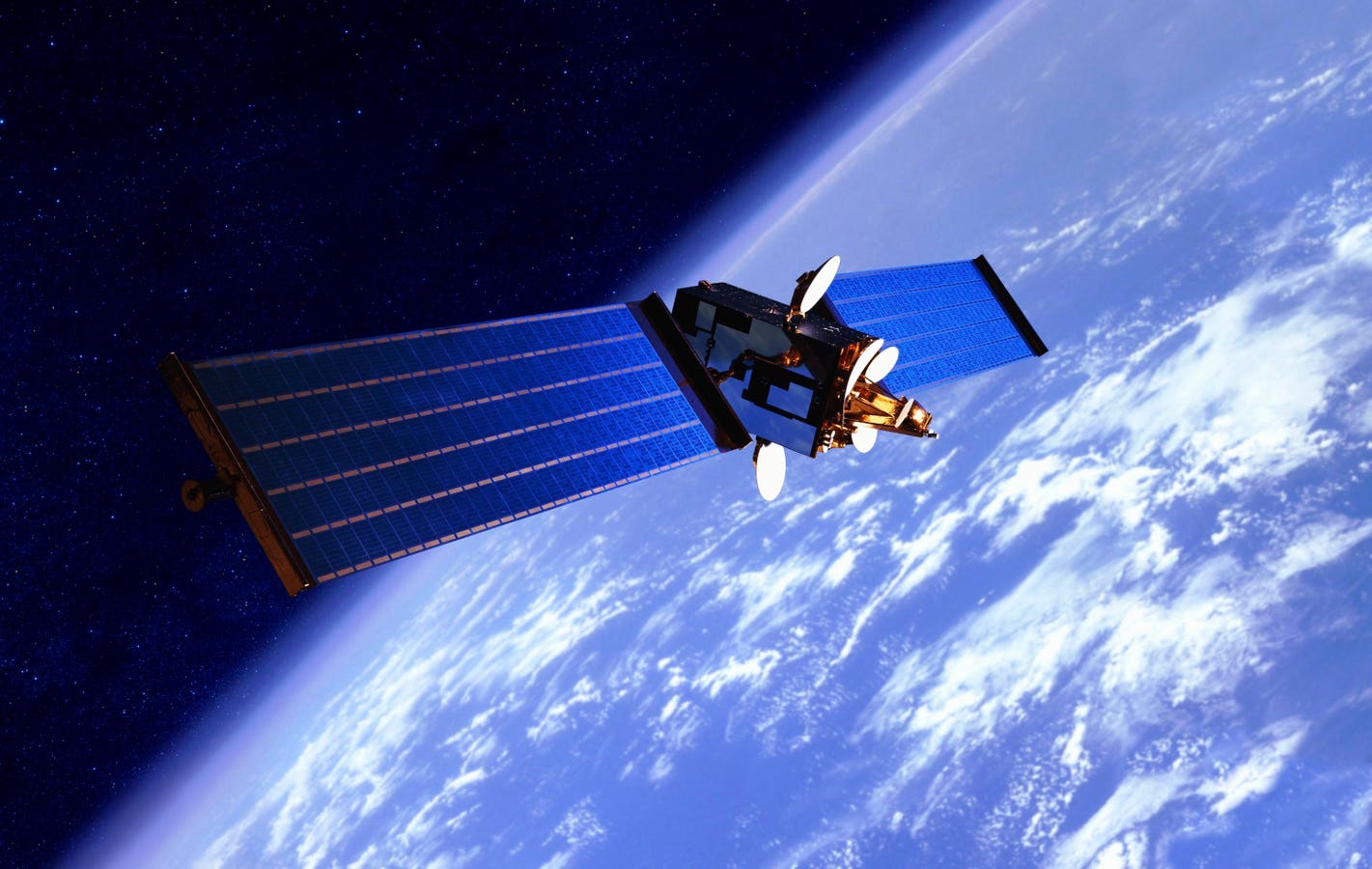
The idea of placing AI data centers in space is slowly edging from science fiction towards reality. In late 2025, Elon Musk’s SpaceX and Google announced plans to launch the servers that train and run LLMS into orbit. The science fiction-like vision is being driven by valid concerns that AI data centers require more energy and land than is available.
The benefits of building AI data centers in space, according to tech and space leaders, is to address the problems of sustainability and capacity issues generated by scaling laws of LLM training. For example, a GW data center , the industry’s next major milestone, would consume roughly 8.8-10 TWh per year, once cooling and other overhead are included. Space-based data solutions offer an alternative solution: to tap solar energy directly in orbit. In addition, by relocating AI infrastructure in space, companies may be able to address limitations on their size and scale. Earth-based data centers are limited by land availability, local infrastructure, risk exacerbating local water shortages and raising utility costs for surrounding communities. In orbit, tech and space leaders claim that “real estate” is effectively limitless. Moving to space could also create a “blank slate” for governance, allowing for data sovereignty and new operational rules outside traditional jurisdictions.
The move to space orbit also capitalizes on recent advances in inference scaling. Emerging data shows that scaling inference compute may be more efficient than increasing model size. Inference workloads are easier to distribute, as long as inference runs locally within tightly connected clusters. This is where firms launching orbital infrastructure may gain an advantage: by integrating GPUs into an existing satellite constellation, they could create many distributed compute nodes in orbit. SpaceX, for example, could potentially evolve its communication network into a distributed orbital cloud.
While it’s encouraging to see tech leaders think outside the box to tackle AI’s energy demands and sustainability challenges, there are real questions about the idea’s feasibility. According to experts interviewed in the New York Times, launching hardware into orbit remains extremely expensive. Currently SpaceX’s Falcon 9 launch costs are above $100 billion (based on $1,400/kg). Similar projects, such as SpaceX’s Starship project would need to achieve a launch cost of $200/kg, often described as a threshold at which orbital computing could become economically competitive with earth-based data centers. On top of that, modern chips aren’t designed to withstand space radiation, and cooling in a vacuum requires bulky radiator systems since there’s no air to dissipate heat. These orbital data centers would also need to be replaced every five years due to hardware lifespans. While advances have been made on these fronts, with Google’s Project Suncatcher demonstrating that their Trillium TPUs can withstand low earth orbit radiation for a five-year mission life, significant engineering and economic hurdles remain.
Potential Impacts on Industries
For now, the idea may be more about long-term vision, and capitalizing on the buzz around both AI and space, says Tom Mueller, a former SpaceX executive in his interview with the NYT. Nevertheless, should space-based AI data centers become feasible in the future, the ripple effects may touch a variety of sectors.
Should tech companies achieve more efficient AI computing in space, they may be positioned to offer services at lower costs or with greener credentials than earth-based operators. Cloud service and data center operators might prepare for hybrid models that incorporate some workloads in space in the intermediate future. This includes planning for workload orchestration across that divide and setting up innovation teams to trace space computing developments and possibly pilot small experiments.
For satellite communications companies and telecom providers, space-based data centers could either become partners or competitors. Key questions to consider is how orbital computing might enhance telecommunications networks or help them to diversify their offerings. Those working in the semiconductor industry may see a demand for radiation-hardened chips that can operate in space. Those working in thermal components could also see a new market in liquid cooling systems that are designed for space.
For most business leaders who rely on AI rather than build infrastructure, the key question is how space-based data centers might affect their access to computing power, cost structures, or sustainability goals. In the near term, little will change. But as with any emerging technology, it’s wise to maintain strong relationships with vendors and explore pilot opportunities to gain firsthand experience. More broadly, this trend invites future-oriented thinking about digital supply chains and how, in a radically different computing landscape, companies might source and scale AI services.
While still speculative, the push to move AI infrastructure beyond Earth reflects just how urgent and complex the challenge of scaling AI has become. Business leaders don’t need to bet on orbit today, but they should stay adaptable, open to new partnerships—and ready to rethink where their compute power comes from.