Thursday, November 13, 2025
Media Contact:
Stephen Howard | Director of Marketing & Communications | 405-744-4363 | stephen.howard@okstate.edu
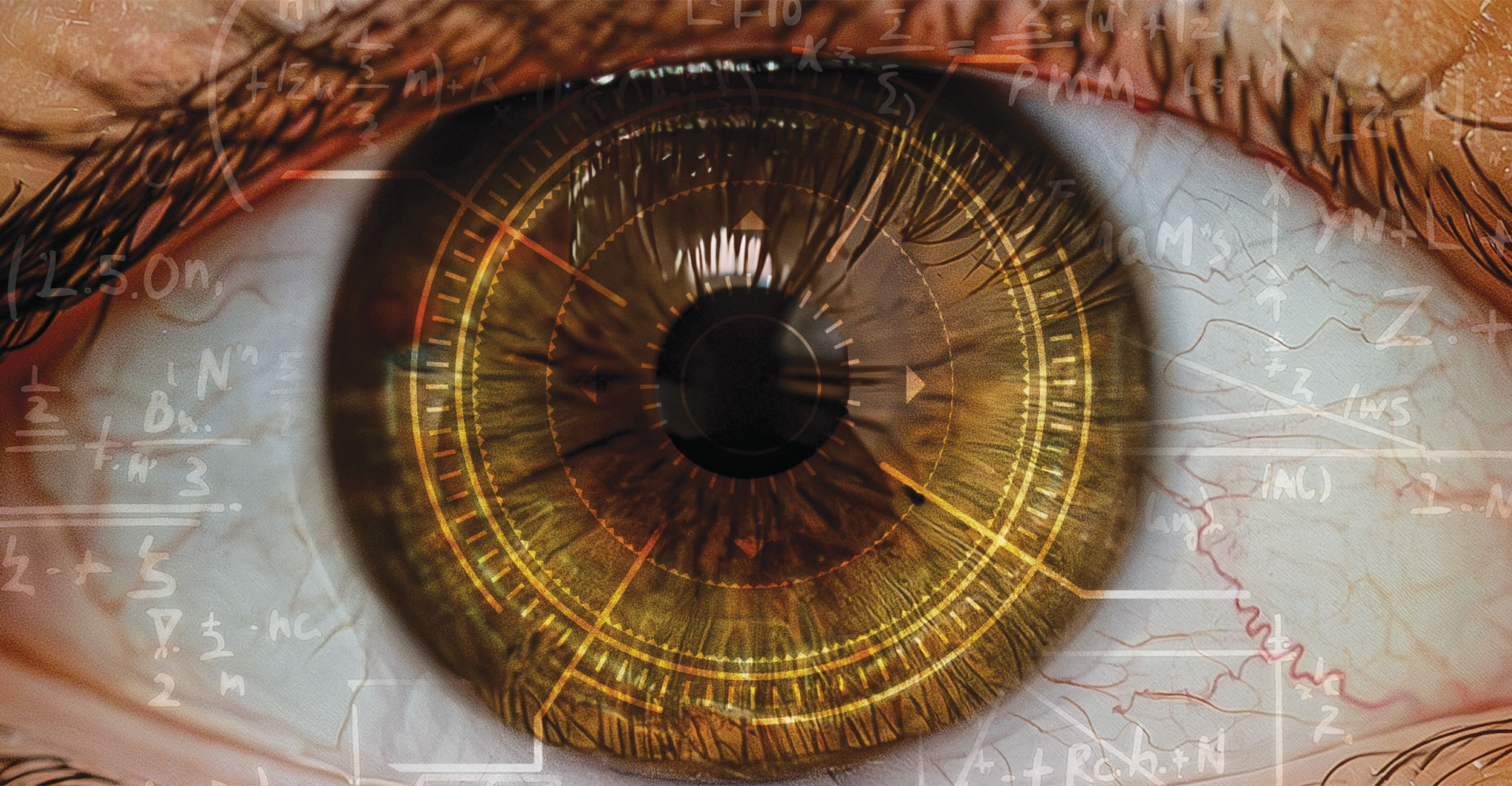
In a human eye, the retina acts as a translator, turning light into electrical signals
for the brain.
When someone has diabetic retinopathy, high blood sugar impairs the retina’s blood
vessels, disrupting the process.
In the United States, diabetic retinopathy is the most common reason why working-age
adults develop blindness. It’s a complication of diabetes, a diagnosis more than a
million people in the U.S. and about 26,000 Oklahoman adults receive each year, according
to the American Diabetes Association.
Although diabetic retinopathy is manageable with early intervention, it can be difficult
to detect. A patient might see clearly during a routine visit to a primary care provider
but experience irreversible vision loss within months.
What if their primary care provider could use a precise, data-informed algorithm to
predict this elevated risk and help preserve the patient’s vision?
Thanks to applied research in Oklahoma State University’s Center for Health Systems Innovation, this breakthrough could soon become a reality in clinics across the state and beyond.
Spears School of Business researchers, in partnership with OSU’s School of Industrial Engineering and Management (IEM), have analyzed and tested anonymous data from a database of millions of patients.
The result is a patent-pending, artificial intelligence-powered diabetic retinopathy
risk index system that can assist overworked physicians, evaluate individual patients
and relieve financial strain.
This supports CHSI’s stated mission to transform rural and Native American health
care, increasing accessibility through the implementation of innovative care models
and information technology solutions. CHSI is shared between Spears Business and OSU Center for Health Sciences.
a photo illustration.)
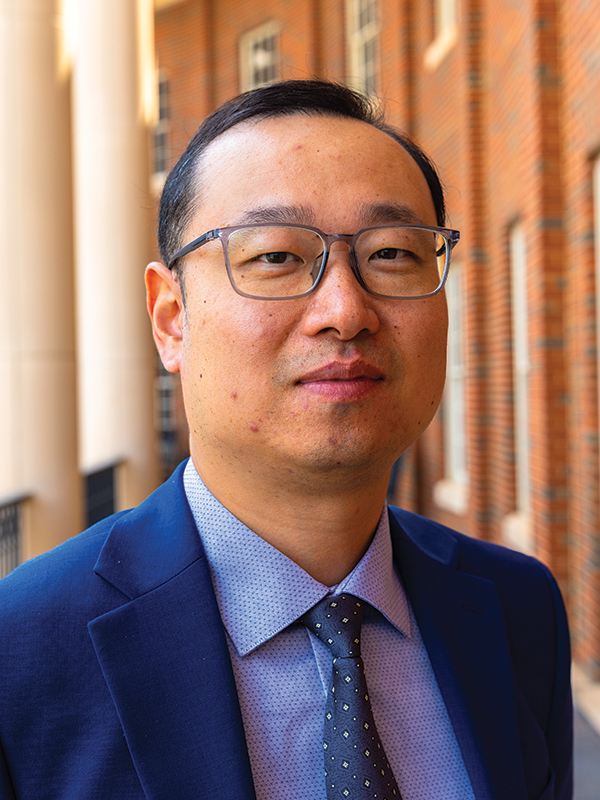
“We find the problems in health care worthy of solving,” said Dr. Dursun Delen, a
Regents Professor of Management Science and Information Systems and director of research
for CHSI. “Then, not only do we do the theoretical work on it, but we turn it into
an action. We put it into the field.”
Delen, who holds the William S. Spears Endowed Chair in Business Administration and
the Patterson Family Endowed Chair in Business Analytics, is a widely published scholar
with expertise in developing clinical decision support systems.
In 2023, the U.S. Department of Defense awarded Delen and his team a grant totaling
nearly $1.7 million over three years to analyze patient data and explore links between
traumatic brain injury and epilepsy in veterans.
While advancing that initiative, they also prepared the diabetic retinopathy risk
index system for pilot testing in rural clinics. After several years of internal funding,
the researchers won a National Institutes of Health R01 grant of approximately $1,185,000.
Dr. Zhuqi Miao, director of CHSI’s Institute for Predictive Medicine, helped lead
the technology’s creation. Ru Wang, then an OSU doctoral student in statistics, worked
with CHSI on the process.
Wang, Miao, Delen and CHSI executive director Dr. William Paiva published an April
2021 article in the Journal of Clinical Medicine about the risk index for early detection
of diabetic retinopathy. The collaboration also featured Dr. Tieming Liu, an OSU IEM
professor.
Their idea has become a patent-pending invention poised to address a widespread problem
affecting patients and clinicians.
Defining the issue
Paiva calls it the “lack of ologists.”
“If you look at rural markets, we are significantly understaffed in primary care,
and there’s almost a complete lack of subspecialists in rural markets,” Paiva said.
These subspecialists range from cardiologists to neurologists to ophthalmologists.
Without specialized care, diseases can get ahead of patients before they know to seek
help. For example, dilated eye exams and medical imaging can detect diabetic retinopathy,
but they aren’t accessible to everyone.
“My history with diabetic retinopathy goes back to when I was a venture capitalist
25 years ago,” Paiva said. “At the time, we invested in companies that were bringing
new eye imaging technology to the marketplace. New service models. None of them moved
the meter.”
Many rural patients lack health insurance and nearby resources, Miao pointed out,
so one appointment could cause a significant loss of money and time.
Resource shortages also affect physicians and nurses, pushing them toward burnout.
Delen teamed up with MSIS Ph.D. graduate Ankita Srivastava and MSIS assistant professor
Dr. Chenzhang Bao for a 2025 publication in the top-tier Journal of the Association
for Information Systems. They focused on factors that improve or worsen clinicians’
well-being, using a dataset of more than 55,000 workplace reviews on Glassdoor.com.
To make a real-world impact, Delen has to understand the clinicians who will use his
technologies.
“We get their insight,” Delen said. “What works; what doesn’t work; what is it that
they need that we can create and provide them to make their job easier and more efficient?”
Documentation is a common pain point. Clinicians spend hours entering data into electronic health record systems while patients experience long wait times,
especially in understaffed clinics.
“The doctors’ primary role should be seeing patients, not doing documentation,” Miao
said.
To ease this burden, Delen asks an important question.
How can we use computers to make smart decisions?
Creating the solution
While AI can spark fears about human replacement, Delen’s clinical decision support
systems aren’t pushing anyone out of a job.
In rural clinics where jobs for specialists don’t exist, primary care providers are
forced to wear many hats.
In practice, the AI-based risk index will reduce a physician’s excessive workload
and provide additional knowledge, automating tedious steps of the documentation process.
A valuable gift to OSU made this possible.
CHSI opened in 2013, and Paiva joined as executive director in 2014. The late Neal
Patterson, a two-time Spears Business graduate who co-founded health care technology
company Cerner Corporation (now Oracle Health), donated millions of dollars to the
center.
He also granted OSU researchers access to Cerner’s anonymized, HIPAA-compliant database. These data points tell the stories of more than 110 million
unique patients in the U.S. over 20 years.
Analyzing data from diabetic patients, OSU researchers created the risk index system.
It relies on 10 distinct biomarkers — including age, comorbidities and lab results
— noted at any diabetic patient’s routine visit to a primary care provider. No invasive
procedures or costly scans are necessary.
AI synthesizes the biomarkers, calculating an individual patient’s unique risk score
on a 0-100 scale. If the score is 10, the patient has a low risk of diabetic retinopathy.
If it’s 90, the patient faces a serious risk of vision loss.
The system alerts the primary care provider, who will discuss the score with the patient,
raising awareness of the risk.
“Our technology does not try to replace the gold standard eye examination, but we
give an early warning so it can push the patients to see an ophthalmologist,” Miao
said.
The benefits are numerous. No two patients are alike, so the algorithm’s “population
of one” approach, as Delen calls it, represents personalized medicine’s future. Delen
said the system is remarkably 85-90% accurate, a lower margin of error than many physicians
have. To ensure the algorithm’s accuracy, Emory University in Atlanta is replicating
and testing it with additional data.
The technology’s most transformative aspect might be its affordability.
Clinics must consider the financial impact of everything they do, and medical imaging
systems are expensive. At risk of closing without sufficient funds, many rural hospitals
need new solutions.
The risk index could be a game-changer, and CHSI is taking steps to deploy it into
rural clinics. Although the invention doesn’t yet carry a price tag, Delen and Miao
intend to keep it affordable and accessible to everyone.
The risk index might appear on a phone app, in a physician’s smart glasses or as a
feature of the EHR system. No matter the researchers’ chosen format, a primary care
provider can easily access the technology.
“We believe that innovation without implementation produces PowerPoints and PDFs,”
Paiva said. “We are passionate about the implementation of our innovations.”
With early detection, diabetic retinopathy can be treated. Interventions include medication,
laser therapy and surgery.
Preventing vision loss is only the starting point.
Delen envisions a package of screening tools for many difficult-to-diagnose diseases,
revolutionizing health care through readily available technologies.
“Unless you turn the research into action, it’s just a paper,” Delen said. “We want
the things that we find to make a real impact in the real world. We like applied research
that will make an impact in the lives of many.”
Story by: Hallie Hart | Discover@Spears Magazine
Photos by: Aaron Murphy, Ellie Piper, Piper Reese and Cole Weiberg