Key market opportunities for liquid packaging include growing demand across sectors like food & beverages, pharmaceuticals, and personal care. Innovations in biodegradable materials, smart systems, and e-commerce packaging drive growth. Asia-Pacific leads the market, with significant eco-friendly strides. Flexible formats and aseptic technology are rapidly expanding.
Liquid Packaging Market

Dublin, Nov. 04, 2025 (GLOBE NEWSWIRE) — The “Liquid Packaging Market – Types, Materials, Technologies and End-Use Sectors” has been added to ResearchAndMarkets.com’s offering.
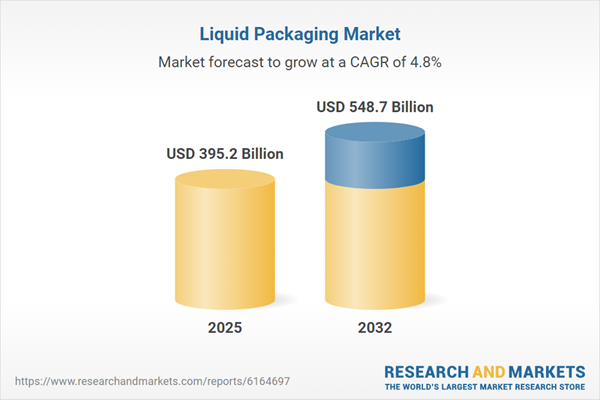
The global liquid packaging market, valued at US$395.2 billion in 2025, is projected to reach US$548.7 billion by 2032, growing at a CAGR of 4.8%. This growth is fueled by the demand for packaged beverages, pharmaceuticals, and personal care items. Millennial lifestyle shifts and urbanization increase the consumption of functional beverages and home healthcare packaging solutions.
Technological advancements like bio-based resins, mono-material barriers, and flexible aseptic packaging offer improved shelf life and environmental performance. Smart packaging innovations, including QR codes, RFID, and temperature indicators, enhance safety and traceability, while the rise of e-commerce demands leak-proof and tamper-evident packaging.
Regional Market Analysis
The Asia-Pacific region leads the market, accounting for 43.2% of the global share in 2025, with a CAGR of 5.4% anticipated through 2032. This growth is propelled by urbanization, rising incomes, and a growing middle class in China, India, Japan, and South Korea. Sustainability efforts and government support, alongside demands for ready-to-drink options, drive further expansion. The North American market is also expected to grow, driven by eco-conscious regulations and demand for specialized pharmaceuticals.
Market Analysis by Type
Rigid packaging holds the foremost position in 2025 due to demand for durable solutions in food and beverage sectors, while flexible liquid packaging is forecasted to grow rapidly at a CAGR of 5.6%. This is driven by lightweight pouches and bag-in-box solutions that enhance storage efficiency and sustainability.
Market Analysis by Material
The plastic segment dominates due to its versatility and cost-effectiveness, though paper and paperboard will see the highest growth at 5.4% CAGR, driven by eco-friendliness and high recyclability. Consumer preferences for eco-friendly materials stimulate increased demand for paper-based packaging solutions.
Market Analysis by Technology
Aseptic packaging commands the largest share and fastest growth (CAGR of 5.3%), benefiting from demand for convenient, preservative-free products. This technology maintains sterility and freshness in beverages and pharmaceuticals, supported by advanced techniques like blow molding.