
Things to do in Palm Springs include Palm Springs Modernism Week
Check out our guide to Modernism Week, an 11-day festival of mid-century modern architecture and design featuring tours, talks, parties and more.
George Roberson was known to have quipped that the hotel business was just great — if it weren’t for the guests and the employees.
Roberson and his half-brother, Earl Coffman, knew all about the hotel business. They had been in the business their whole lives with their mother, Nellie Coffman, and theirs was a particularly hands-on experience.
Conjured up from the sand in 1909, The Desert Inn was the finest establishment in Palm Springs. It really defined the town, making it into a resort destination with just determination and industriousness. Coffman set an example for her sons of diligence and perseverance. The Desert Inn at its height had more than 200 employees to service about as many guests. It was the biggest employer in town for decades.
Roberson was an engineer and had a mechanical bent. He could fix most anything and had an analytical mind. He managed the grounds and maintenance of the buildings. As the inn grew, he worried it would outstrip the cesspools that serviced its little cottages. Roberson developed a sewer system, piping wastewater far out of town to fertilize fruit trees and beautify the desert naturally.
Palm Springs would wait years to have such infrastructure, and Roberson would help design it.
Earl was more the indoor manager of the inn, dealing directly with guests and employees, both pesky and pleasant.
Earl’s grandfather Charles Coffman had come to California during the gold rush, running freight wagons through the Mother Lode country. Charles and his wife, Mary, had one daughter and three sons. The youngest was Harry. In the 1880s, they moved to Southern California, where they purchased a small land grant from Pio Pico, the last governor of Alta California under Mexican rule.
The Coffmans established a farming operation with livestock, horses and walnuts on their land. Charles became the head of the walnut grower association, which became Blue Diamond Walnuts. Each of the four children were given a small farm adjoining the original parcel, and they worked all of the land cooperatively.
James Monroe and Ruth Jane Orr came from Texas, where they had been in the hotel business, and settled close to the Coffmans with their widowed daughter, Nellie, and her newborn son George Roberson. Nellie and Harry were neighbors — that’s how they met.
The Orrs had ideas of ranching but were unable to sustain it and eventually moved to the least expensive place they could find — Santa Monica — where they were once again in the hotel business.
Harry traveled between the ranch and Santa Monica to court Nellie, and they were married at the St. James Hotel in March of 1891. The newlyweds made their home on Harry’s ranch, and it was there on March 28, 1892, that Owen Earl Coffman was born. Named Owen for his uncle Owen Oscar Orr and Earl for his aunt Edna Earl Orr, he was a welcome addition to the family and was mostly called Earl.
He was horseback riding before he could walk expertly, and he would grow to be a fine horseman. Exceedingly active and adventurous, he was told to keep out of the pig pen, but petting piglets was too alluring. On one occasion, Earl was grabbed by a ranch hand just in time, rescued from certain death at the hands of an angry mommy sow.
When Harry went to medical school in Philadelphia, Earl helped his mother and brother with the ranch chores. Upon Harry’s return, the family moved to Santa Monica to establish Harry’s medical practice.
Living close to the Orr grandparents resulted in both George’s and Earl’s work in the hotel business.
Nellie traveled with her sons to Idyllwild to recuperate from pneumonia. One day when they were horseback riding, she gazed out on the expansive desert of the Coachella Valley below. She was intrigued and promised she would make the little village of Palm Springs her home.
Indeed, she moved in the fall of 1909, establishing The Desert Inn. Earl stayed with his grandparents until graduating from Santa Monica High School in May 1910, joining his parents in Palm Springs that fall.
The family would spend summertimes in Santa Monica. To have some income when The Desert Inn was closed, Earl looked for work elsewhere. His father knew John N. Baylis, a physician in San Bernardino who had a summer resort in the close-by mountains. He got a position working at Squirrel Inn, and he spent several summers there. He would eventually marry Dr. Baylis’ daughter, Helen.
Determined to be a first-rate businessman, Earl went to New York where he attended business school. He also worked for Simplicity Patterns and a few other businesses. He met a number of men who worked at One Wall Street, and a few became his lifelong friends.
Helen Baylis was in New York to attend school, and they became reacquainted. They married on May 25, 1917, and honeymooned at Niagara Falls.
That fall, they moved permanently to Palm Springs and The Desert Inn. Earl joined again in doing all that was necessary.
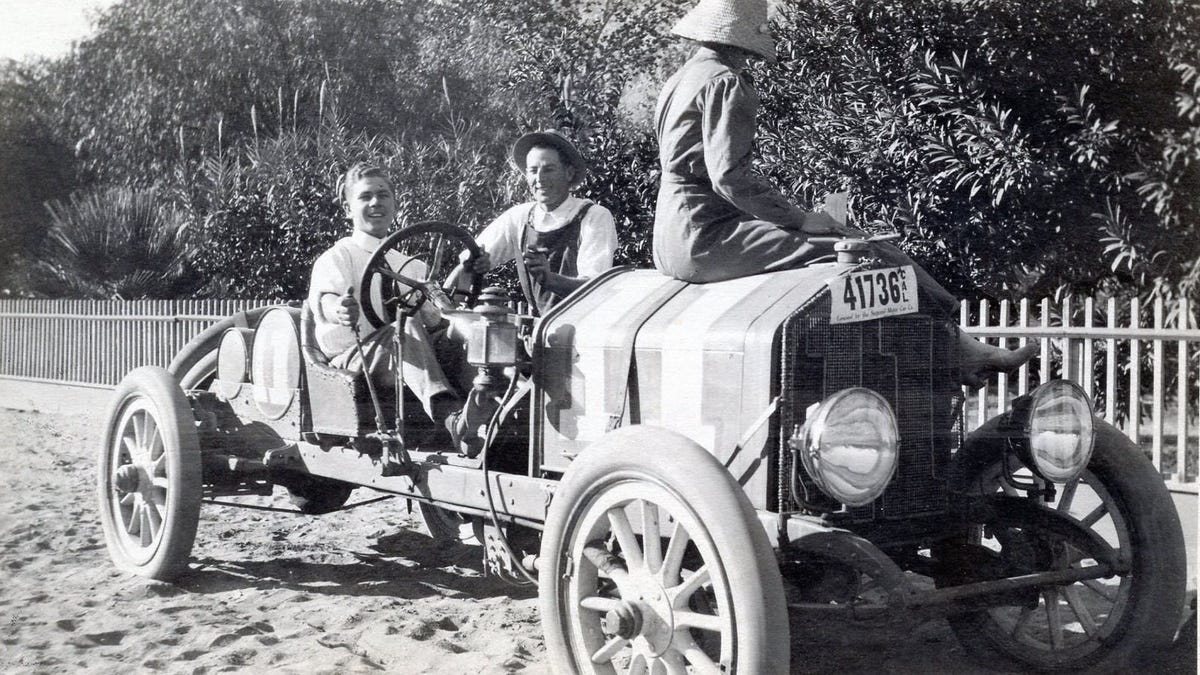
That spring, Earl was drafted into the Army. He did basic training at Miramar and then was sent to France. At the Western Front, he was an ambulance driver retrieving wounded from the front lines, risking his own life. The suffering was overwhelming, with no analgesics available. His letters to his father were published in the Calexico newspaper, recounting the horrors. (George also served in France with the Army engineers.)
Earl returned to Palm Springs in 1919 and to the hotel business. Determined to have the finest accommodations, he joined the national hotelman’s association and concentrated on making The Desert Inn known internationally. He was often in the front of house, greeting the guests and building relationships. Before the city was incorporated, the inn was the center of village civic affairs and business meetings as well as social events, and Earl was a leader in all.
In the summers, the family would decamp to cooler climes at Pine Crest, the next resort that Dr. and Mrs. Baylis had in the San Bernardino mountains. In the late 1920s, Earl became the manager of the North Shore Tavern on Lake Arrowhead. Regular guests were members of the prestigious Los Angeles law firm O’Melveny and Myers. Day-long horseback rides through the mountains cemented lifelong friendships.
In the 1930s, Earl became the summer manager of the Ahwahnee Hotel in Yosemite. His mother, Nellie, and Jennie Curry were close friends. At the time, Ansel Adams has a studio at the Ahwahnee and would come to the lobby in the afternoon to play the piano.
An avid horseman, he helped to form Desert Riders. He was a founding member and the first president of Vaqueros del Desierto. One of their early rides started at The Desert Inn Ranch on Ramon Road and proceeded south to Palm Canyon up and on to Pinyon Flats, then to Martinez Mountain and down to Thermal and into the Whitewater River and back to Palm Springs.
Earl’s friendship with the Palm Springs manager of the Southern Sierras Power Company, Francis Crocker, proved auspicious. Crocker wanted to ascend the heights of St. Jacinto by funicular. Most thought the notion completely crazy, but Earl understood the vision. The same zeal with which he approached the hotel business would produce something entirely unique and new in California. That singular accomplishment is a story for another week.
Tracy Conrad is president of the Palm Springs Historical Society. The Thanks for the Memories column appears Sundays in The Desert Sun. Write to her at pshstracy@gmail.com.