April 6, 2026
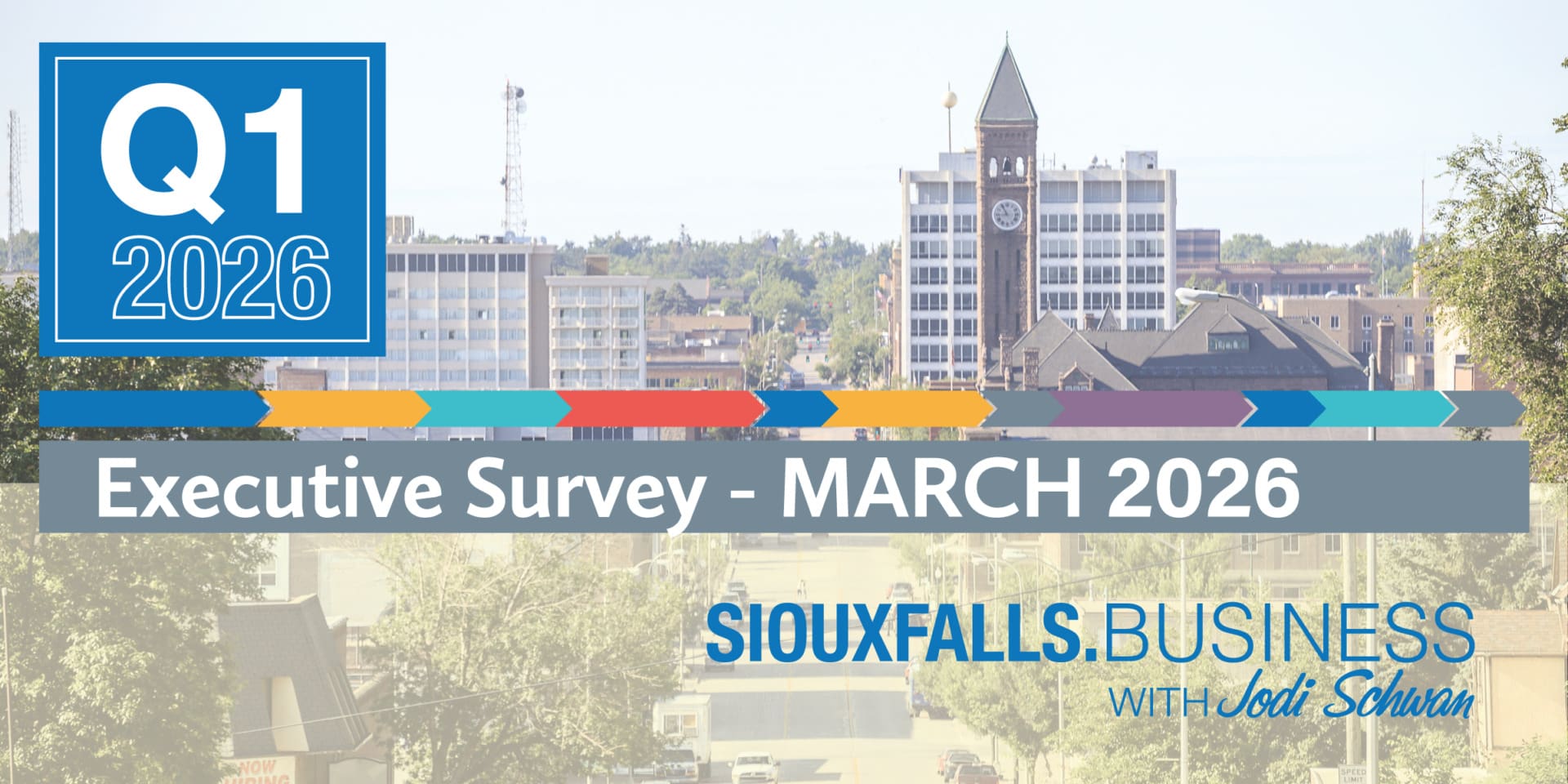
Despite a tumultuous start to the year internationally and a spike in oil prices, business conditions in Sioux Falls don’t appear overly impacted yet.
That’s according to the most recent SiouxFalls.Business quarterly CEO survey, conducted in partnership with the Augustana Research Institute and the Sioux Falls Development Foundation.
The survey was conducted during mid-March and completed by nearly 50 CEOs and business owners.
The response rate was notably lower than three months ago, when about 70 business leaders completed the survey. The concentration among those not responding was in businesses of 100 employees or fewer.
“Even though businesses of this size are still the majority represented, it does skew the results more towards larger businesses. Smaller businesses tend to be more sensitive to economic headwinds and, frankly, more pressed for time when conditions get difficult,” said Raymond Leach, director of fintech at Augustana University.
“Their reduced participation may itself signal stress that doesn’t fully show up in the survey numbers. Readers should keep this in mind when comparing results to prior quarters.”
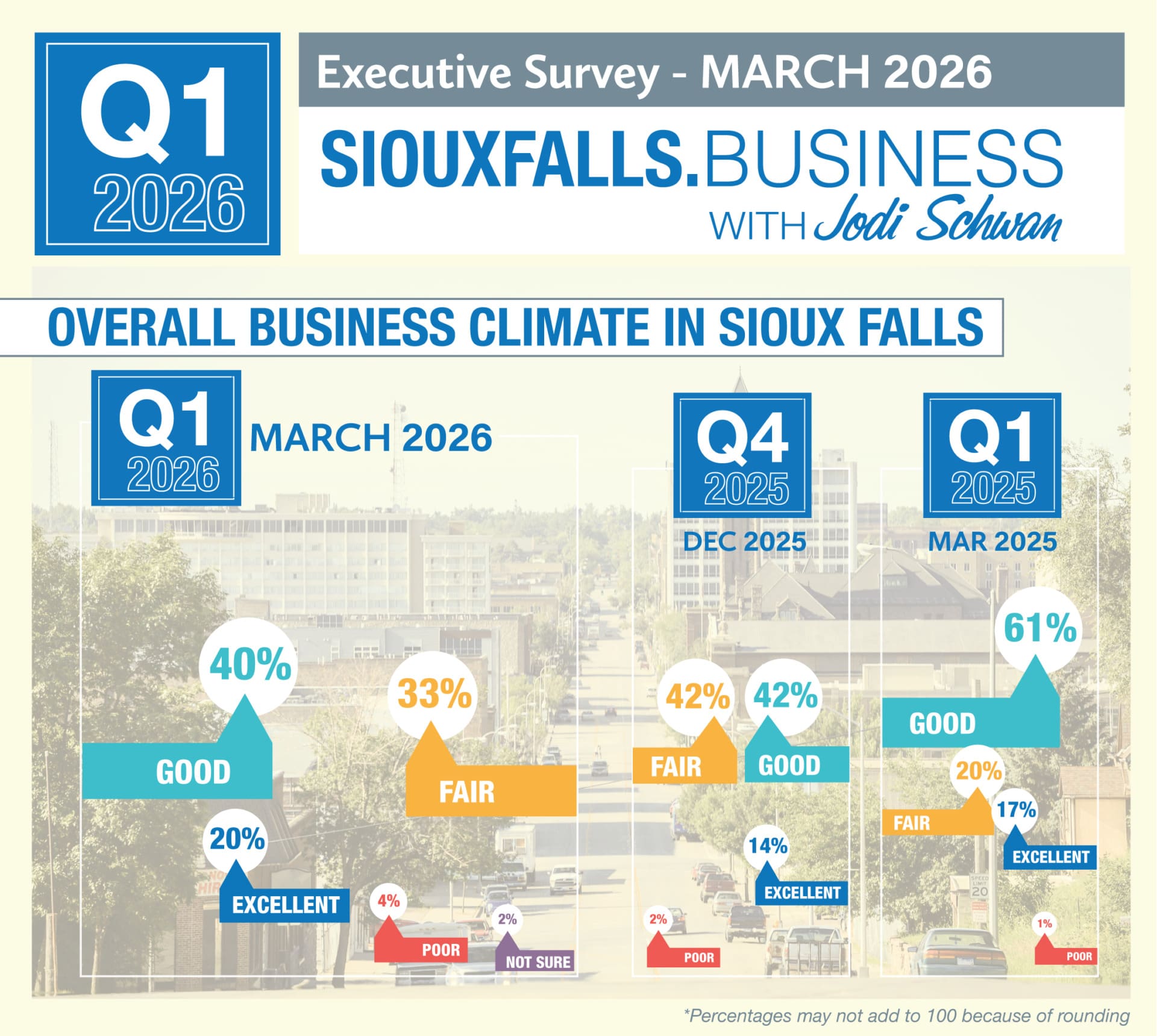
When asked about overall conditions in their businesses, results were on par with what CEOs said in late 2025, even a bit better in some cases. More than half reported good or excellent conditions, and 2 percent said conditions were poor, an improvement from 5 percent three months ago.
“Despite turbulence at the national level, Sioux Falls-area CEOs continue to report relatively stable business conditions,” Leach said.
“That’s a notably different picture than what national indicators would suggest, and it reflects something that has been consistently true of this market: Sioux Falls tends to be insulated and optimistic from what happens on the national stage.”
On pricing, the majority of respondents reported little change to a slight increase over the past quarter.
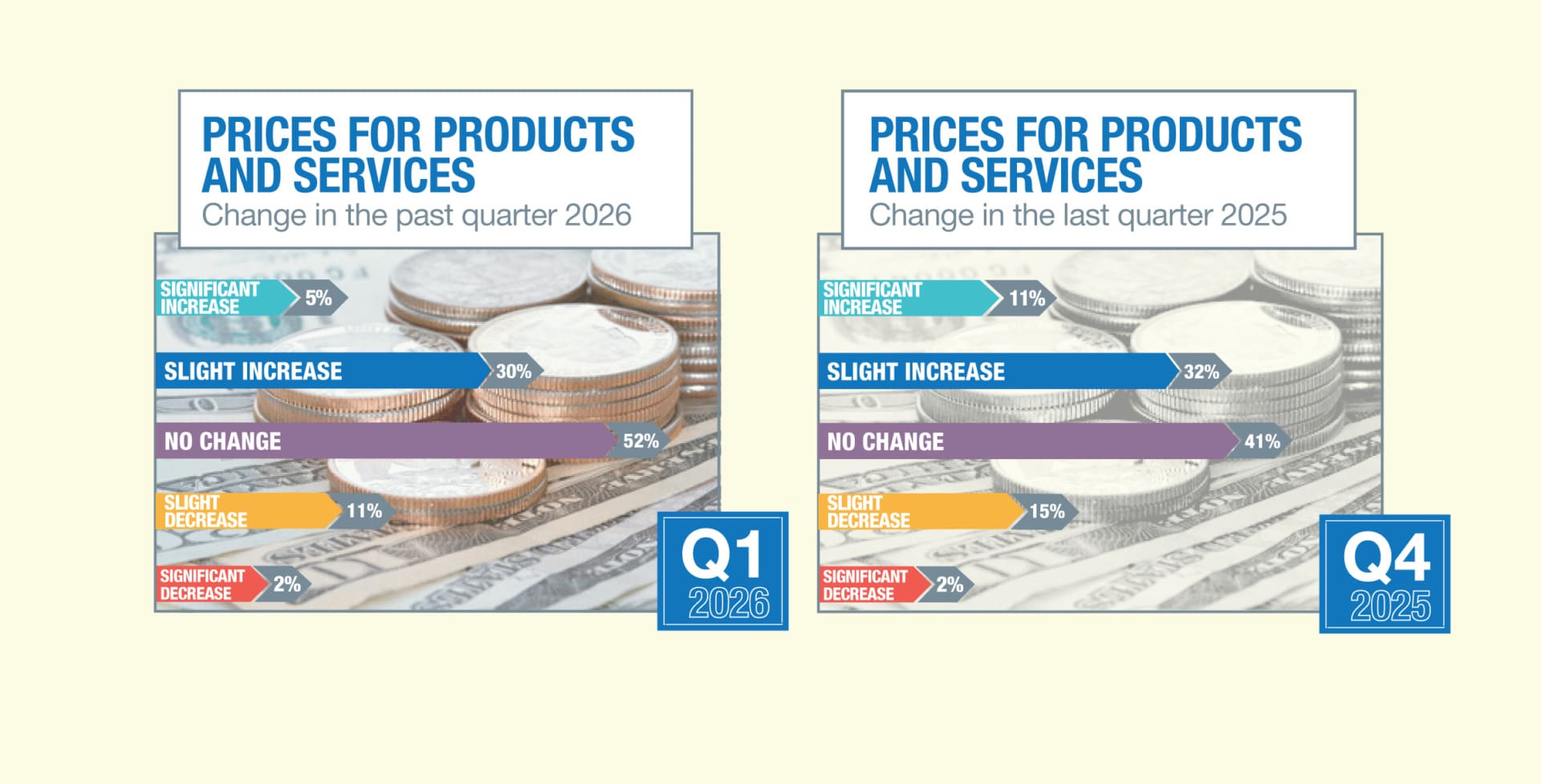
That’s “despite national inflation remaining slightly elevated. It may be that businesses have already passed these price increases through to consumers and are currently in a holding pattern,” Leach said.
Sales told a more mixed story, with similar numbers seeing increases and decreases.
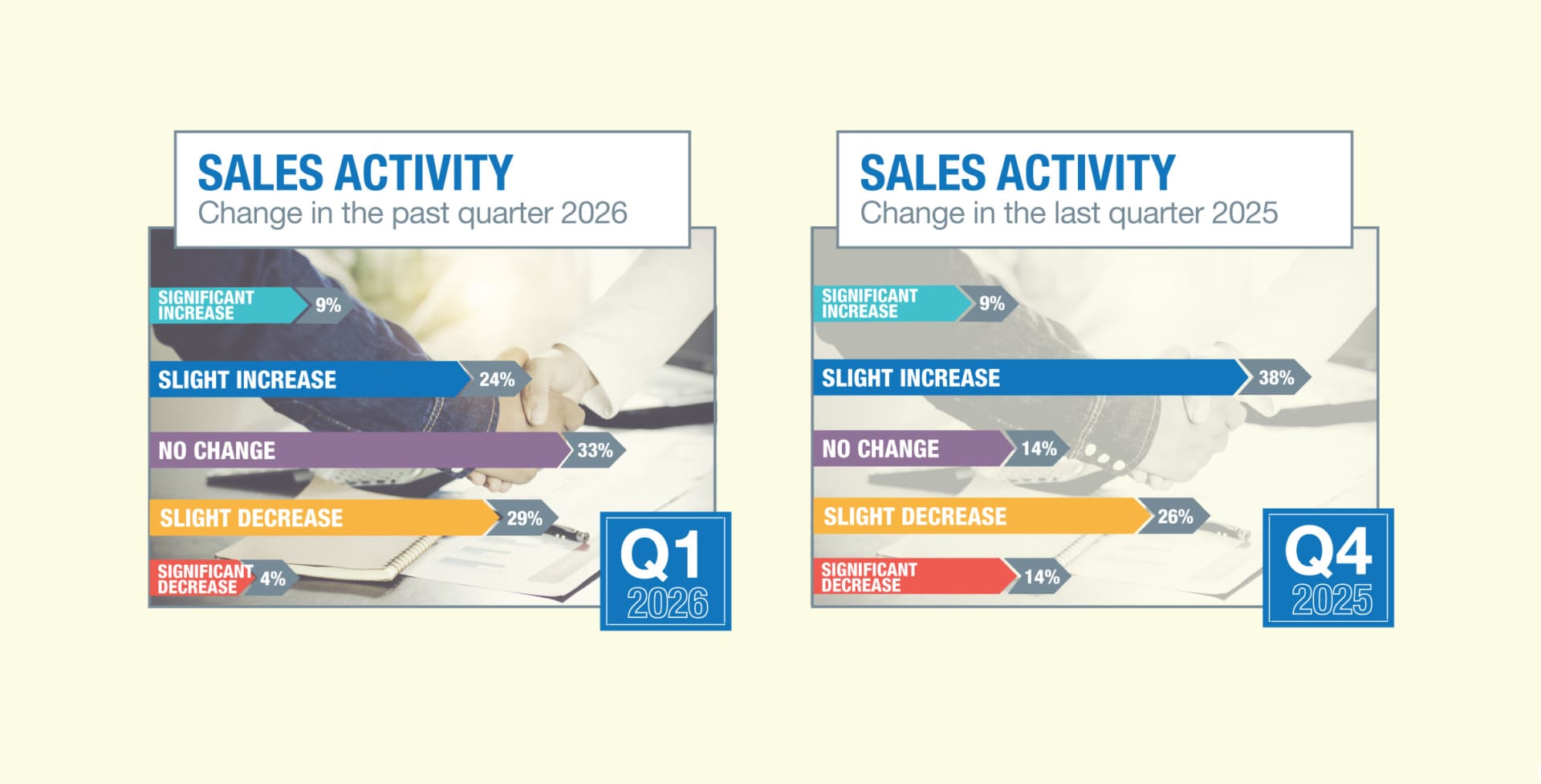
“Responses clustered around no change but with a fairly even spread of increases and decreases on either side, which means experiences varied depending on the organization,” Leach said.
“This kind of distribution often reflects a market in transition, where some sectors are finding footing while others are beginning to feel the squeeze. Once we have the updated data from the city of Sioux Falls’ monthly financial status report, we may have a better idea on which industries are feeling the pressure.”
One of the most notable results is the pullback in hiring, he added.
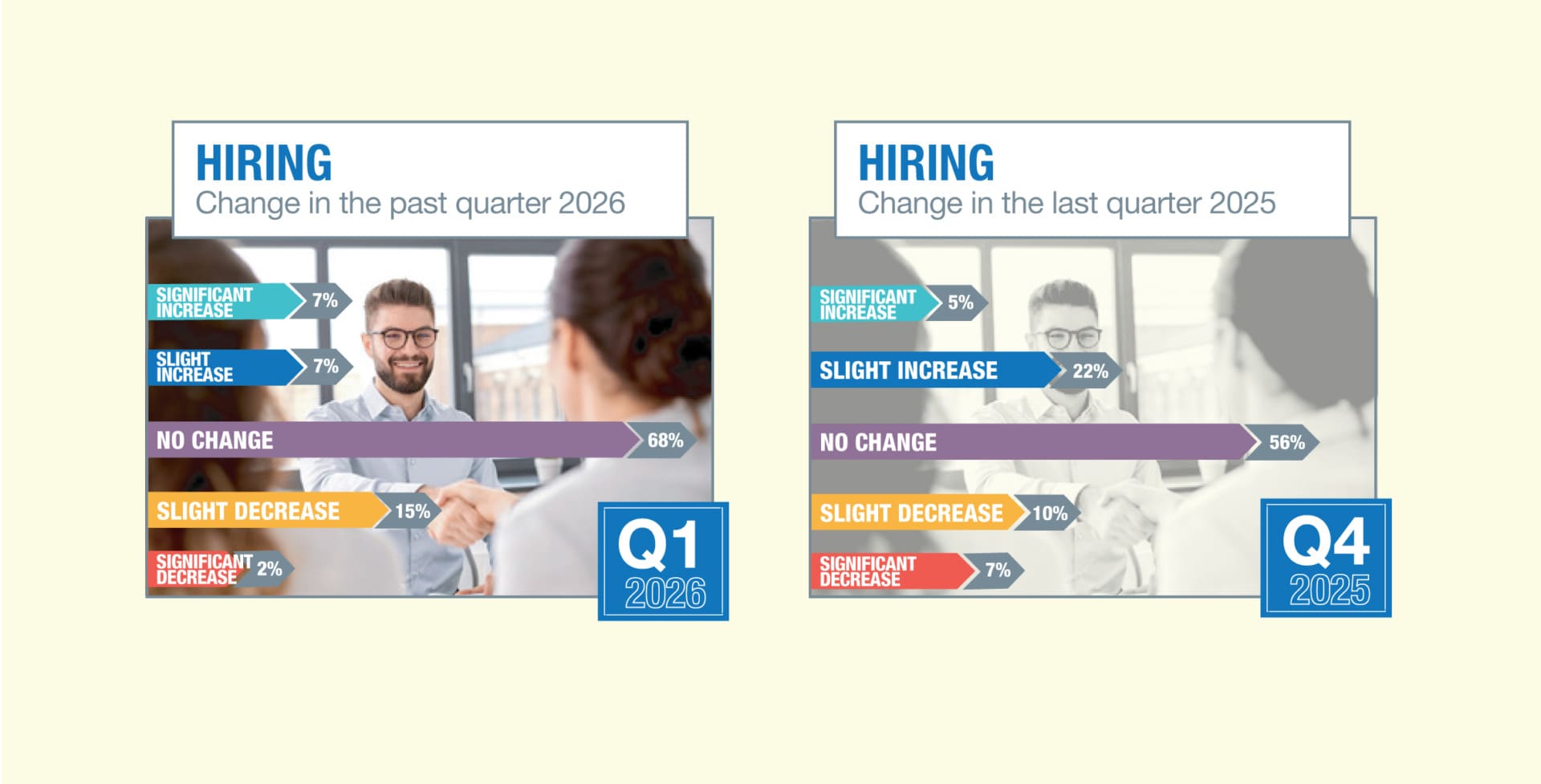
“Fewer than 15 percent of respondents reported increasing head count, while the remainder indicated flat or declining employment levels. This aligns with what we’re seeing nationally, where job growth has been minimal since the start of the year and the national unemployment rate has nudged up to 4.4 percent,” Leach said.
Capital spending followed a similar pattern, with most companies reporting slight to no significant capital improvements over the past quarter.
“We generally see around 20 percent of the respondents reporting significant capital expenditures over the past quarter, but we only see 13 percent reporting so for Q1 2026,” Leach said. “All of this suggests that investment decisions are also being deferred pending greater clarity.”
Looking ahead to the second quarter, CEOs largely expect average hiring.
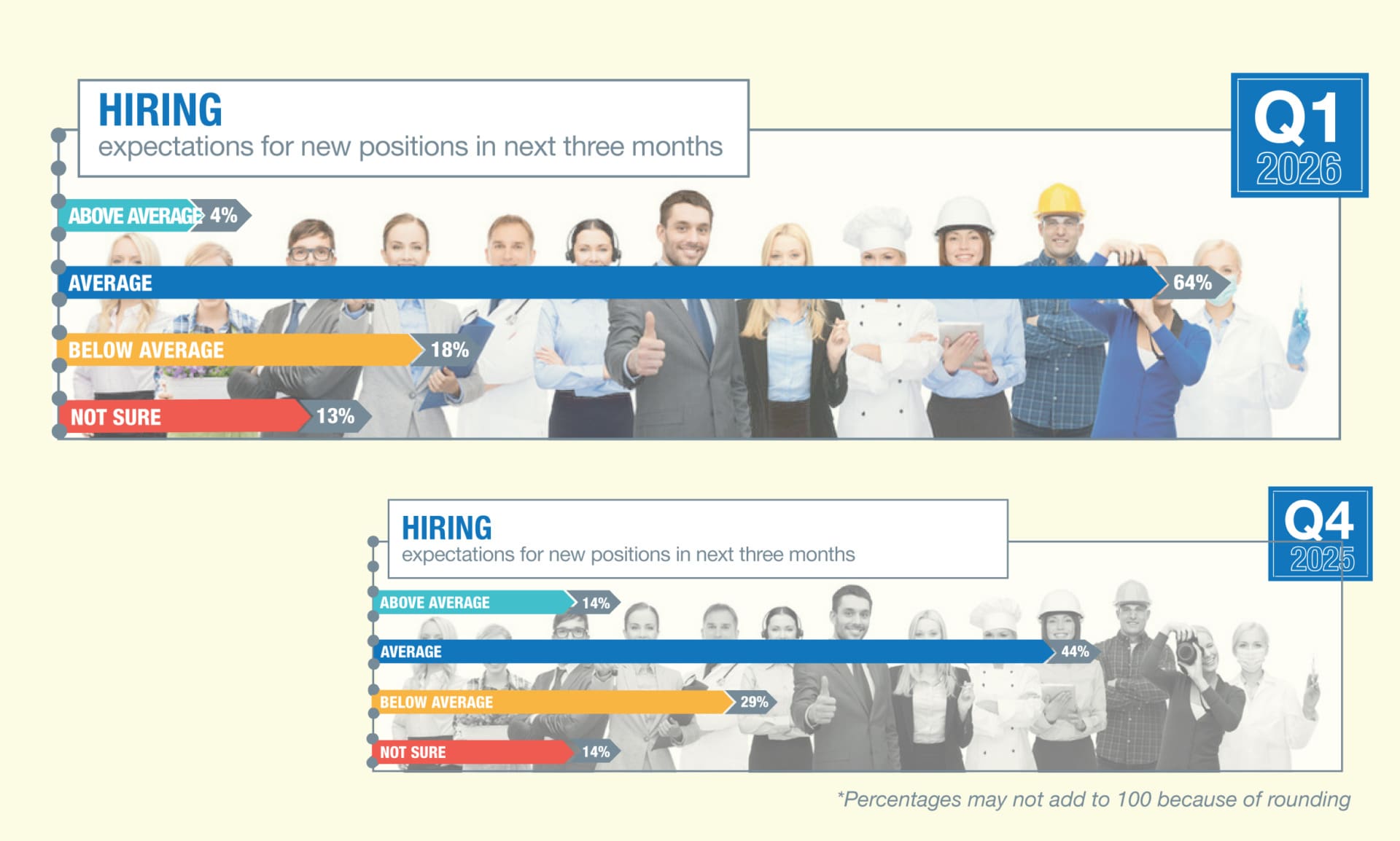
They are split on capital expenditures, with about half reporting average expectations and the rest divided between above- and below-average spending.
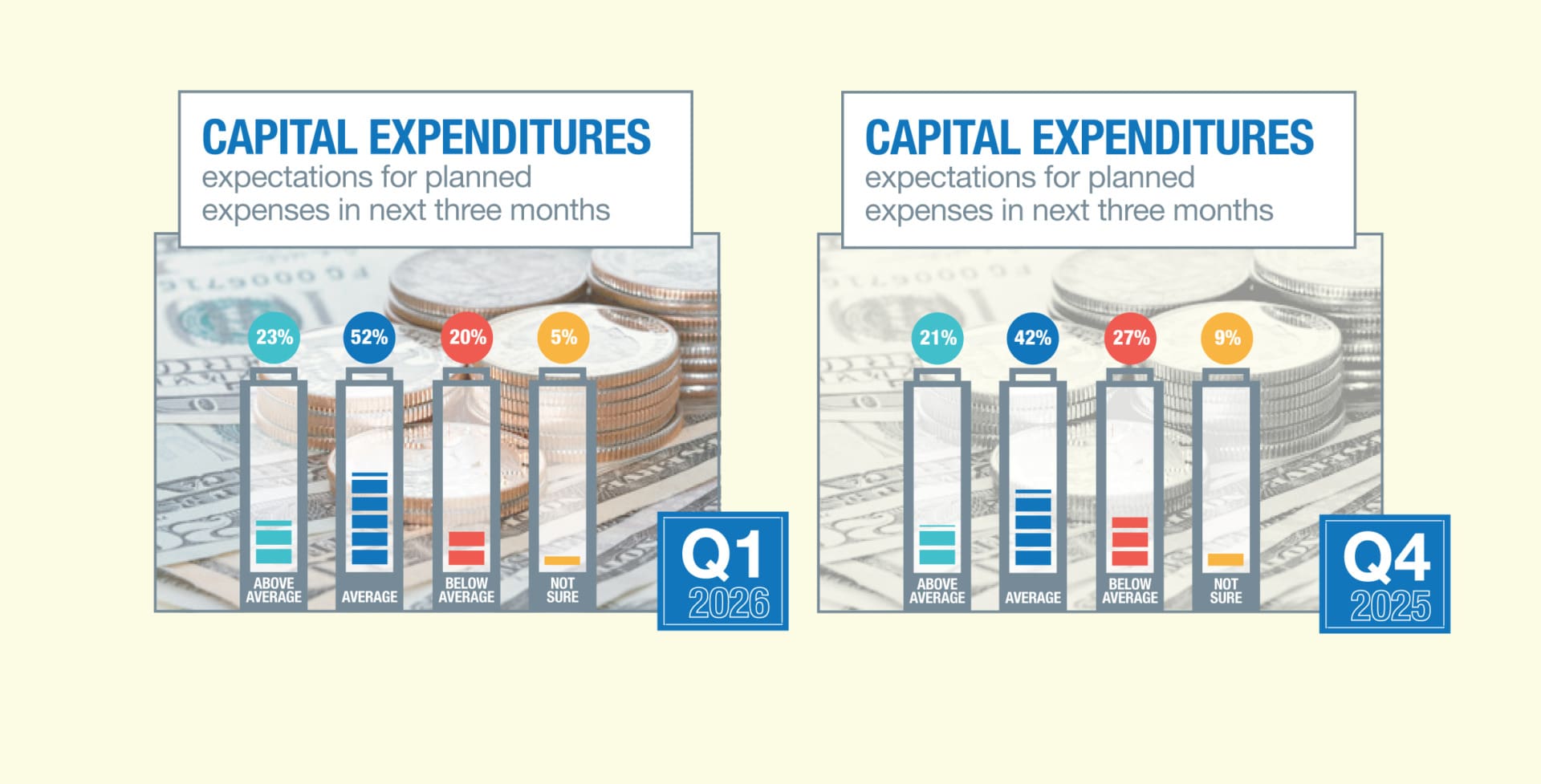
The caution reflected in local hiring and investment decisions makes more sense when viewed against the national economic picture, which has “deteriorated more noticeably in recent months,” Leach said.
“GDP growth for 2025 came in at 2.1 percent, down from 2.8 percent the prior year, and the second estimate for Q4 2025 was revised down sharply to just 0.7 percent. Meanwhile, core PCE (personal consumption expenditures) inflation rose to 3.1 percent on an annual basis as of January, well above the Fed’s 2 percent target. At the same time, energy costs are rising with crude oil prices hovering around $100 per barrel. This leaves the Fed with limited room to stimulate growth without risking further price increases.”
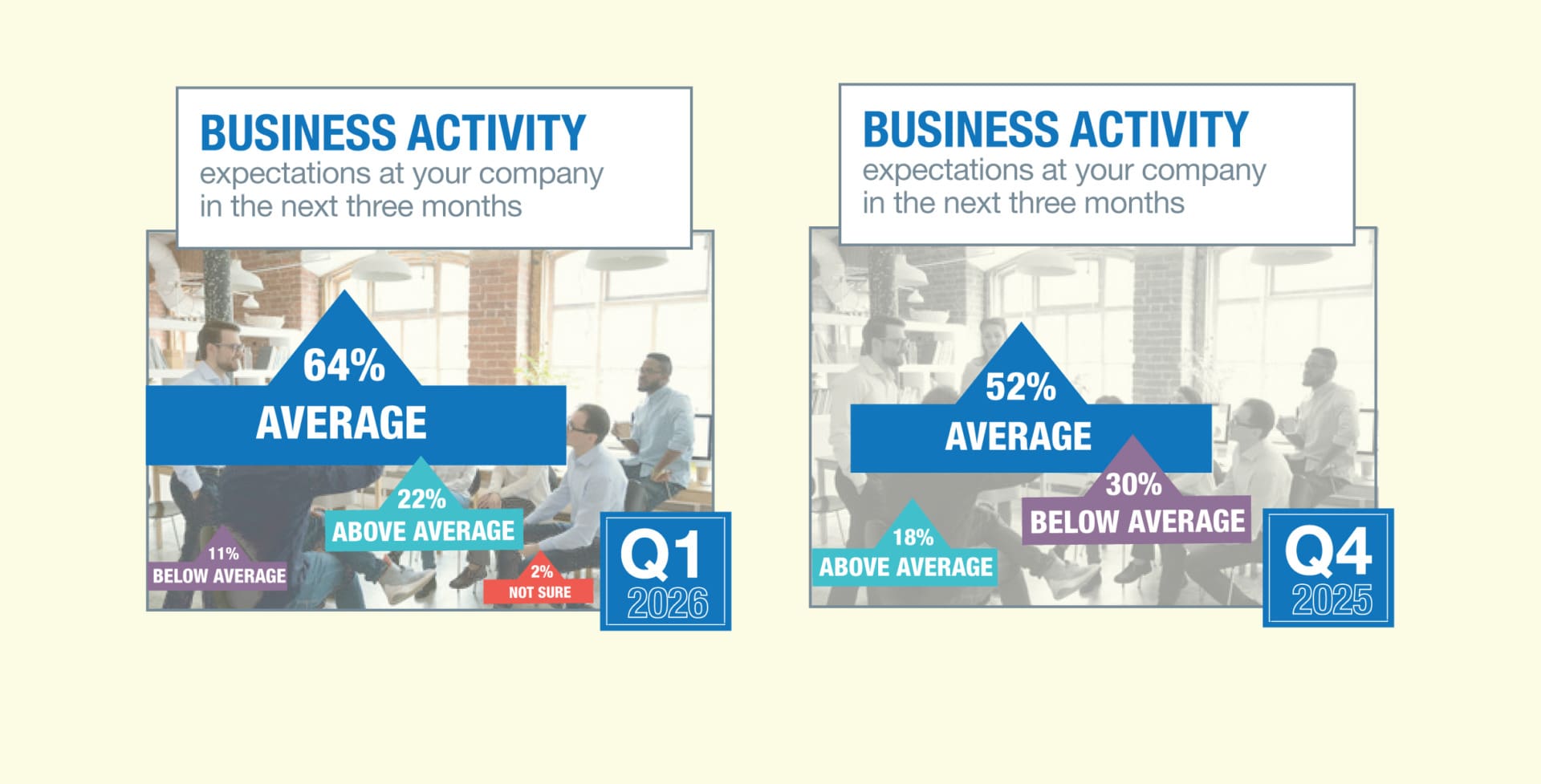
Against that backdrop, nearly two-thirds of CEOs said they expect average business activity in the second quarter, while 22 percent are anticipating above-average activity.
Perceptions of the Sioux Falls business climate are trending upward from the end of last year.
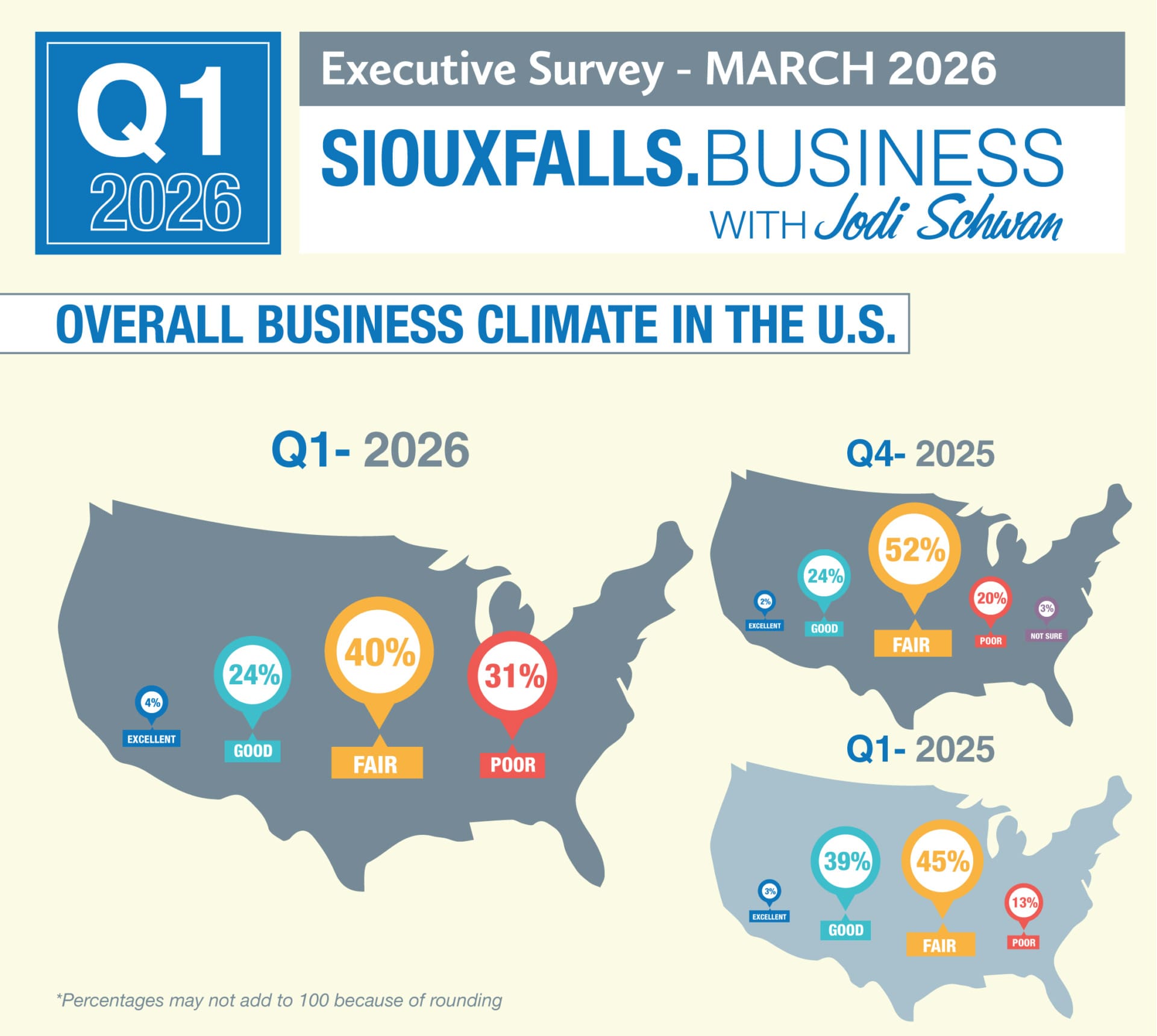
Perceptions of the U.S. business climate have eroded some, with nearly one in there CEOs now calling it poor.
Sioux Falls Development Foundation resources
Do you have further information to share about conditions at your business? Or are you looking to connect to additional resources to support your growth? The Sioux Falls Development Foundation can assist you in the following areas:
- Workforce development: The Development Foundation offers programs and initiatives to help you attract, retain and develop your workforce. Contact Denise Guzzetta, vice president of talent and workforce development, at 605-274-0475 or deniseg@siouxfalls.com.
- Business growth and expansion: Whether your business is planning an expansion in the next five years or facing risk factors impacting growth, the Development Foundation can help by discussing existing building space, available land, potential local and state incentives and other resources. Contact Mike Gray, director of business expansion and retention, at 605-274-0471 or mikeg@siouxfalls.com.