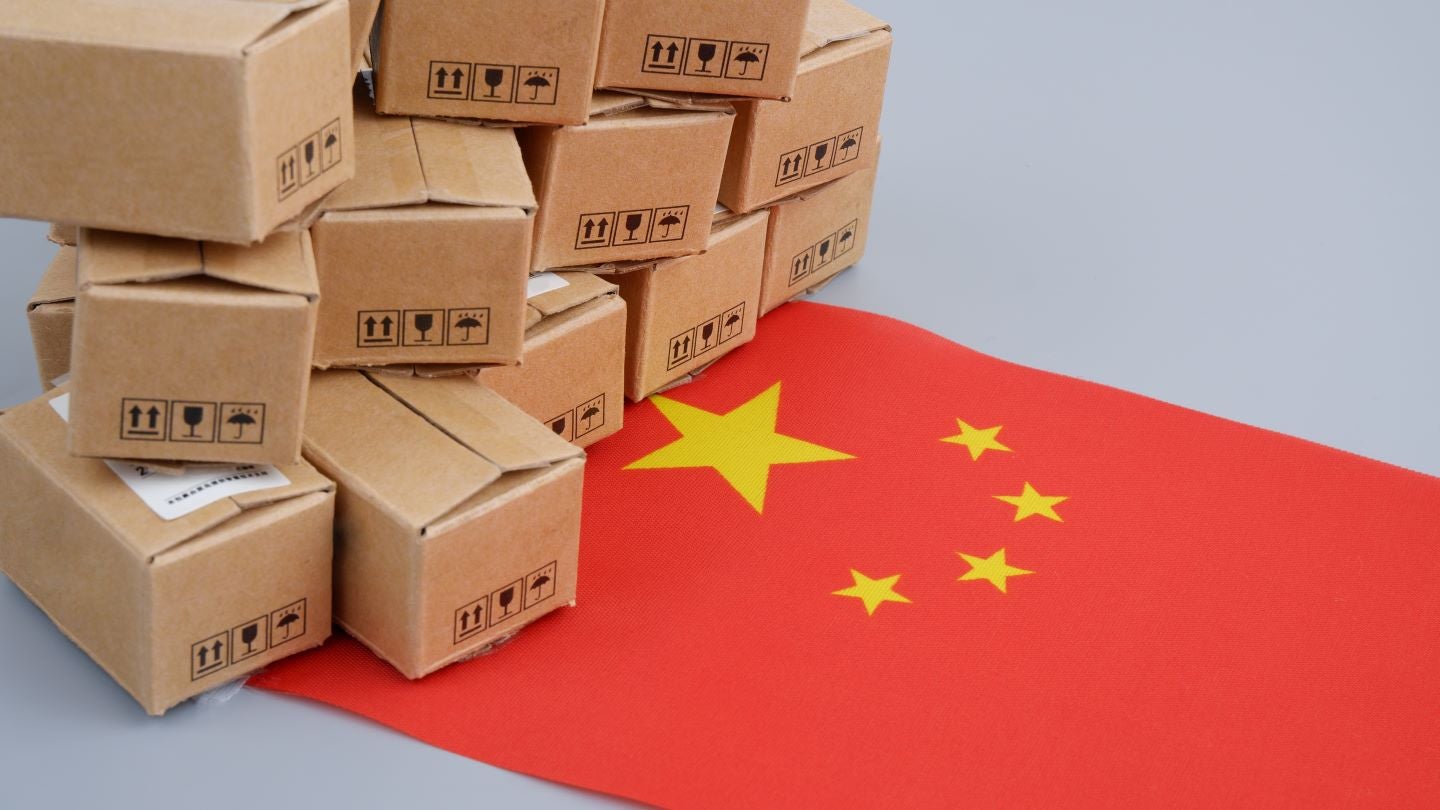

DETROIT – Billions of dollars in tariff refunds could be on the way for American companies but getting that money back will be anything but simple.
Experts also warn consumers probably won’t see a dime.
The refunds fall under the International Emergency Economic Powers Act, or IEEPA. In February, a U.S. Supreme Court decision struck down most of President Donald Trump’s tariff policy under the act. A lower court has since ruled the government must return those funds which opens the door for businesses to find some financial relief.
The federal government reports it’s getting closer to finishing the system to process refund claims.
Building the system from scratch
U.S. Customs and Border Protection is still developing the system to process refund claims.
In a recent filing with the U.S. Court of International Trade, a CBP official detailed that the processing system is still in development with a goal of taking up to 45 days to review and process refund claims once it is operational.
Dr. Jeff Rightmer, an associate professor of teaching at Wayne State University’s Mike Ilitch School of Business, believes the process will be long and complex.
He noted that while companies are expected to pay tariffs within 10 business days of goods crossing the border, getting money back is a different story.
“[The] government’s great at taking in money. It’s a lot harder to give back money,” Rightmer said.
The refund process — and who gets it
Rightmer explained that the Supreme Court addressed the legality of the tariffs but stopped short of spelling out what happens to the money already collected.
“They ruled on the legality of the tariffs under the War Act and ruled that we’re not at war with these countries, so you can’t use this. So, they struck that down. But they didn’t say anything about, ‘OK, you’ve collected all of these. What are you going to do with them? Do you have to give it back or anything?’” he said.
Only entities that are listed as importer of record like big-box stores or small businesses are eligible, not customers who may have absorbed the costs, he said.
Detroit small businesses feel the squeeze
For Detroit-area small business owners, the tariff fight is deeply personal.
Sherrie Savage is the founder of The Coloring Museum, an interactive art space that uses the power of coloring to promote mental wellness. She launched the concept from her self-published coloring book, “Naturally Illustrated,” and grew it into a business after a series of pop-up coloring events showed real community demand.
In 2025, Savage says she spent well over $10,000 in tariff costs.
While Savage has worked to keep prices reasonable, she acknowledges some of those costs have been passed on to customers. She also uses various suppliers in an effort to keep costs down.
For Savage, a refund would mean more than padding her bottom line.
“Everything. So, as I mentioned to you before, one of the things that I really would have liked to happen during the holiday season was to give back to my employees some bonuses. The Coloring Museum is all about social impact, it’s about community, and then also about my staff and making sure that they’re taken care of along with their families,” Savage said.
Absorbing the cost
Jennifer Harmon, owner of Jen’s Finest Things, took a different approach. Rather than pass tariff costs on to her customers, she absorbed them — eating roughly 20 percent of her supply costs last year.
Jen’s Finest Things sells handmade beaded jewelry, custom earrings, patches, sunglasses and accessories — with a pricing range designed to stay accessible to everyone.
A refund, Harmon said, would go straight back into the business.
“A refund on these tariffs would mean a lot because it would give me back some of the profit that I would have made. It will allow me to have a profit versus just a small amount, because again, I didn’t apply it to the customer,” Harmon said.
Despite the financial pressure, her customers never stopped showing up.
“Even though the tariffs were there, my customers still were supporting me. So that was the blessing on the one hand,” Harmon said.
She closed with a direct message to the public.
“The climate for small business owners right now is that we need your support. Regardless if it’s sharing our information, referring somebody to us, or even making a purchase — being it a small purchase or a big purchase — it will help us all,” Harmon said.
What businesses should know now
Not only does CBP have to pay back eligible importers, it also must do so with interest.
The U.S. Chamber of Commerce has published guidance for small businesses navigating the refund process, and CBP has resources available on its website.
One final note of caution: experts warn scammers may try to take advantage of the moment. Any business working with a customs broker should verify that broker’s legitimacy before moving forward.
Copyright 2026 by WDIV ClickOnDetroit – All rights reserved.