Andrew Schneider/Houston Public Media
Texas’ ban on the sale of smokeable hemp products takes effect Tuesday, March 31. Stores in the Houston area and across the state have been scrambling to sell off their inventory before the ban takes effect.
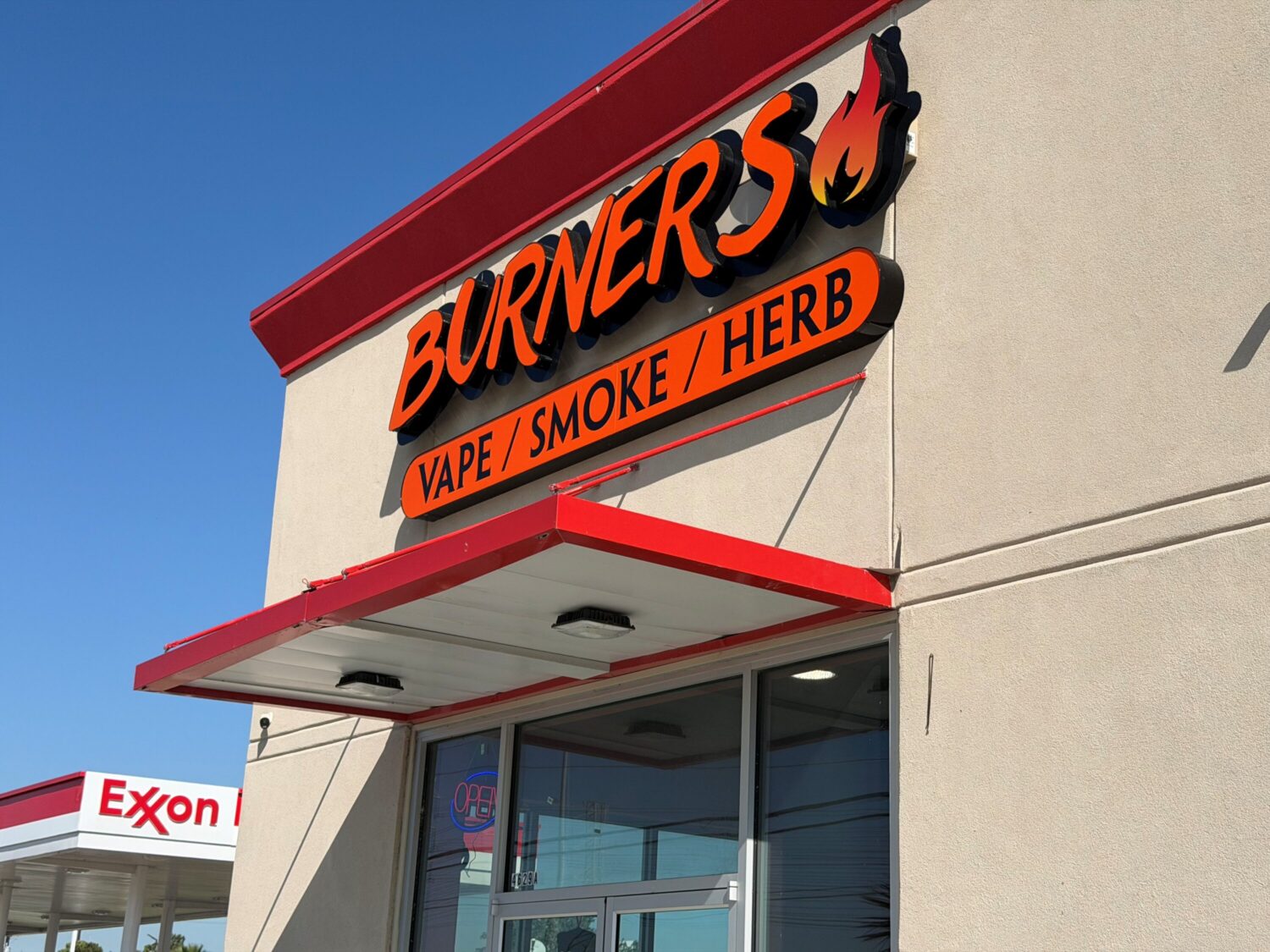
“We are still running a sale, trying to burn out the stuff that’s no longer going to be available,” Kenneth Berner, who co-owns Burners Vape, Smoke and Herb in League City and Bacliff, told Houston Public Media on Monday. “And that’s going to happen ’til the end of the day, and then just whatever’s left at closing time will get boxed up.”
Berner said that even with prices slashed, he still expects to be stuck with between $10,000 and $15,000 worth of product he will no longer be allowed to sell. And he says things will only get tougher going forward.
“Roughly 75% of our business is hemp products, and 90 to 95% of that business is smokable,” Berner said. “So, it’s going to be very devastating.”
The ban comes as part of new regulations of hemp products adopted earlier this month by the Texas Department of State Health Services (DSHS). It caps more than a year of efforts by hemp opponents, led by Lt. Gov. Dan Patrick, to bar the sale of all products containing tetrahydrocannabinol (THC) — the main intoxicant in marijuana.
Those efforts appeared dead at the end of last year’s second special session of the Texas state Legislature, after Gov. Greg Abbott vetoed a bill passed in the first session that would have banned virtually all hemp products containing THC. But they subsequently gained new life when Abbott ordered state agencies to enforce age restrictions on THC products and Congress enacted a forthcoming federal ban in November.
The new state regulations include banning the sale of hemp products to anyone under 21, child-resistant packaging, new labeling and testing requirements, product recall standards and a 10,000% increase in licensing fees. With the exception of the last, many of these changes were regulations the industry itself supports.
“We do have some big concerns, though, with two provisions, the first being the outrageous licensing fees, hiking the fee from $125 to $5,000 per retail location per year. And you couple that with the restriction on the products that can be sold, this is going to have a big impact on businesses,” said Heather Fazio, who leads the Texas Cannabis Policy Center.
The restrictions cap the level of THC in products for sale at 0.3% — a concentration well above the naturally occurring level of THC in hemp flower that goes into smokeable products.
Advocates say the ban on the sale of smokeable hemp products is a long-needed safety measure, particularly for the safety of children. But Berner argued a focus on smokeable hemp products alone undercuts the state’s argument.
“They didn’t feel like they had to remove alcohol and THC drinks being served together in a bar,” Berner said. “So after tomorrow, you can’t [sell] flower products for safety — which, by the way, is the most natural, safest version — but you’ll still be able to get THC drinks served to you in bars when you’re already inebriated.”
Along with THC beverages, consumers also will be able to continue purchasing edibles, which typically have lower concentrations of THC than the smokeable products.
And while the new DSHS rules only affect the manufacture, distribution and sale of hemp products, they don’t affect state law allowing for possession of them.
“We’re concerned that by restricting businesses and not allowing them to sell these products, we’re going to be sending consumers to the illicit market where there are no age restrictions, product safety standards, or consumer protections,” Fazio said.