- Rising e-commerce volumes are challenging Europe’s major air cargo hubs, with congestion, rising costs, and regulatory scrutiny prompting a reassessment of traditional entry points.
- Northern Europe and the Baltics, particularly Riga, are emerging as regional consolidation and customs gateways, leveraging geography, connectivity, and less-congested airports to accelerate parcel distribution across multiple European markets.
- Geopolitical disruptions, notably the Ukraine conflict, and evolving regulatory pressures have exposed vulnerabilities in concentrated networks, reinforcing the strategic value of smaller, agile regional hubs for e-commerce logistics.
e-commerce flows into Europe are forcing a quiet reassessment of how air cargo networks are structured. For years, a handful of major hubs absorbed the bulk of cross-border parcel traffic arriving from Asia, supported by scale, infrastructure and established customs ecosystems. That concentration is now showing strain. Congestion, rising handling costs, slot pressure and increasingly complex regulatory scrutiny around low-value shipments are pushing operators to reconsider whether Europe’s traditional entry points remain sustainable for the next phase of e-commerce growth.
Across Northern Europe and the Baltics, a different model is beginning to take shape, one built less around scale alone and more around geography, customs integration and regional distribution efficiency. For Latvijas Pasts, the Latvian national postal operator, the rapid expansion of cross-border e-commerce has effectively repositioned postal logistics from domestic infrastructure into a strategic air cargo facilitator linking Asia with multiple European markets simultaneously.
Kristians Godins, Head of International Services and Business at Latvijas Pasts, argues that the challenge facing global platforms is no longer simply capacity but operational balance across the supply chain. Major gateways such as Frankfurt, Amsterdam, Liège or Budapest continue to attract enormous volumes, yet the consequences are becoming increasingly visible across handling performance and cost structures.
A regional gateway model emerges
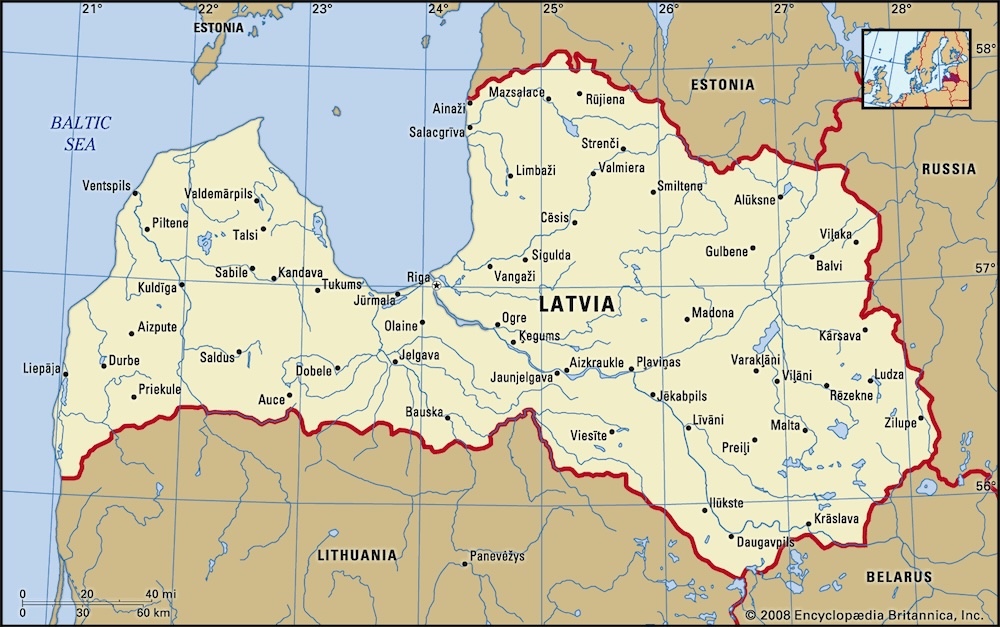
Rather than competing directly with Europe’s largest airports, Latvia’s strategy has been to position Riga as part of a wider Nordic and Baltic logistics catchment area. The approach reflects how e-commerce platforms increasingly distribute shipments across several entry points to mitigate operational risk and accelerate last-mile delivery.
The solution has been to treat Riga as a consolidation and customs processing gateway serving multiple destinations simultaneously. Through recently launched charter operations linked to one of the world’s fastest-growing e-commerce platforms, aircraft arriving into Latvia are already carrying parcels destined beyond the domestic market.
“We are doing the customs clearance for the Baltics, for Finland, some part of the Poland and Czhec Republic ith plans to expand geographically even further,” Godins said, noting cooperation with additional partners handling other European destinations.
This shift reflects a broader structural reality in e-commerce logistics. Speed is increasingly determined not only by flight time but by where clearance occurs and how efficiently parcels disperse into regional delivery networks. Concentrating millions of small consignments into a limited number of mega-hubs can introduce delays that undermine the very promise e-commerce depends upon.
Smaller airports, meanwhile, are discovering competitive advantages precisely because they are less congested. As Godins put it, “for smaller ones, it will be an important partner,” allowing operators to tailor processes more closely around large-volume customers.
Geography also plays a role. Riga’s proximity to Scandinavia, combined with ferry and road connectivity, allows shipments to move across Northern Europe within a day, reducing both transit time and emissions compared with routing cargo through Western European hubs before redistributing northwards.
War, disruption and a forced reset
The Baltics’ current positioning in e-commerce logistics cannot be understood without examining the disruption triggered by Russia’s invasion of Ukraine in 2022. Prior to the conflict, Riga had already developed significant parcel charter activity linked to Asian platforms, supported by growing regional demand.
Eligijus Jentkus, Head of the International E-Commerce and Logistics Development Division at Latvijas Pasts, recalls how quickly those operations collapsed once airspace restrictions took effect.
“War started on 24th February. On 28th the airspace was closed,” he said.
Flights connecting regional markets were abruptly halted, forcing operators to reroute volumes elsewhere in Europe. Budapest and other gateways absorbed traffic almost overnight. For airports dependent on charter flows, the consequences were immediate.
“Airport stayed without anything,” Jentkus said, describing how volumes shifted away while postal operations continued receiving shipments by truck instead.
The disruption exposed how vulnerable e-commerce supply chains had become to geopolitical dependency within routing structures. Yet it also accelerated adaptation. Latvia Post and airport stakeholders used the intervening period to rebuild services, modernise handling processes and reposition themselves for a potential return of charter activity.
When congestion and cost pressures later began affecting established hubs again, the region was ready to re-enter the market.
Regulation may ultimately prove as influential as infrastructure in determining where future e-commerce gateways emerge. European authorities are increasingly scrutinising the explosion of small parcels entering the bloc, particularly from Chinese platforms, with new tax and compliance mechanisms under discussion.
For operators handling millions of low-value shipments, customs processing capacity may become the decisive constraint.